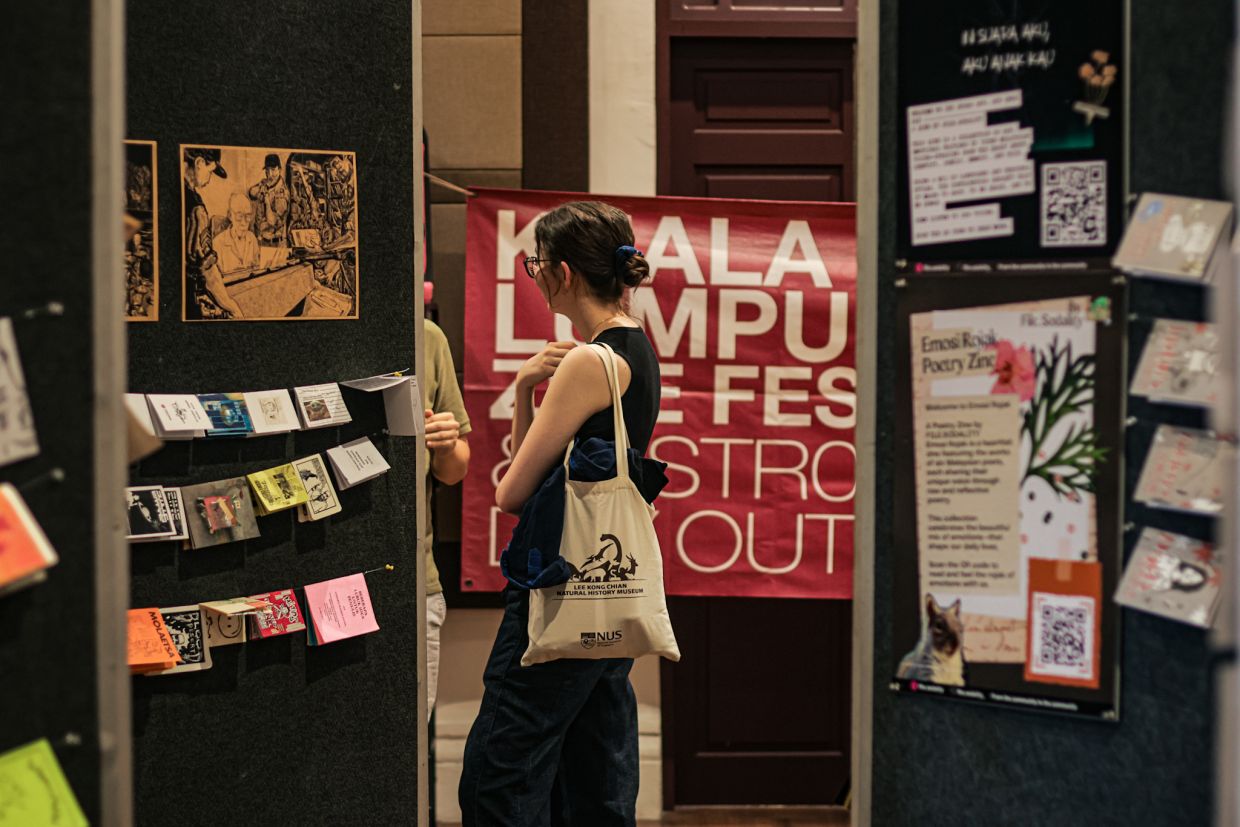
The KL Zine Etc festival, an increasingly prominent feature of Kuala Lumpur's independent arts scene, is making a return with an expanded vision that underscores the city's role as a hub for alternative publishing and creative expression. The second edition of the festival will occupy the first floor of the heritage trade hall, transforming the space into a vibrant showcase of zine culture, self-published works, and DIY creative practices that operate outside conventional commercial channels. This year's gathering reflects the maturation of an arts movement that has grown steadily across Malaysia, drawing together a diverse community of makers, writers, and visual artists united by a commitment to independent voices and unconventional storytelling.
Building momentum from its inaugural success, KLZE has nearly doubled its vendor presence, expanding from 30 to over 50 exhibitors. The expanded roster brings together zinesters, artists, independent publishers, and printmakers offering an eclectic range of works. Attendees will encounter handmade zines alongside experimental publications, artist books, and limited-edition prints—the tactile, labour-intensive outputs of a creative ecosystem that has flourished precisely because it exists beyond the constraints and commercial logic of mainstream publishing. This growth demonstrates genuine appetite among Malaysian audiences for authentic, grassroots cultural production.
The festival's programmatic offerings extend well beyond a simple marketplace. Across three days, organisers have curated zine-focused discussions, hands-on workshops where visitors can engage directly with printmaking and binding techniques, film screenings that explore related themes, and live music sessions. These elements transform KLZE from a transactional event into a gathering space where creative communities can learn from one another, share techniques, and build relationships. An anti-war-themed exhibition serves as the festival's conceptual anchor, providing intellectual and emotional coherence to the diverse works on display.
The decision to foreground an anti-war message reflects the festival's engagement with contemporary global realities while simultaneously exploring inward-facing dimensions of conflict. As the organising committee explained, the thematic focus encompasses not only conventional warfare but also the internal "wars" waged through psychological strain, questions of identity, and ideological difference. This broader interpretation of conflict allows the festival to operate on multiple registers simultaneously—as a response to external geopolitical turmoil while also creating space for reflection on personal and social healing.
Central to this year's curatorial approach is the concept of "ceasefire zones," spaces designed explicitly for reading, reflection, and meaningful exchange. Rather than viewing the festival as a purely commercial or entertaining event, KLZE's organisers position it as a platform for reconciliation and dialogue. By framing vendor booths and gathering spaces as deliberate "ceasefire zones," they invite both participants and visitors to approach the festival as an opportunity for genuine connection and intellectual engagement—a retreat from the adversarial tenor that often characterises public discourse.
The content landscape of this year's festival encompasses an ambitious thematic range reflecting the breadth of contemporary independent publishing. Represented topics include contemporary fanzine culture, punk aesthetics and history, folk narratives and oral traditions, indigenous activism and First Nations perspectives, comics and visual storytelling, environmental sustainability and climate concerns, feminist theory and gender studies, and even role-playing game design and culture. This thematic diversity signals that independent publishing in Malaysia and the broader region is not confined to any single political or aesthetic orientation but rather constitutes a genuinely pluralistic creative sector.
The participating vendors themselves tell a story about the geographic and demographic distribution of Malaysia's independent arts infrastructure. Established outlets like Otter Is Reading, Tokosue, and Paulitical Art share the festival platform with emerging projects and regionally-based publishers, including Kedai Hitam Putih from Kelantan, Pipit Press from Melaka, Shuren Press from Johor, Olivia JD from Sarawak, and Borneo Komrad from Sabah. This geographic representation highlights how independent publishing has taken root not just in Kuala Lumpur but across Malaysia's states, creating a genuinely distributed cultural ecosystem.
The festival's significance extends beyond Malaysia's borders, reflecting the emergence of KLZE as a genuine regional nexus for independent creators. This year's edition welcomes zinemakers and publishers from Singapore, Indonesia, the Philippines, Hong Kong, China, Myanmar, and Taiwan—a geographic footprint that positions the festival within Southeast Asian and broader East Asian creative networks. The cross-border participation creates opportunities for regional artistic exchange and positions Malaysian independent publishers within transnational conversations about identity, politics, aesthetics, and cultural production.
Language and accessibility constitute deliberate design choices within the festival's architecture. The multilingual nature of the zines and publications on display—spanning Bahasa Malaysia, English, Mandarin, and other languages—mirrors the linguistic diversity of the independent publishing scene across Southeast Asia. This linguistic pluralism has practical implications, allowing works to circulate across language communities while also affirming that alternative publishing functions as a tool for linguistic and cultural expression among communities whose voices may be marginalised in mainstream media.
The festival's economic accessibility reflects a commitment to democratic participation. Entry is priced at RM10, a modest sum that incorporates a RM5 voucher redeemable toward zine purchases. This pricing structure acknowledges that independent publishing communities operate on tight margins while simultaneously ensuring that the festival remains accessible to students, precarious workers, and others with limited disposable income. The voucher system supports vendors while reducing barriers to purchasing works that might otherwise seem expensive relative to mass-market alternatives.
Looking forward, KLZE's organisers articulate a vision focused on community building and cross-pollination rather than growth for its own sake. Their stated aim is to create spaces where local and regional zinemakers can encounter one another, where alternative narratives gain visibility and celebrate, and where meaningful friendships and professional collaborations emerge. This orientation suggests that KLZE understands itself not primarily as an entertainment or commercial venue but as infrastructure for creative communities—a gathering place where different approaches to publishing, storytelling, and artistic expression can develop in dialogue with one another.
For Malaysian readers and those across Southeast Asia, KLZE represents something increasingly significant in an era of media consolidation and algorithmic content distribution: a deliberate assertion that alternative forms of publishing, distribution, and cultural exchange remain vital. The festival embodies a commitment to tactile, local, and community-rooted cultural production—forms of creativity that insist on the enduring value of handmade objects, independent voices, and spaces designed for genuine encounter. In this sense, KLZE functions not merely as a marketplace or entertainment event but as a statement about the kinds of cultural futures worth building.

