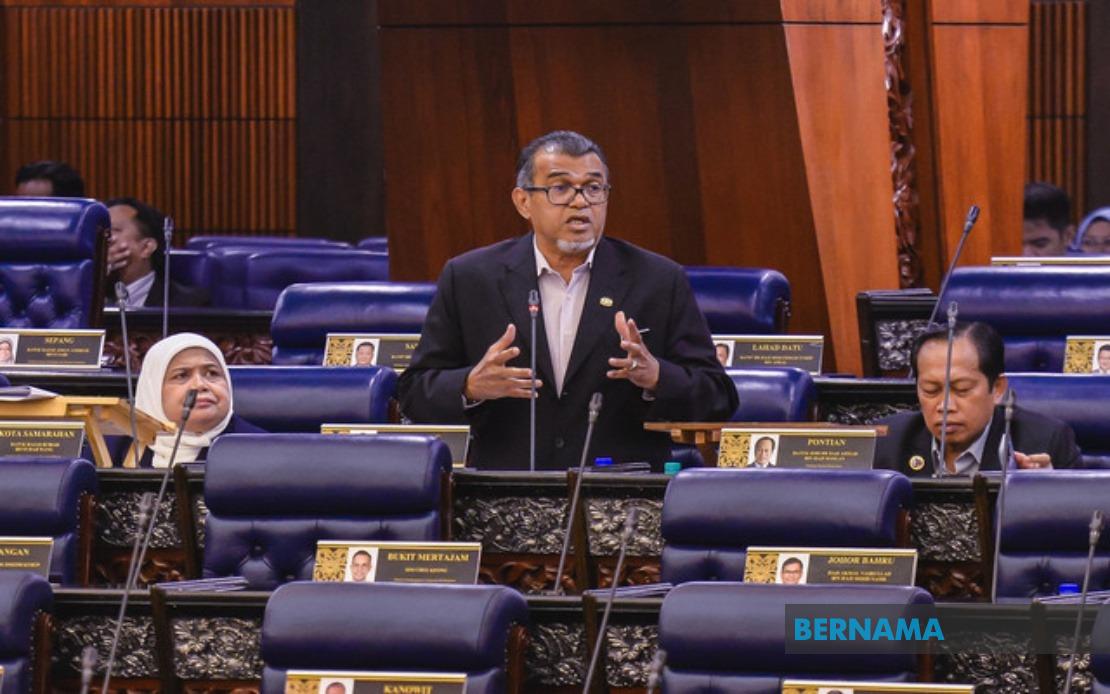
Deputy Transport Minister Datuk Hasbi Habibollah has indicated that Kota Kinabalu International Airport's RM500 million expansion project cannot move forward until critical land and site-related complications are ironed out with the Sabah state government. While the financial backing for the ambitious infrastructure undertaking has already secured parliamentary approval, the project faces administrative hurdles that have prevented construction from commencing. Speaking during Question Time in the Dewan Rakyat, Hasbi outlined the specific areas requiring resolution before work can begin, signalling that technical approvals alone are insufficient for a project of this scale.
The expansion scheme forms part of a broader RM2.3 billion airport development initiative announced by Prime Minister Datuk Seri Anwar Ibrahim in October's Budget 2026 allocation. This comprehensive strategy encompasses terminal and runway enhancements at Penang, Kota Kinabalu, Tawau and Miri airports, with all projects targeted for completion by 2028. For Sabah, this represents substantial federal investment in modernising its aviation infrastructure, a critical priority for a state heavily dependent on air connectivity for tourism, business and trade. The Kota Kinabalu facility, serving Sabah's largest city and capital, handles significant passenger volumes and serves as a gateway to Malaysia's eastern region.
Hasbi's comments reveal the complex interplay between federal transport planning and state-level land administration in Malaysia's federal structure. The deputy minister indicated that discussions with Sabah authorities concerning runway proximity zones, spatial requirements for terminal facilities and adjacent land parcels remain unresolved. These aren't trivial bureaucratic matters—airport expansion requires careful coordination between multiple stakeholders including civil aviation regulators, state land offices, municipal authorities and potentially affected communities. Without Sabah government endorsement on these foundational details, the federal funding, however substantial, cannot translate into physical development.
Meanwhile, progress differs markedly for Tawau Airport in the same state. Construction work at Tawau is already proceeding, suggesting that state-federal coordination proved smoother for that particular project. This disparity underscores how expansion timelines depend heavily on administrative preparedness rather than solely on financial resources. The contrast between Tawau's active development and Kota Kinabalu's preliminary stage hints at varying levels of project readiness and institutional coordination between the two airports.
For Malaysian business and tourism stakeholders, Kota Kinabalu's expansion delays carry real implications. Sabah's economy relies substantially on international visitor arrivals, and airport capacity constraints can limit tourism growth potential. A modern, expanded facility would enhance passenger-handling capacity, reduce congestion during peak seasons, and potentially attract additional airline services. Delays defer these economic benefits while competitors in other Southeast Asian destinations continue infrastructure improvements.
During the parliamentary session, Hasbi also addressed a separate question regarding Pangkor Airport's future, providing clarification on the government's position towards smaller regional airports. The deputy minister emphasised that sea transport remains the government's preferred connectivity mode for Pangkor Island, reflecting a strategic prioritisation of different transport modes depending on geographic and economic circumstances. This stance reflects practical considerations—island locations with established ferry networks may benefit more from maritime investment than from the operational complexities and costs of maintaining scheduled air services.
Pangkor Airport previously accommodated charter operations through Berjaya Air's Dash 7 service and SKS Airways' flights from Subang, but these services ceased in May 2022. Rather than pursuing commercial restoration, the government has adopted a pragmatic approach accepting that viability depends entirely on airline business cases. Hasbi noted that the Ministry of Transport and Malaysia Airports Holdings Bhd remain receptive to proposals from interested carriers, but only if such operations satisfy commercial feasibility criteria. This market-driven approach avoids subsidising unviable routes whilst keeping options available should circumstances change.
The deputy minister also took the opportunity to dispel perceptions that Pangkor, along with Redang Island and Tioman Island airports, have become abandoned infrastructure. Rather, these facilities continue serving important functions including private aircraft operations, military activities, helicopter services, emergency diversions and flying doctor operations. Malaysia Airports Holdings maintains staffing at these locations to preserve asset integrity and ensure operational readiness for essential services. This clarification corrects a common misconception that underutilised regional airports represent wasted resources; in reality, they provide crucial safety nets for aviation emergencies and specialised operations.
The broader strategic context involves balancing airport development across Malaysia's diverse geography. While major urban centres like Kuala Lumpur and Penang command substantial investment, regional airports serving Sabah, Sarawak and Peninsular Malaysia's secondary cities require careful prioritisation. The RM2.3 billion Budget 2026 allocation demonstrates federal commitment to geographic diversity, but implementation challenges persist. Kota Kinabalu's expansion exemplifies how funding availability doesn't automatically translate into project execution—administrative coordination, land availability and state government cooperation remain essential prerequisites.
Looking ahead, resolving Kota Kinabalu's land issues requires constructive dialogue between federal transport authorities and Sabah's state administration. Hasbi's parliamentary statement essentially places responsibility on Sabah to clarify the project site details and finalise land arrangements. The deputy minister's framing suggests the federal side has completed its obligations, positioning the onus clearly on the state government. This dynamic reflects broader federalism tensions in Malaysian infrastructure development, where projects require alignment between multiple governance levels.
For Southeast Asia's competitive aviation landscape, Kota Kinabalu's expansion delays carry regional significance. Neighbouring countries are aggressively upgrading airports to capture international connectivity and tourism flows. Thailand, Indonesia and the Philippines all pursue ambitious airport modernisation programmes. Malaysia's delays in implementing its own expansion strategy risk relative disadvantage, potentially affecting the country's position as a regional aviation hub. The RM500 million Kota Kinabalu project, once commenced, should substantially enhance Sabah's connectivity positioning and reinforce Malaysia's commitment to diversified infrastructure investment beyond its major peninsular hubs.

