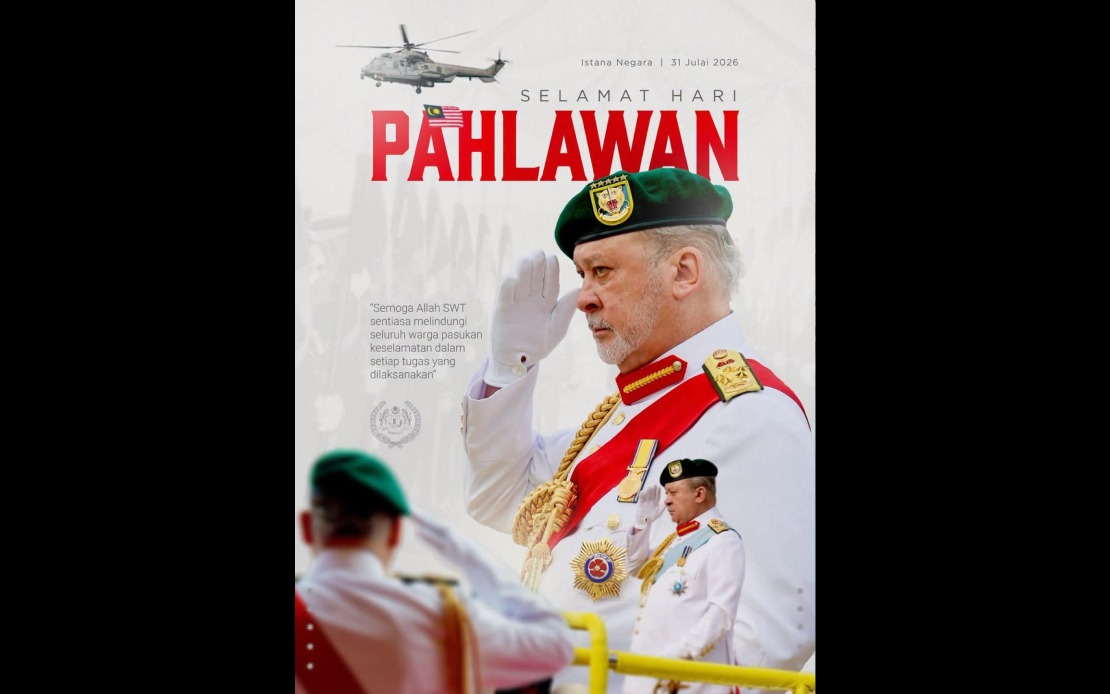
His Majesty Sultan Ibrahim, King of Malaysia, has conveyed Warriors' Day greetings to all personnel serving in the Malaysian Armed Forces and the Royal Malaysia Police, reaffirming the monarchy's recognition of their contributions to national security. The message, delivered through the Sultan Ibrahim Sultan Iskandar Facebook page on July 31, underscores the Crown's enduring appreciation for the men and women in uniform who undertake dangerous and demanding work on behalf of the nation.
In his statement, the King articulated gratitude for the sacrifices made by military and police personnel across all ranks and specialisations. The acknowledgment extends beyond ceremonial recognition, touching upon the foundational principle that security force members dedicate themselves to protecting Malaysia's sovereignty, territorial integrity, peace and the general welfare of its citizens. Such affirmations carry particular weight during Warriors' Day, an annual occasion set aside specifically to honour those in service and to remind the public of their continuous dedication.
The King's message invoked religious sentiment, calling upon Allah to continue bestowing protection upon all security force members as they execute their duties. This spiritual dimension reflects Malaysia's Islamic heritage whilst also speaking to the universal vulnerability of personnel who operate in high-risk environments. The framing suggests that royal recognition extends not merely to professional achievement but to the moral and physical courage demanded by military and police work.
However, the royal gesture was tempered by practical necessity. Istana Negara released a concurrent statement explaining that Sultan Ibrahim would be unable to attend the Warriors' Day Parade at Dataran Pahlawan Negara in Putrajaya on the scheduled date. The reason centred on ongoing medical treatment for musculoskeletal pain affecting his back and hip. Medical specialists had advised the King to prioritise rest prior to the treatment phase to optimise recovery outcomes and ensure the intervention's efficacy.
This disclosure raises considerations about the King's health management at a time when Malaysia's constitutional monarchy requires active engagement with national institutions and ceremonies. The decision to withhold attendance reflects a pragmatic approach: securing the sovereign's long-term wellbeing takes precedence over ceremonial participation. Nonetheless, the absence of the King from a parade honouring the security forces represents a symbolic loss, even if mitigated by the advance explanation and the separate message of support.
The Warriors' Day observance itself holds significance within Malaysia's national calendar. Established to commemorate the contributions of military and police personnel, the annual recognition serves multiple functions: it provides institutional validation for those in service, educates the general public about security sector importance, and offers an opportunity for political and state leadership to reinforce their commitment to law enforcement and defence. The King's message, despite his non-attendance, preserves this messaging even while circumstances force an adjustment to expected protocol.
For the armed forces and police personnel themselves, such royal recognition matters beyond ceremonial niceties. It signals that their work, often conducted with limited public visibility and substantial personal risk, remains valued at the highest levels of government. In a country where military and police morale can be affected by resource constraints, operational challenges, and occasionally controversial incidents, these periodic reminders of institutional appreciation from the Crown help sustain commitment and professional standards across the services.
The specific circumstances of the King's medical treatment also merit consideration within the broader context of governance. Malaysia's constitutional arrangements vest significant ceremonial and symbolic power in the monarchy, and any extended period of medical treatment or health management can prompt questions about succession arrangements and institutional continuity. The transparency provided by Istana Negara in disclosing the reason for his non-attendance attempts to manage such concerns by framing the matter as routine medical care rather than serious illness.
Regionally, Malaysia's approach to honouring its security forces reflects patterns seen across Southeast Asia, where military and police institutions occupy central positions within state structures and national identity. The royal validation of security sector contributions reinforces the hierarchical and institutional frameworks through which regional governments exercise authority and maintain order. For Malaysian observers, the King's message connects local security concerns—ranging from border management to internal security—to the broader question of national coherence and stability.
The Warriors' Day observance also carries implications for civil-military relations. In democracies with active monarchies, the Crown's regular acknowledgment of military and police work helps establish that security institutions operate within a constitutional framework overseen by institutions beyond themselves. The King's message, framed around sacrifice and commitment to national values rather than political loyalty or partisan interest, reinforces this principle.
Looking forward, the King's recovery from his medical treatment will likely be monitored closely by both official circles and public observers. His gradual return to fuller ceremonial engagement will signal the restoration of normal constitutional operations. Meanwhile, the Warriors' Day message serves its intended purpose: acknowledging a constituency whose work, though essential, rarely generates the public attention afforded to politicians or business leaders. For the armed forces and police, it represents a moment of national recognition, even if delivered through a screen rather than in person.

