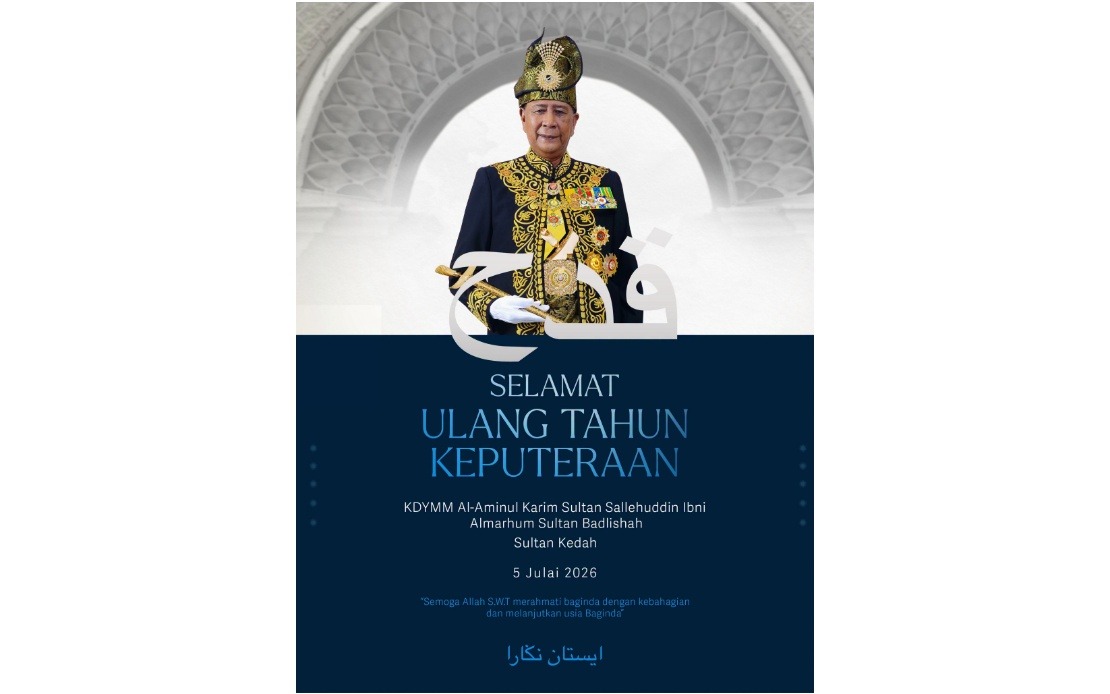
His Majesty Sultan Ibrahim, King of Malaysia, has offered his personal greetings to the Sultan of Kedah, Al-Aminul Karim Sultan Sallehuddin Sultan Badlishah, marking the royal ruler's 84th birthday. The gesture, conveyed through the official Facebook channel of the King, reflects the strong bonds of unity that characterise Malaysia's constitutional monarchy system, where respect and acknowledgement among the rulers remains a cornerstone of the federation's governance structure.
In his message, His Majesty expressed heartfelt prayers for the Sultan of Kedah's continued well-being. The King invoked blessings from Allah SWT, seeking divine favour in granting Sultan Sallehuddin sustained happiness, robust health, and a lengthy life. Such sentiments, though ceremonial in nature, carry significant weight within Malaysia's monarchical traditions, where public expressions of goodwill between the sovereign and state rulers underscore the collaborative framework upon which the constitutional monarchy operates.
The birthday acknowledgement from the highest office in the land represents more than mere protocol. It demonstrates the institutional respect maintained across Malaysia's multi-layered royal structure, comprising the King, nine state sultans, and other royal institutions. These public gestures of recognition serve to reinforce constitutional solidarity and reaffirm the principle of unity in diversity that characterises the federation's political arrangements.
Prime Minister Datuk Seri Anwar Ibrahim similarly extended his sincere wishes to Sultan Sallehuddin, reflecting the government's commitment to maintaining harmonious relations with the sultanates. The Prime Minister's message, also shared via Facebook, encompassed not only birthday felicitations but also encompassed prayers for the entire Kedah royal household. Anwar's wishes specifically included the Sultanah of Kedah, Sultanah Maliha Tengku Ariff, acknowledging the broader royal family's role in the state's constitutional framework.
The Prime Minister's invocation of Allah SWT's continued mercy and guidance for Sultan Sallehuddin, the Sultanah, and their family units reflected a recognition of the spiritual and custodial responsibilities that royal figures bear within Malaysia's Islamic constitutional context. By extending wishes encompassing good health, well-being, and enduring sovereignty, Anwar Ibrahim's message aligned with the government's broader commitment to supporting state-level institutions and maintaining federal cohesion.
Kedah, located in the northwestern peninsula, holds particular significance within Malaysia's political geography. As one of the oldest sultanates in the nation, Kedah's ruler carries considerable cultural and constitutional weight. Sultan Sallehuddin's tenure has witnessed evolving relationships between state and federal authorities, making the public acknowledgement of his birthday a moment reflecting broader institutional stability. The timing of these greetings underscores the importance both the monarchy and government place on visible demonstrations of respect and constitutional cooperation.
The milestone of reaching 84 years represents a substantial life achievement, particularly for a constitutional ruler bearing the responsibilities of state governance and cultural stewardship. Sultan Sallehuddin's longevity in his position reflects the stability and continuity valued within Malaysia's monarchical system. The public recognition from both the King and Prime Minister serves to honour not merely an individual but the institution he represents and the contributions he has made to Malaysian federalism.
In Malaysia's constitutional arrangement, the relationship between the King and state sultans operates within a carefully balanced framework that respects both the paramount position of the Yang di-Pertuan Agong and the autonomy of state rulers within their respective territories. Birthday greetings at this level represent more than cordial exchanges; they affirm the functional interdependence and mutual recognition that characterises successful constitutional monarchy systems. Such public acknowledgements become particularly meaningful when viewed through the lens of maintaining institutional harmony across the federation's complex political landscape.
The celebration of Sultan Sallehuddin's birthday also coincides with broader considerations regarding succession planning and institutional continuity within Malaysia's sultanates. As rulers advance in age, questions surrounding the succession and stability of state institutions gain importance. Public recognition of the Sultan's milestone demonstrates the federation's commitment to acknowledging the contributions of long-serving rulers while ensuring seamless transitions within established constitutional frameworks when circumstances require.
These birthday wishes illustrate the ceremonial yet substantive role that public expressions of goodwill play within Malaysia's governance ecosystem. They serve not only personal acknowledgement but function as reinforcements of constitutional bonds, reminders of shared values, and affirmations of institutional stability. For Malaysian observers and those monitoring the nation's political dynamics, such moments provide windows into the operational health of the constitutional relationships that underpin the federation's structure and governance mechanisms.

