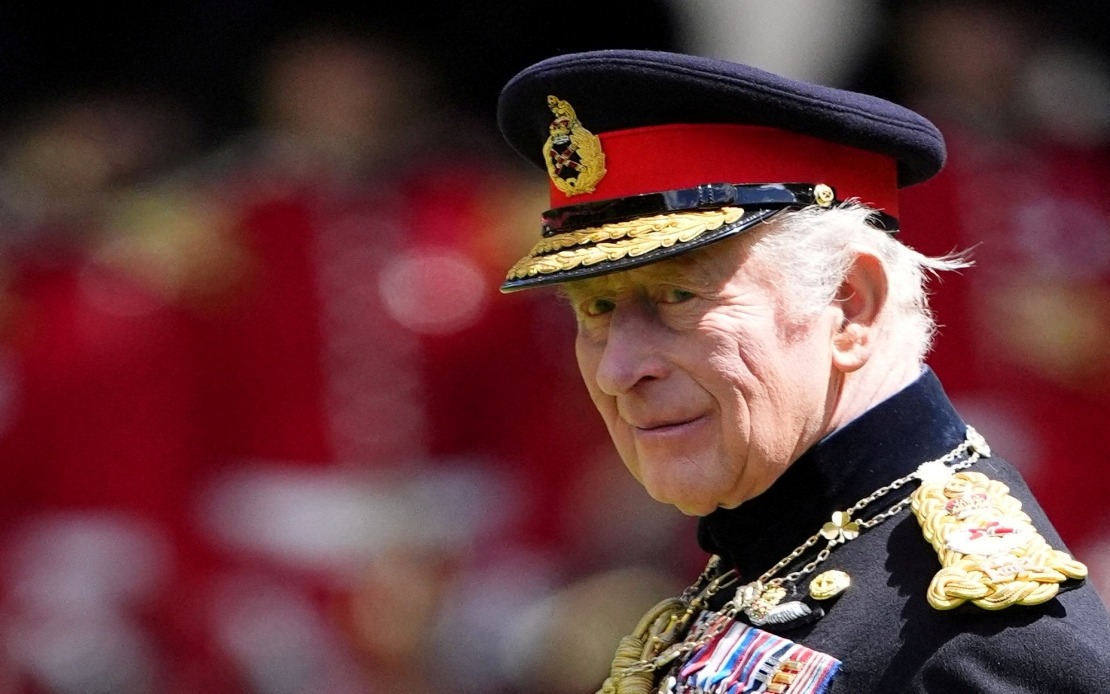
King Charles III has crossed a constitutional threshold by becoming the first British sovereign in history to publicly reveal his personal tax contributions, with Buckingham Palace announcing that the monarch paid £12.9 million in the 2024-2025 tax year. This unprecedented disclosure represents a significant departure from centuries of royal financial secrecy and underscores the current administration's commitment to greater institutional accountability, a concern that has gained prominence across Commonwealth nations in recent years.
The disclosure came as part of a broader Royal Household statement detailing the various revenue streams funding the monarchy, accompanied by documentation designed to demystify what has traditionally been an opaque corner of British public administration. For Malaysian observers accustomed to debates surrounding transparency in state institutions and public finances, the move carries particular relevance, demonstrating how even the most venerable institutions are responding to modern expectations of financial openness and good governance.
The £12.9 million payment in the most recent tax year followed a £11.7 million contribution during the 2023-2024 period, bringing the monarch's cumulative tax payments since his accession to the throne in September 2022 to more than £30 million. These figures encompass income tax and capital gains tax calculated on his personal income, which derives from various sources including private investments and the personally owned estates of Balmoral and Sandringham. The voluntary nature of these payments deserves emphasis—British monarchs remain legally exempt from income tax, capital gains tax, and inheritance tax obligations, yet the king has chosen to contribute under arrangements established during the 1990s.
This development mirrors a pattern that King Charles initiated long before assuming the throne. During his decades as Prince of Wales, he established a practice of publishing information regarding his personal tax contributions, setting a precedent that has now culminated in royal residence making such disclosures standard practice for the sovereign themselves. The evolution from princely transparency to regal openness suggests a deliberate institutional strategy to align the monarchy with contemporary governance norms.
The philosophical underpinning of these tax payments warrants scrutiny from a regional perspective. James Chalmers, the keeper of the Privy Purse, articulated the Crown's rationale by noting that while royal finances "can sometimes appear complex, the underlying system is clear in principle, structured in law, and refined over time to ensure the monarch can serve with independence, accountability and in the long-term interests of the nation." This framing suggests that transparency itself functions as a mechanism for preserving institutional legitimacy and public confidence.
The voluntary tax arrangement represents a delicate constitutional balance. By remaining legally exempt yet choosing to pay, the monarchy preserves its legal prerogatives while demonstrating fiscal responsibility and national commitment. This approach may resonate differently across Southeast Asia, where questions about state finances and elite accountability remain contested terrain in many nations. The British model offers an intriguing case study: maintaining constitutional privilege while embracing financial transparency as a confidence-building measure.
For Malaysia and other Commonwealth realms, this precedent raises questions about institutional accountability standards. The Commonwealth family shares historical constitutional roots with Britain, and decisions emanating from the core institution frequently reverberate through member nations. The normalisation of royal financial disclosure at the highest level could influence broader expectations regarding transparency in federal institutions, state patronage systems, and hereditary bodies across the region.
The timing of this disclosure also merits consideration within Britain's contemporary political landscape. Trust in public institutions has declined across many Western democracies, and the monarchy faces its own legitimacy challenges amid debates about relevance and cost. Publishing tax contributions represents a direct response to such criticism, positioning the Crown as a taxpayer alongside ordinary citizens rather than as an institution existing above such obligations. This strategic transparency contrasts sharply with historical approaches that treated royal finances as essentially private matters.
The mechanics of royal income reveal institutional complexity often obscured from public view. The Balmoral and Sandringham estates function simultaneously as private properties and entities with national significance, generating income streams that require careful accounting and transparent reporting. The palace's decision to elaborate on these financial structures reflects growing recognition that constitutional monarchy cannot survive modern scrutiny without embracing contemporary standards of institutional openness.
From an analytical standpoint, this disclosure suggests that even centuries-old institutions are not immune to broader governance trends. The worldwide movement toward fiscal transparency, driven by anti-corruption campaigns and civil society demands for accountability, has reached institutions previously considered beyond such scrutiny. The monarchy's adaptation demonstrates how deeply embedded accountability expectations have become in contemporary governance frameworks.
The regional implications extend beyond formal institutional questions. Malaysia and other Southeast Asian nations increasingly face civil society pressure for greater transparency in state finances and elite tax contributions. The British example—showing that disclosure enhances rather than diminishes institutional standing—may provide useful reference points for policymakers navigating similar debates about public confidence and institutional legitimacy.
Looking forward, this precedent likely signals a new normal for royal finances. Future monarchs will face expectations that their personal tax contributions remain public knowledge, representing an incremental but meaningful shift in how constitutional monarchy operates in the modern era. The transformation from secrecy to systematic disclosure reflects deeper changes in how power and privilege justify themselves in democracies, with implications that extend well beyond Westminster to other Commonwealth institutions grappling with similar legitimacy questions.

