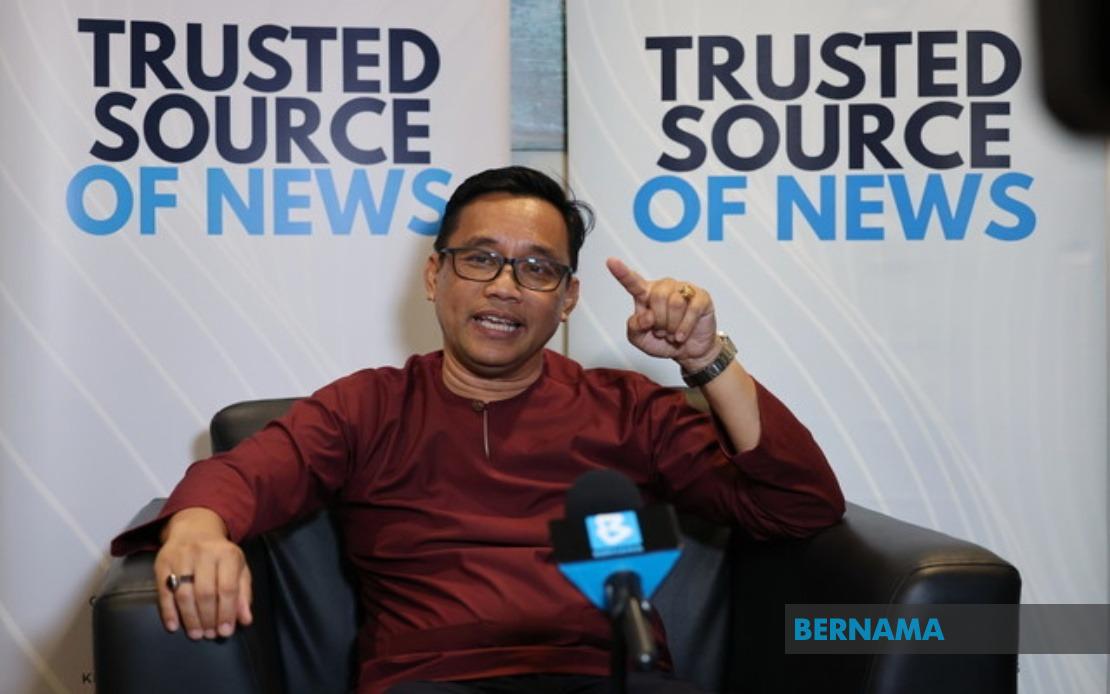
Mohd Khuzzan Abu Bakar, the Pakatan Harapan candidate for Semerah in the 16th Johor state election, is making a bid to reclaim the seat he previously held before losing in the last state election. Rather than framing his return as an attempt to overturn a defeat, the 58-year-old frames his comeback as an opportunity to resurrect development commitments that were left incomplete when PH exited the Johor state administration in 2020, signalling a strategic narrative focused on continuity and unfinished business rather than partisan redemption.
During his tenure as Johor Youth, Sports, Culture and Heritage Committee chairman, Khuzzan initiated several projects that were abandoned following the government transition. Among his key restoration priorities is the Taman Sri Sulong Youth Mini Complex, which represents both a physical infrastructure gap and a symbolic reminder of PH's previous agenda. Beyond this flagship project, he has identified two persistent community challenges requiring urgent intervention: chronic water supply disruptions affecting Semerah residents and recurring flash flooding that threatens Batu Pahat and Tanjung Laboh, issues that have persisted despite multiple election cycles and administrative changes.
Khuzzan's personal connection to the constituency provides the foundation for his campaign messaging. Born in Jalan Mesjid in Batu Pahat and married to a woman from Semerah, he leverages these local ties to establish credibility and responsibility towards the community. This biographical approach attempts to counter perceptions of political opportunism, positioning him instead as someone with genuine stakes in the region's welfare and development trajectory. His family connections serve as a counterweight to the narrative of politicians parachuting into constituencies without deep community roots.
The candidate has identified youth employment creation as another pillar of his platform, aligning with Johor's economic transition towards investment and technology-driven sectors. This emphasis reflects broader Malaysian economic pressures, particularly youth underemployment and the need for skills alignment with emerging industries. By framing job creation within the context of Johor's sectoral evolution, Khuzzan attempts to connect local concerns with regional economic realities that younger voters increasingly understand and care about.
Khuzzan's campaign strategy demonstrates significant adaptation to contemporary political engagement methods. He has embraced digital platforms including TikTok, Instagram, and Threads as primary voter communication channels, a notable shift from traditional ground-based campaigning. His observation that senior citizens now constitute a meaningful portion of his social media followers reveals how digital political engagement has transcended generational boundaries in Malaysia, fundamentally altering assumptions about campaign targeting and voter accessibility. This digital emphasis allows him to reach dispersed constituents including Johoreans working in Singapore, a demographic often underrepresented in traditional polling operations.
Beyond online presence, youth-oriented activities have been incorporated into campaign engagement, including e-sports competitions, sepak takraw tournaments, and carrom events. These initiatives serve dual purposes: they generate grassroots enthusiasm while creating visible campaign activity that translates to social media content. The campaign has additionally introduced educational components around artificial intelligence and digital technology, framing political engagement as preparation for economic futures rather than purely transactional vote-seeking. This approach appeals to younger voters increasingly concerned about skills relevance and technological adaptation.
Drawing on his background as a banking officer, Khuzzan has developed proposals for strengthening the community economy through enhanced small and medium enterprise support. His particular focus targets the effectiveness of government financing mechanisms, specifically TEKUN Nasional and Amanah Ikhtiar Malaysia, which provide crucial capital access for lower-income entrepreneurs. Rather than simply advocating for increased funding volumes, he proposes structured financial management guidance to help entrepreneurs navigate these programmes more successfully and build sustainable businesses. This reflects recognition that capital access alone proves insufficient without corresponding capacity-building and financial literacy support.
The demographic composition of Semerah presents both opportunities and challenges for Khuzzan's candidacy. With 47,431 registered voters, the constituency contains a notably youthful profile—approximately 37.4 per cent of voters fall within the 18 to 39 age bracket. This concentration of younger voters theoretically favours candidates capable of digital engagement and addressing youth employment concerns, areas Khuzzan has explicitly prioritized. However, it also indicates a constituency less likely to prioritize the institutional and developmental continuity narratives that typically anchor established politicians' campaigns.
Khuzzan has expressed confidence that the 2024 election environment differs meaningfully from the 2022 Johor state election, which occurred during the country's post-pandemic recovery period when economic concerns and health-related issues dominated voter attention. He anticipates stronger overall voter turnout this time, including participation from Johoreans working across the causeway in Singapore. This expectation reflects broader assumptions about voter mobilization patterns, though actual turnout dynamics often diverge from candidate expectations, particularly in constituencies with substantial outstate employment.
Feedback from campaign activities, particularly from B40 households and e-Kasih programme recipients, has reportedly strengthened Pakatan Harapan's confidence in reclaiming the seat. The explicit targeting of lower-income voter segments suggests a campaign strategy prioritizing immediate material concerns and government assistance programmes rather than broader ideological or institutional arguments. This approach reflects pragmatic assessment of the electoral base in constituencies with substantial proportions of economically vulnerable voters who evaluate candidates primarily through immediate policy offerings and personal attention to community needs.
The broader 16th Johor state election context encompasses 172 candidates contesting 56 seats, with polling scheduled for July 11 and early voting on July 7. In 2022, Semerah was won by Mohd Fared Mohd Khalid of BN-UMNO with a majority of 4,041 votes, establishing the baseline against which Khuzzan's comeback attempt will be measured. This relatively modest majority in a constituency with over 47,000 registered voters suggests electoral competitiveness and demonstrates that neither major coalition holds overwhelming structural advantage in the seat.
Khuzzan's candidacy illustrates the evolving nature of Malaysian electoral politics, where established politicians increasingly incorporate digital engagement, targeted youth programming, and localized economic development narratives alongside traditional ground presence and personal appeals. His campaign demonstrates how candidates attempt to bridge traditional and contemporary political engagement methods while maintaining narratives of continuity and unfinished development agendas. Whether these integrated approaches prove sufficient to overcome the incumbent advantage and recover a previously held seat will depend on multiple factors beyond campaign strategy, including broader state-level political dynamics and voter receptiveness to PH's broader governance narrative following several years outside the Johor administration.

