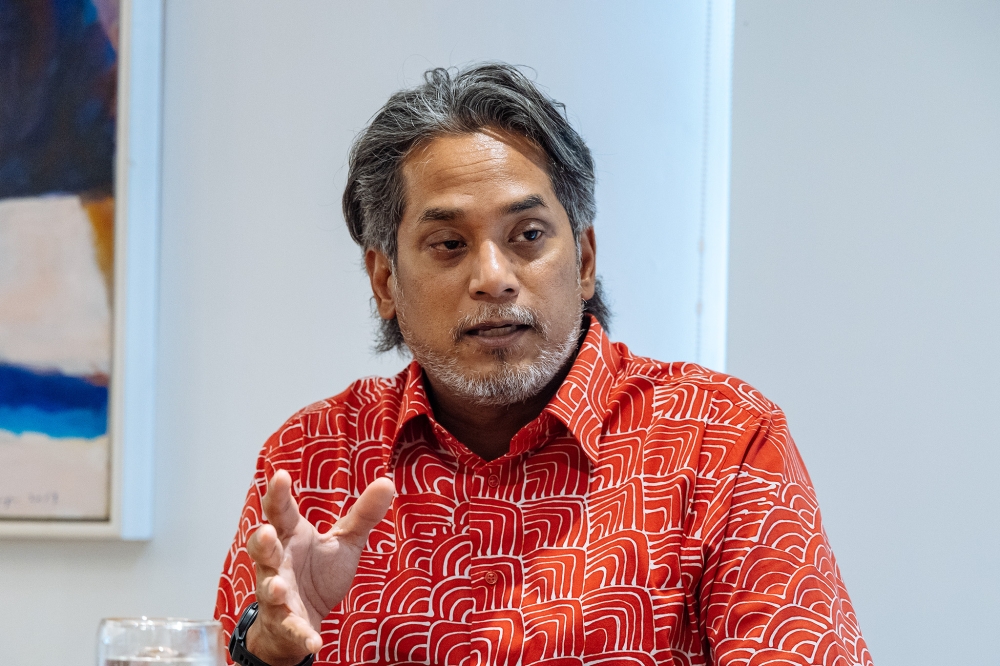
Barisan Nasional appears to be examining whether former Umno Youth chief Khairy Jamaluddin could be positioned as a state assembly candidate in Rembau, Negeri Sembilan, according to reports emerging from the state capital Seremban. The apparent recalibration of political positioning suggests the coalition is exploring fresh leadership configurations ahead of potential electoral contests and internal party transitions.
Khairy, who has maintained a considerable political profile despite stepping down from his youth wing leadership, represents a generation of Umno figures seeking renewed relevance within the party's hierarchy. His potential placement in Rembau would mark a significant shift from his previous parliamentary focus and indicate strategic thinking within Barisan Nasional regarding which personalities should contest at state level. The move signals broader discussions within the coalition about succession planning and the distribution of candidacies across multiple levels of representation.
Negeri Sembilan remains a crucial state for Barisan Nasional, and control over state legislative seats directly influences the composition of the state executive council. The Rembau constituency carries particular significance given its demographic profile and electoral history, making it a natural testing ground for candidates positioned for higher office. Should Khairy secure the seat, the pathway toward eventual consideration for the chief minister position would theoretically open, though such promotions remain contingent on party mechanics and electoral performance.
The speculation regarding Khairy's potential elevation to Menteri Besar reflects confidence within certain quarters of Barisan Nasional that he possesses the credentials and public standing necessary for such a role. As a former cabinet minister and long-time Umno heavyweight, he brings parliamentary experience and a political network extending beyond Negeri Sembilan. However, such considerations remain preliminary, and their materialisation depends on multiple factors including party consensus, electoral outcomes, and the broader political environment in the state.
Negeri Sembilan's political landscape has undergone considerable shifts in recent years, with leadership transitions and coalition adjustments reshaping the balance of power. Any significant repositioning of candidates or leadership aspirants must account for existing power structures, relationships between Umno and its Barisan Nasional partners, and considerations of demographic representation across the state's various constituencies. The potential involvement of a high-profile figure like Khairy could either accelerate or complicate such calculations depending on local party dynamics.
For Malaysian political observers, the Rembau scenario illustrates how national-level politicians frequently pivot toward state-level contests when circumstances require renewal or when opportunities for advancement arise. This pattern of movement reflects the interconnected nature of Malaysian political advancement, where success at state level increasingly determines access to federal positions. Khairy's reported consideration demonstrates that even senior figures may need to establish or re-establish credentials at the state assembly level to maintain political trajectory.
The timing of such discussions also warrants consideration. State elections in Negeri Sembilan are not imminent, suggesting these conversations represent longer-term strategic planning rather than immediate electoral preparations. Barisan Nasional's apparent willingness to consider repositioning established personalities indicates confidence in its organisational capacity and suggests that internal deliberations about future leadership are well underway. These preliminary discussions often precede formal candidacy announcements by months or years.
From a regional perspective, developments within Negeri Sembilan carry implications for Barisan Nasional's broader positioning across Malaysia. The coalition's ability to refresh its candidate roster while maintaining experienced leadership proves essential for electoral competitiveness, particularly in states where opposition parties have strengthened significantly. Khairy's potential candidacy represents one element of what is likely a comprehensive review of Barisan Nasional's state-level representation across multiple constituencies.
The question of whether Khairy would ultimately pursue the Menteri Besar position remains open and depends on multiple contingencies. Barisan Nasional's chief minister selection process involves negotiations between coalition partners, consideration of seniority within Umno, and assessment of an individual's capacity to manage state government effectively. Any Menteri Besar candidate must demonstrate not merely personal political standing but ability to work constructively with both coalition colleagues and state assemblymen from their own party.
For voters in Rembau and beyond, such high-level political repositioning reflects the competitive dynamics driving Malaysian electoral politics. The apparent consideration of Khairy signals that Barisan Nasional views the state as sufficiently important to deploy experienced national figures in state contests. Whether this translates into formal candidacy and subsequent electoral success remains contingent on decisions yet to be made and political calculations that extend beyond the immediate horizon of public announcement.

