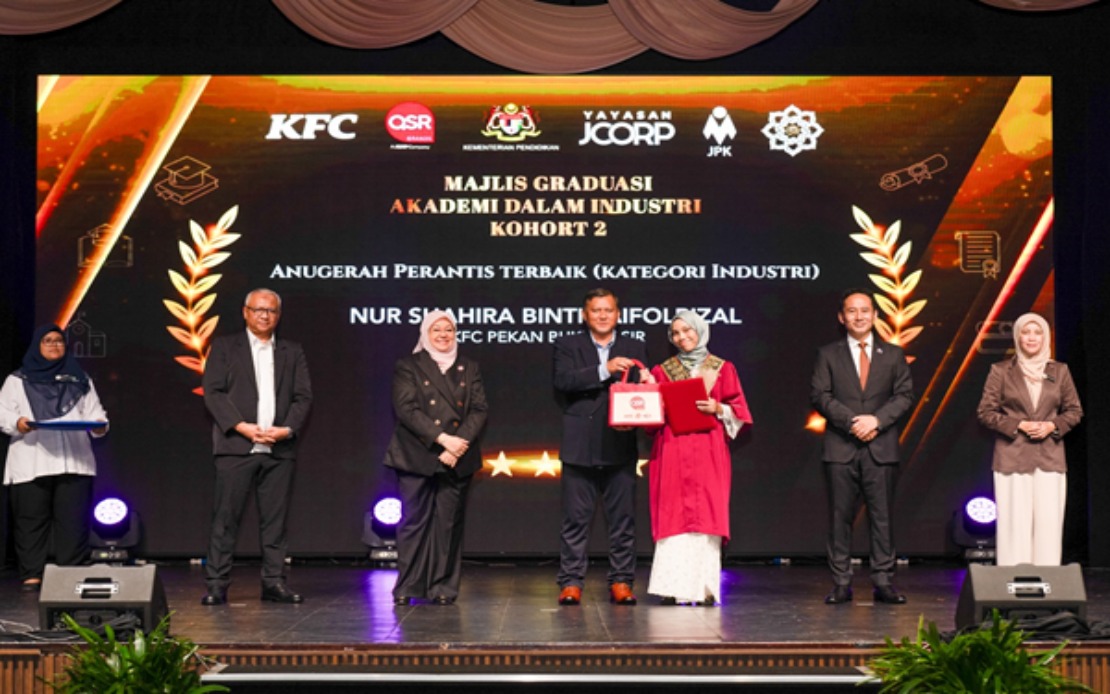
QSR Brands, operating KFC Malaysia outlets across the country, has successfully graduated another cohort of 37 skilled workers through a partnership with Yayasan JCorp, demonstrating the expanding reach of an innovative work-study model that is reshaping how Malaysia develops its frontline hospitality workforce. The achievement marks a significant expansion of the Applied Dual Intake (ADI) programme, which has now produced 60 graduates since its establishment in June 2023, establishing a compelling template for vocational training that bridges the persistent gap between classroom learning and workplace readiness.
The programme's underlying philosophy centres on a simple yet powerful principle: young Malaysians benefit most when education institutions and major employers align their efforts toward producing job-ready workers. Rather than relegating vocational training to a secondary tier of education, the ADI model positions industry experience as an equal partner to academic qualifications. Students progress through their qualifications while simultaneously working in actual KFC restaurant environments across Johor Bahru, acquiring practical competencies in food preparation, customer service, operational management, and workplace safety standards that textbooks alone cannot convey.
Zulkernai Fauzi, the Ministry of Education's technical and vocational education and training director, has endorsed the ADI approach as a benchmark for sectoral integration, arguing it represents the strategic direction Malaysia must pursue to enhance the competitiveness of its vocational education system. His perspective is particularly significant given Malaysia's ongoing challenges in talent development—many employers report difficulty finding workers with the specific skill sets their operations demand, while graduates struggle to secure positions that value their qualifications. The ADI model addresses this mismatch directly by ensuring that every qualification a student earns has been validated through real-world application.
The latest cohort's performance underscores the programme's effectiveness. Students achieved a perfect pass rate in Vocational Stream Subjects (MPAK) examinations and secured both Level 2 and Level 3 Malaysian Skills Certificates (SKM), while 95 per cent successfully completed the Sijil Pelajaran Malaysia (SPM) national examinations. These are not merely statistics; they reflect students who have simultaneously managed formal academic requirements and demanding workplace responsibilities. Each graduate receives five separate qualifications upon completion, positioning them as immediately deployable workers rather than individuals requiring additional on-the-job training before full productivity.
Rozaini Mohd Sani, chairman of Yayasan JCorp, emphasizes the programme's broader social dimension. Beyond technical skill development, the ADI initiative serves as an equaliser, opening pathways for young people regardless of socioeconomic background or prior educational track record to build confidence and secure stable employment. In a Malaysian context where class mobility remains constrained and vocational pathways are sometimes viewed as inferior alternatives, this aspect carries considerable weight. The programme demonstrates that dedicated support structures can help students from disadvantaged communities access meaningful careers in a growth sector.
Dr Sharifah Musainah Syed Alwi, QSR Brands' chief human resources officer, stresses that the programme's value extends beyond credential accumulation. The recognition of students who have trained in genuine restaurant environments and mastered industry-validated skills represents a paradigm shift in how Malaysian employers and educators should evaluate workforce readiness. This distinction matters because it elevates the status of practical competency, signalling to young Malaysians that mastery of operational realities carries weight equivalent to theoretical knowledge.
The curriculum's specificity reflects careful design. All Cohort 2 participants completed training grounded in the vocational syllabus for Fast Food Preparation and Service, ensuring that their qualifications directly correspond to actual job requirements within the quick-service restaurant sector. This alignment prevents the frequent disconnect between vocational education and employment reality, where graduates possess generic qualifications loosely related to available positions. Instead, each student has been systematically exposed to the operational, customer-facing, food-preparation, and compliance dimensions of fast-food restaurant work, preparing them to contribute immediately upon employment.
The ADI programme's strategic origin demonstrates how government coordination can facilitate private-sector participation in skills development. Launched in June 2023 through collaboration between KFC Malaysia, the Department of Skills Development under the Ministry of Human Resources, and the Ministry of Education, the initiative represents a carefully orchestrated alignment across three essential institutions. This multi-stakeholder approach contrasts with fragmented vocational systems where employers and educators operate in isolation, often producing mismatches between training and market needs.
For Malaysian policymakers and business leaders, the ADI model offers a replicable framework applicable across sectors beyond quick-service restaurants. Manufacturing, hospitality, logistics, and retail all face similar challenges sourcing adequately trained frontline workers. The success of 60 graduates suggests that when employers invest in systematic training partnerships with educational institutions, supported by clear qualification pathways and committed government coordination, the results validate the investment. The 100 per cent pass rate in SKM examinations particularly evidences this synergy.
The programme's recognition of outstanding individual achievements through awards—including Best Apprentice (Industry Category), Best Apprentice (SPM Category), and Best Apprenticeship Documentation—further reinforces the notion that vocational pathways warrant celebration equivalent to academic accomplishments. This cultural shift, though subtle, matters significantly in Malaysia's education landscape, where perceptions of vocational training have historically lagged behind perceptions of university-track education. By highlighting excellence within the apprenticeship model itself, the programme legitimizes vocational pursuits as worthy career choices.
Looking forward, the expansion from 23 inaugural graduates in the first cohort to 37 in the second demonstrates growing confidence from all stakeholders in the model's effectiveness. KFC Malaysia's continued participation, Yayasan JCorp's strategic support, and government ministry endorsement suggest this represents an expanding rather than experimental initiative. As Malaysia grapples with demographic shifts reducing the youth workforce and increasing skill demands across sectors, models like ADI that efficiently develop employment-ready workers become increasingly valuable to national competitiveness.
The programme also carries implications for regional talent flows. Southeast Asia experiences significant migration of workers to higher-wage countries, partly due to insufficient domestic employment opportunities for those with vocational qualifications. By creating clear, prestigious pathways within Malaysia's employment market, initiatives like ADI can help retain talent domestically, reducing skill losses and enabling local businesses to grow without facing acute labour shortages. The success of the first two cohorts suggests that Malaysian employers across sectors should examine similar partnership models to strengthen their workforce pipelines while contributing to national skills development objectives.

