Malaysia's Ministry of Human Resources (KESUMA) is moving to cushion the impact of global supply chain disruptions on the domestic workforce by opening access to technical and vocational training pathways. Minister Datuk Seri R. Ramanan announced the initiative in Johor Bahru on June 23, positioning TVET as a bridge for workers who have faced redundancy due to international logistics challenges that have reshaped production networks across Asia and beyond.
The policy acknowledges that three sectors face particular vulnerability: services, manufacturing, and construction. These industries form the backbone of Malaysia's employment landscape, collectively providing jobs to millions across the country. The supply chain pressures that began during the pandemic have created ongoing instability, forcing companies to restructure operations and in some cases reduce headcount. Rather than leaving displaced workers to fend for themselves, KESUMA's approach recognises that rapid reskilling can preserve employability and maintain consumer spending power during economic transitions.
Central to the initiative is integration with the Social Security Organisation's (PERKESO) MYFutureJobs platform, which represents a coordinated effort to match workers with emerging opportunities. The system operates beyond simple job listings; it incorporates assessment mechanisms to evaluate worker capabilities and identify training gaps, ensuring that placements reflect genuine skill alignment rather than superficial matching. This methodical approach aims to reduce job churn and improve retention rates, benefiting both workers seeking stability and employers seeking reliable talent.
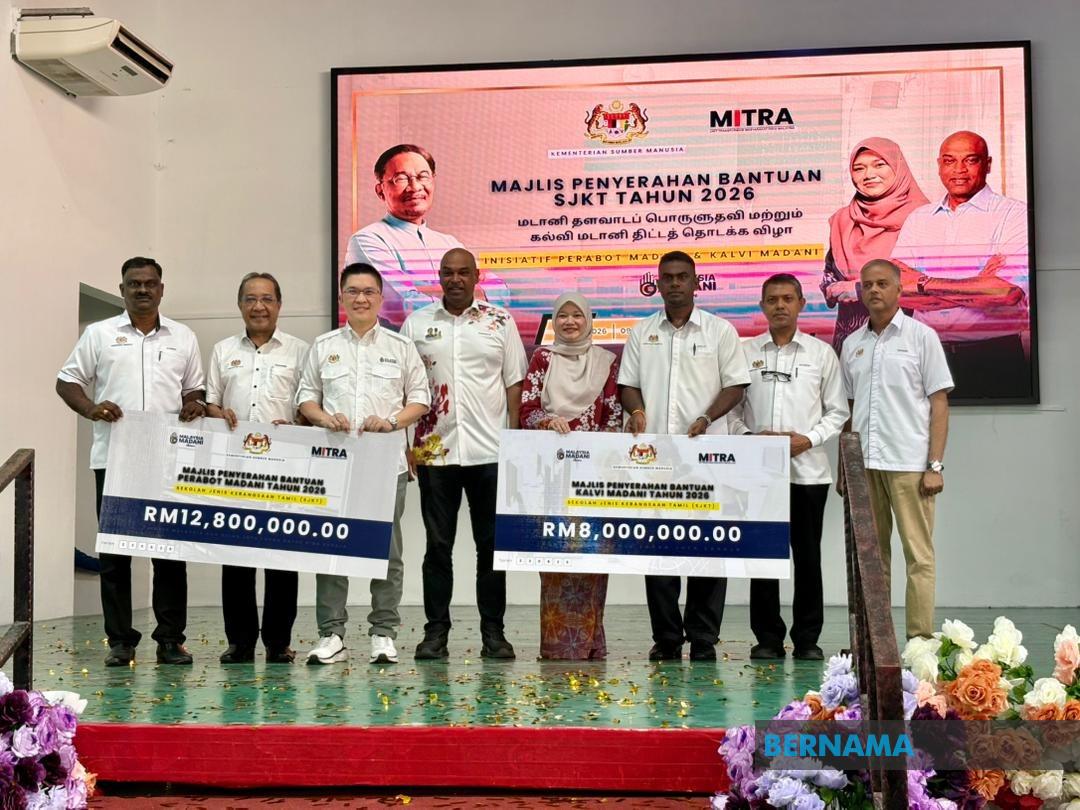
While announcing the reskilling drive, Ramanan also unveiled two initiatives specifically targeted at Tamil vernacular schools, reflecting Malaysia's commitment to inclusive development across all communities. The MADANI Furniture Initiative will distribute RM12.8 million in school furnishings and equipment across 361 government-aided Tamil vernacular schools (SJKT), directly benefiting 39,692 pupils and 5,290 teachers. This five-month rollout, spanning June through August, will supply fourteen categories of furniture and equipment including desks, seating, storage units, and cooling fans—essentials that many underfunded schools have long lacked.
The accompanying KALVI MADANI Programme commits RM8 million to educational support services targeting approximately 10,410 Indian pupils across 315 selected Tamil schools. The programme's multifaceted approach addresses barriers to learning comprehensively: free supplementary tuition removes cost obstacles to academic advancement, nutritional support recognises that hunger impedes concentration and retention, learning kits and devices bridge the digital divide that has widened since the pandemic, and teacher welfare initiatives acknowledge that educator quality directly influences student outcomes. This holistic model suggests recognition that poverty and educational disadvantage are interconnected challenges requiring simultaneous intervention across multiple fronts.
The supply chain crisis that prompted KESUMA's reskilling initiative reflects broader structural shifts in global manufacturing. Companies have diversified sourcing away from traditional hubs, shortened supply lines to reduce vulnerability, and invested in automation to decrease labour dependency. For a country like Malaysia, which has long relied on manufacturing exports and foreign investment in electronics, textiles, and petrochemicals, these trends present both threat and opportunity. The threat lies in potential job displacement; the opportunity emerges if Malaysia can position itself as a source of flexible, trainable labour capable of adapting to evolving production requirements.
Vocational and technical education has historically occupied an uncertain space in Malaysian education policy, often viewed as a fallback rather than a preferred pathway. However, global labour market trends increasingly vindicate TVET as essential infrastructure. Advanced economies struggling with skilled trades shortages now actively promote apprenticeships and technical credentials. Southeast Asian nations competing for foreign investment recognise that workforce capabilities determine whether manufacturers choose to establish or expand operations locally. By making TVET more accessible and credible through government backing, KESUMA signals that technical expertise represents genuine career progression rather than consolation.
The initiative's timing aligns with broader Malaysian economic challenges. Growth has moderated from pre-pandemic levels, unemployment remains a structural concern despite headline statistics, and income inequality continues widening. Reskilling programmes offer a policy response that avoids both the costs of income transfers and the stigma of unemployment benefits, instead positioning affected workers as agents of their own development. Success requires not only training availability but also employer engagement; companies must actively recruit from reskilling cohorts rather than maintaining traditional hiring patterns. PERKESO's platform potentially addresses this by creating visibility around graduate capabilities.
Geographically, the supply chain crisis has unevenly affected Malaysian states and communities. Major manufacturing clusters in Selangor, Johor, and Penang face particular exposure, while service economies in Kuala Lumpur and other urban centres experience different sectoral pressures. Localising reskilling support remains logistically complex; quality TVET delivery requires skilled instructors, appropriate facilities, and curricula reflecting actual labour market demands rather than dated assumptions about job requirements. Scaling these programmes equitably across peninsular and East Malaysia presents administrative challenges that will test KESUMA's implementation capacity.
The decision to couple reskilling initiatives with support for Tamil vernacular schools reflects political recognition that economic disruption affects marginalised communities disproportionately. Indian Malaysians experience elevated unemployment rates and education gaps compared to other communities; investing in both adult reskilling and foundation-level education for children creates a two-generation approach to mobility. Whether these investments translate into measurable improvements in employment and earnings outcomes will require careful monitoring, but the integrated strategy at least acknowledges interdependency between youth education and adult labour market outcomes.
For Malaysian businesses, particularly small and medium enterprises that have absorbed supply chain shocks directly, access to reskilled workers could ease operational constraints. Manufacturers struggling to find appropriate talent at reasonable cost might find reskilling programme graduates offer better value than either external recruitment or automation investment. However, adoption depends on breaking traditional hiring practices and investing time in worker integration—commitments some businesses resist even when skilled labour remains scarce.
The broader question facing KESUMA concerns sustainability and scale. One-off initiatives improve conditions for immediate beneficiaries but do not fundamentally restructure how Malaysia develops and deploys human capital. Long-term competitiveness requires treating continuous reskilling as institutional norm rather than crisis response—embedding TVET into career pathways, encouraging employer investment in worker development, and shifting cultural attitudes toward technical work. The current initiatives represent progress, but whether they catalyse deeper systemic change remains uncertain.