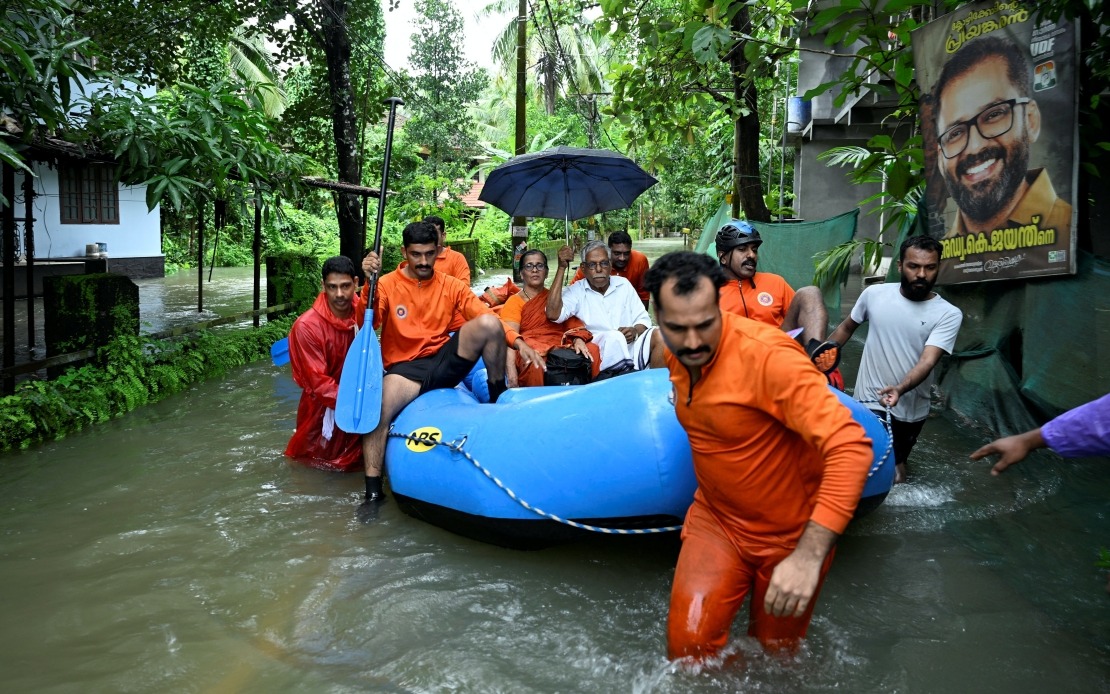
India's southern state of Kerala is battling an intensifying natural disaster as successive monsoon deluges continue to wreak havoc across the region. The death toll from rain-related incidents now stands at 26, with state officials warning that the crisis remains far from resolved. Chief Minister V D Satheesan briefed the media on Wednesday following an emergency meeting to assess the escalating situation, revealing that the toll extends beyond fatalities to encompass significant injury and missing persons, underscoring the scale of the unfolding tragedy.
The human displacement caused by these torrential conditions has reached alarming proportions. Approximately 27,048 residents have been forced from their homes as floodwaters inundate low-lying communities and infrastructure fails under the onslaught. To shelter this suddenly homeless population, authorities have mobilised 462 relief camps across Kerala's districts, transforming schools, community centres and public buildings into emergency shelters. This logistical undertaking reveals both the preparedness of state administration and the sheer magnitude of the humanitarian challenge facing officials tasked with providing food, water, sanitation and medical care to tens of thousands of vulnerable people.
Beyond the immediate human toll, the meteorological service has issued grave warnings about further deterioration. The India Meteorological Department released an orange alert on Wednesday morning, indicating substantial additional rainfall expected through August 11th. The forecast encompasses not only Kerala but extends to neighbouring coastal Karnataka and parts of Telangana, suggesting this disaster transcends state boundaries and may intensify pressures on regional response infrastructure. The persistence of monsoon activity across this extended period means relief operations cannot scale down, and recovery efforts remain suspended indefinitely.
The agricultural sector faces catastrophic losses that will reverberate through the rural economy for months. Damage surveys have documented destruction across 1,882 hectares of cultivated land, directly impacting the livelihoods of 23,537 farming families. These statistics mask deeper human stories of destroyed crops, contaminated fields rendered temporarily unproductive, and rural communities already vulnerable to climate volatility facing fresh economic hardship. For small-scale farmers in Kerala who operate on thin margins, such losses can translate into debt cycles and forced migration to urban centres.
Chief Minister Satheesan announced a comprehensive relief package designed to mitigate the financial devastation afflicting affected households. The measures include enhanced compensation mechanisms for bereaved families, reconstruction support for those who have lost homes, and property damage reimbursement schemes. Such announcements, whilst politically necessary and materially helpful, also highlight the gap between immediate relief and longer-term rehabilitation needs. Policymakers face difficult choices about sustainable recovery planning when monsoon seasons return annually to Kerala.
The geography of Kerala's northern districts appears particularly vulnerable to these weather patterns. Regions including Kozhikode and Kannur, especially their high-altitude areas, experienced the heaviest rainfall since August 1st. The topography of these zones—characterized by steep gradients and vulnerable soil composition—has created conditions favouring both flash flooding in valleys and destructive landslides on elevated terrain. Hydrological systems designed for normal monsoon flow remain overwhelmed, with floodwaters persisting in numerous low-lying zones far longer than typical seasonal patterns would suggest.
For Malaysian policymakers and disaster management officials, the Kerala situation offers sobering lessons about monsoon preparedness. While Malaysia's southwest monsoon seasons differ in timing and intensity from Kerala's southwest and northeast monsoons, the fundamental vulnerabilities—infrastructure susceptibility to extreme rainfall, inadequate drainage systems in rapidly urbanised areas, and agricultural sector fragility—resonate across Southeast Asia. The scale of displacement and the strain on relief camp infrastructure demonstrate how quickly natural disasters can overwhelm even moderately developed state systems.
The international dimensions of such disasters increasingly influence how nations prepare and respond. Climate scientists increasingly attribute the frequency and intensity of extreme monsoon events to broader atmospheric pattern changes linked to global warming. This means Kerala's current crisis should not be viewed as an isolated meteorological event but rather as a preview of recurring conditions that may become normalised across the Indian subcontinent and Southeast Asia throughout this century. Regional cooperation on disaster mitigation, climate adaptation funding, and early warning systems becomes strategically important.
Institutional coordination during the relief phase will significantly determine whether Kerala's recovery succeeds or stalls. Chief Minister Satheesan's convening of emergency meetings and public briefings suggests active state-level engagement, yet the coordination challenges between state and national governments, military relief operations, civilian NGOs, and local administration remain substantial. The 462 relief camps operating simultaneously require coordinated supply chains, volunteer management systems, and health monitoring protocols—logistical challenges that test the capacity of even experienced disaster management agencies.
The immediate priority for Kerala authorities centres on preventing secondary disasters and disease outbreaks in crowded relief camps. With floodwaters persisting and further rainfall forecast, the risk of waterborne illness, malnutrition among displaced children, and mental health consequences for traumatised populations demands urgent attention. Simultaneously, authorities must begin documenting damage systematically to support compensation claims and eventual reconstruction planning. This dual focus—immediate humanitarian response and crisis documentation—taxes resources and personnel across multiple state departments.
Longer-term considerations about Kerala's resilience infrastructure merit serious policy debate. Whether current flood management systems, drainage networks, and building codes adequately account for the new normal of more intense monsoon events remains contested among engineers and climate scientists. The state government faces pressures to upgrade infrastructure whilst simultaneously addressing immediate relief needs, a tension that often sees long-term improvements deferred. For Southeast Asian governments facing similar pressures, the Kerala experience demonstrates how climate-driven disasters increasingly demand sustained, multi-year investment in adaptation rather than episodic emergency response.

