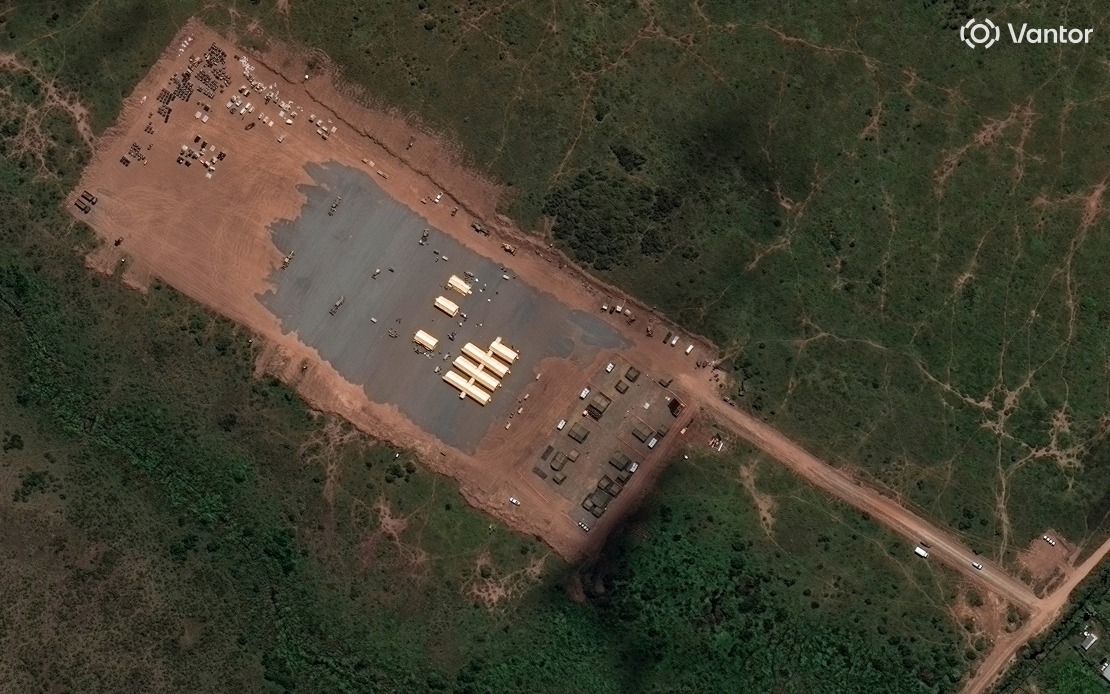
Kenya's health minister faces potential sanctions after a High Court judge found him in contempt of court on Monday for continuing construction of a US-backed Ebola quarantine facility despite explicit judicial orders to suspend the project. Judge Patricia Nyaundi delivered the ruling against Aden Duale, determining that the minister had breached court directives issued on May 28 and reconfirmed on June 2 by overseeing ongoing work at the facility located at Laikipia Air Base, approximately 8 kilometres west of Nanyuki and 200 kilometres north of Nairobi. The ruling sets up a significant legal confrontation, with Nyaundi directing Duale to appear personally in court on Tuesday to explain his actions and face potential penalties for defying judicial authority.
The 50-bed quarantine and isolation facility sits at the heart of a dispute that has consumed Kenya's public discourse for months, pitting government interests against constitutional safeguards and community concerns. According to authorities, the installation is designed to house American personnel who may have been exposed to Ebola during response operations connected to outbreaks in the Democratic Republic of the Congo and neighbouring regions. The project gained prominence following President William Ruto's confirmation that he approved the initiative following a direct request from United States President Donald Trump, characterising the arrangement as an extension of the longstanding health security partnership between the two nations. This revelation transformed the facility from a technical health matter into a geopolitical issue, sparking widespread debate about Kenya's sovereignty, foreign policy alignment, and the proper balance between international security partnerships and domestic accountability.
The constitutional rights organisation Katiba Institute petitioned the High Court to block the project, raising several fundamental concerns about its legitimacy and process. Their challenge focused on constitutional violations, inadequate public participation, transparency deficiencies, and potential public health risks that should have been addressed before construction commenced. The court sided with these arguments, issuing suspension orders that effectively halted the project pending full resolution of the underlying constitutional questions. By ignoring these directives and continuing with construction work, Duale's ministry crossed a critical threshold from policy disagreement into direct defiance of judicial authority, a development that legal observers view as a serious challenge to the court system's institutional independence.
Government officials have persistently defended the facility as essential to Kenya's regional health security posture, emphasising that the country's position as a major transport, diplomatic, and commercial hub in East Africa creates genuine Ebola vulnerability. Ministry statements argue that preparation for infectious disease outbreaks requires forward-thinking infrastructure and international cooperation, particularly given Kenya's geographic proximity to affected areas and its role coordinating regional responses. This rationale reflects a genuine tension within public health governance: the need to prepare for potential catastrophic disease outbreaks versus the obligation to respect constitutional processes and community input. However, this reasoning has failed to convince the courts or substantial portions of the Kenyan public, who view the project as an example of elite decision-making that bypasses ordinary democratic consultation.
The United States Embassy in Nairobi has weighed into the controversy by maintaining that the facility poses no danger to neighbouring communities and represents a legitimate contribution to regional disease detection and response capacity. American officials have framed the installation as part of broader efforts to strengthen East African preparedness for Ebola and similar pathogens, positioning it as a collaborative health security measure rather than a unilateral imposition. This diplomatic messaging appears designed to counter perceptions of American overreach, yet it has resonated primarily among government insiders and technical experts rather than shifting public opinion. For many Kenyans and Southeast Asian observers monitoring regional security dynamics, the US involvement has become emblematic of how powerful nations navigate health security partnerships with developing countries—a pattern with implications extending far beyond Kenya's borders.
The project has emerged as one of Kenya's most polarising public health initiatives, generating sustained legal challenges, street protests, and vociferous criticism from opposition politicians, civil society organisations, and local administrators in Laikipia County. Demonstrators have organised repeated protests opposing the facility and accusing government authorities of ignoring both grassroots concerns and explicit court instructions. These demonstrations have occasionally turned violent: police reports, witness testimonies, and human rights groups have documented at least three fatalities linked to protests associated with the facility, raising questions about the government's response tactics and suggesting that opposition to the project extends beyond elite constitutional debates into genuine community alarm.
The contempt-of-court finding represents a pivotal moment in the dispute, shifting focus from the project's merits toward fundamental questions of judicial authority and government accountability. When courts issue suspending orders during pending litigation, compliance becomes a constitutional imperative that transcends policy preferences. The minister's continued supervision of construction activities despite these orders constitutes a direct challenge to the judiciary's ability to enforce its own directives—a challenge that could undermine the court system's credibility if left unchecked. This dimension explains why the ruling has attracted attention from constitutional law specialists and governance observers across Africa and beyond, who recognise that the outcome could establish important precedents about whether executive officials can disregard judicial instructions when they believe their policy objectives justify such defiance.
For Malaysian and Southeast Asian policymakers watching these developments, the Kenyan situation offers instructive lessons about the governance challenges accompanying health security partnerships with powerful nations. As countries in the region navigate similar arrangements with international partners, the Kenya case illustrates how inadequate transparency, insufficient domestic consultation, and perceived foreign influence can transform technical projects into sources of institutional conflict and public controversy. The willingness of Kenya's government to continue construction despite court orders demonstrates the tensions that can arise when security concerns intersect with constitutional governance—a dilemma that other developing nations must anticipate when negotiating comparable arrangements.
The minister's scheduled court appearance on Tuesday will determine what sanctions the judiciary imposes for the contempt finding, with potential penalties ranging from fines to imprisonment depending on Nyaundi's assessment of the severity and deliberateness of the violation. Beyond the immediate legal consequences, the ruling signals that Kenya's courts are willing to enforce their authority against executive officials, even those involved in internationally significant projects. This judicial assertion could influence how government agencies approach future court orders, particularly those involving contested facilities or policies backed by international partners. The contempt determination also reopens questions about whether the underlying facility project can proceed given the constitutional and procedural problems that Katiba Institute raised in its original petition—issues that remain unresolved despite months of construction and legal controversy.
The broader implications of Kenya's experience extend to regional health security governance more generally. East African nations collaborating on disease surveillance and outbreak response increasingly receive technical support and infrastructure assistance from international partners including the United States, European governments, and international organisations. The Kenya case demonstrates the risks of proceeding with such partnerships without robust domestic consultation, parliamentary oversight, and transparent public communication about the projects' scope, purpose, and safeguards. For countries like Malaysia, which maintains important health security partnerships and receives technical assistance from various international sources, the Kenyan situation reinforces the importance of ensuring that such collaborations proceed through established constitutional channels and with genuine public engagement rather than through executive decision-making that circumvents ordinary democratic processes.
As the dispute continues, fundamental questions persist about how Kenya will balance its legitimate interest in regional health security with its obligations to respect constitutional processes and judicial authority. The contempt-of-court finding represents not merely a personal rebuke to the health minister but a broader institutional assertion about the limits of executive discretion and the judiciary's role in enforcing constitutional governance even when security concerns are at stake. The outcome of Tuesday's hearing and the ultimate disposition of the underlying facility project will shape Kenya's approach to similar partnerships for years ahead, potentially influencing how other African nations structure international health security collaborations.