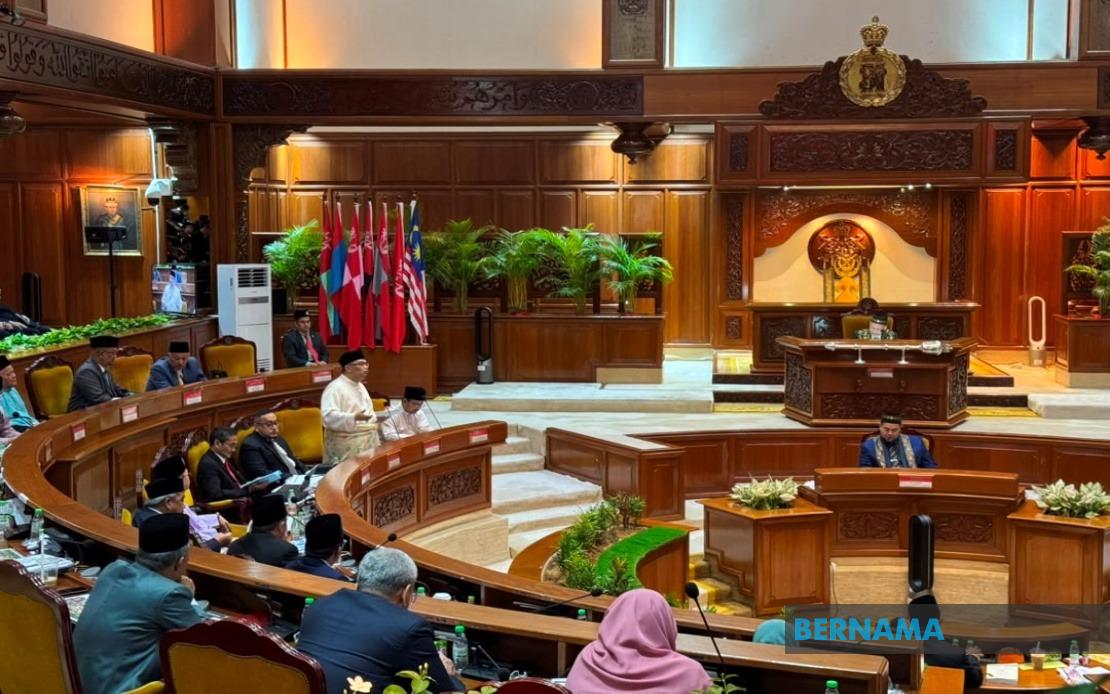
Kelantan has taken a significant step in reforming its religious criminal justice system with the unanimous passage of the Syariah Criminal Offences (Kelantan) Bill 2026 in the state assembly. The comprehensive legislation introduces a more structured and systematic approach to handling Syariah offences, incorporating three principal reform mechanisms designed to balance accountability with rehabilitation and flexibility in prosecution. This modernisation of Kelantan's religious legal framework reflects broader evolving attitudes towards Islamic law implementation across Malaysian states, particularly in how authorities balance punitive measures with restorative approaches.
At the heart of the Bill's reforms lies restorative sentencing, a mechanism that emphasises rehabilitation through community service rather than purely punitive approaches. According to Kelantan Deputy Menteri Besar Datuk Dr Mohamed Fadzli Hassan, this framework requires offenders to complete their designated community service obligations within a strictly enforced one-year timeframe. This approach represents a notable departure from conventional sentencing practices, acknowledging that certain offences can be addressed through constructive societal contributions rather than incarceration or corporal punishment alone. The introduction of such mechanisms suggests recognition that modern criminal justice increasingly values restoration alongside deterrence.
The compoundable offences provision grants the Sultan of Kelantan discretionary authority to classify which Syariah offences may be settled through compensation or out-of-court resolution. Through gazetteed orders, the sultanate will establish the specific categories of compoundable offences, the procedural requirements for compounds, and the appropriate forms for such settlements. This provision injects flexibility into the prosecution process, allowing authorities to pursue alternative dispute resolution pathways for offences deemed suitable for such treatment. For Malaysian states grappling with overcrowded religious courts and the social stigma accompanying certain convictions, such mechanisms provide valuable pressure-relief mechanisms while maintaining religious law's integrity.
Significantly heightened penalties form the Bill's third major pillar, with enhanced whipping sentences reserved for the most serious violations. These severe offences encompass attempted apostasy, parental neglect of children's religious upbringing, violation of modesty and bodily sanctity requirements, consumption of intoxicating beverages, gambling, extramarital sexual relations, and unmarried pregnancy. The prioritisation of corporal punishment for these categories reflects the religious authorities' determination to underscore the gravity of these transgressions within Islamic jurisprudence. The escalation signals a hardline stance on behavioural infractions deemed fundamental to Islamic practice and community morality, a positioning that contrasts with the flexibility embedded in the restorative and compoundable provisions.
The Bill introduces six entirely new legal provisions addressing previously undefined or inadequately specified offences. These include neglecting or abandoning obligatory prayer obligations, clarified under Clause 10; the distinct offences of guarding private body parts and protecting other body areas, specified in Clauses 15 and 16 respectively; and intellectual protection against harmful influences, codified in Clause 33. Additionally, two procedural clauses establish the compounding mechanisms for Syariah offences and delineate the relevant authorities' compounding powers. This legislative architecture reflects a comprehensive attempt to eliminate ambiguities that previously characterised enforcement, creating clearer definitions that should reduce arbitrary application.
The Bill substantially revises existing provisions from Kelantan's 2019 Syariah Criminal Code Enactment. Section 11 concerning places of worship desecration undergoes restructuring under Clause 12, now framed as disturbance of Muslim worship venues. More controversially, Section 14 addressing sodomy, previously a standalone offence, has been repealed and reconceptualised through Clauses 15 and 16 as violations of the obligation to guard private body parts and other body areas. This reformulation, while technically retaining prohibitions on same-sex conduct through alternative legal framing, represents a subtle reorientation of how the law conceptualises and prosecutes such conduct. This semantic shift raises questions about enforcement approaches and potential sentencing variations under the new framework.
The Bill's comprehensive architecture spans nine distinct parts and 62 clauses, organised systematically to address discrete categories of religious and moral offences. This structured presentation contrasts sharply with the fragmented nature of some predecessor legislation, potentially enhancing accessibility for legal practitioners, enforcement officers, and ordinary citizens seeking to understand their obligations. The accompanying schedule provisions add further specificity to procedural requirements and penalty frameworks. For Malaysian legal observers, this systematic approach demonstrates how states can modernise religious law implementation through technical refinement and conceptual reorganisation.
Kelantan's legislative initiative reflects broader regional trends in Islamic legal modernisation, particularly concerning the integration of restorative justice principles alongside traditional Islamic jurisprudential approaches. While some Southeast Asian jurisdictions have resisted such innovations, viewing them as incompatible with Islamic legal tradition, Kelantan's approach suggests that rehabilitation and flexibility need not undermine religious law's fundamental principles. This positioning may influence other Malaysian states considering similar reforms, particularly regarding how competing values of punishment, rehabilitation, and community protection can be harmonised within religious legal frameworks.
The implications extend beyond Kelantan's borders. Malaysia's federation of states with varying Islamic legal jurisdictions creates inherent inconsistencies in how Syariah offences are prosecuted and punished. Kelantan's new framework, with its emphasis on restorative mechanisms and prosecutorial discretion through compounding, may pressure other states to reconsider their comparative rigidity. However, the Bill's simultaneous escalation of penalties for serious offences suggests that enhanced flexibility should not be misinterpreted as leniency—rather, it represents targeted application of different justice modalities to different offence categories. This calibrated approach may offer a sustainable model for other Malaysian jurisdictions seeking to balance Islamic law's sacred dimensions with contemporary criminal justice philosophy emphasising proportionality and individualised sentencing. For Malaysian observers and Southeast Asian legal experts, Kelantan's legislative initiative warrants careful monitoring as potentially precedent-setting in how Islamic law adapts to twenty-first-century justice principles.

