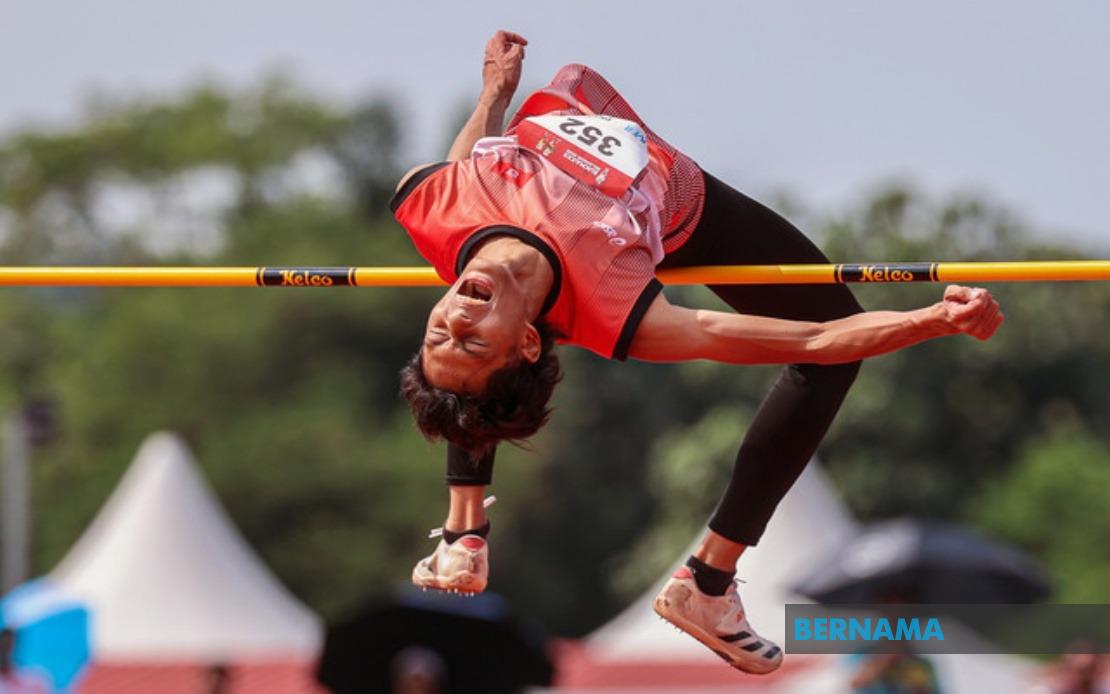
Eighteen-year-old Dzul Darwisy Adam Khairulaswari has authored a compelling comeback story at the Selangor Malaysia Games, triumphing in the men's high jump at Universiti Putra Malaysia Sports Centre and delivering Kelantan its second athletics gold medal at this edition of the biennial national championship. Clearing 2.09 metres to secure victory, the teenage prospect has transformed his trajectory in Malaysian athletics after languishing in 11th place just two years earlier at the Sarawak SUKMA Games, underscoring the rapid development possible within Malaysia's competitive sports ecosystem.
The dramatic improvement marks a significant inflection point in Dzul Darwisy's athletic career, particularly given his relative anonymity at the national stage until this breakthrough performance. His ascent from mid-field finisher to podium champion represents the kind of generational talent identification and development that sports administrators across Southeast Asia monitor closely, as emerging athletes often signal broader trends in regional athletic competitiveness. The fact that he surpassed both Kedah competitors—Muhamad Nawawi Mohamad (2.07m silver) and Muhammad Naufal Zulkifli (2.04m bronze)—suggests that Kelantan's athletic programme has managed to extract significant performance gains from their training infrastructure.
For Dzul Darwisy himself, victory at SUKMA 2026 constitutes his first triumph at the apex of Malaysia's domestic championship calendar, a milestone that eluded him through previous attempts at national competition. His previous career-best showed him managing only third place at the 2023 Malaysian School Sports Council (MSSM) Championships whilst still in Form Three, a result that might have suggested a ceiling for his capabilities at that juncture. The intervening years, however, appear to have unlocked physical development and technical refinement that have propelled him into medal contention at the highest national level.
Speaking immediately after his victory, Dzul Darwisy attributed his success to familial and community support, describing the achievement with the language of spiritual providence that resonates within Malaysian sporting culture. He emphasised that the gold medal represented not merely personal vindication but validation of collective prayer and encouragement from those surrounding him, a sentiment that reflects the integrated role of family networks within athlete development pathways across Malaysia. His candid acknowledgement that this constituted his first major championship victory—despite his age and apparent promise—underscores how competitive the pathways to national success remain even for talented young athletes.
The magnitude of his performance gains cannot be overlooked. Dzul Darwisy entered the Selangor Games with a personal best of 2.03 metres, yet managed to exceed this by six centimetres at the championship venue, a substantial improvement under competitive pressure. Remarkably, he achieved this leap whilst managing a persistent back injury throughout the tournament, a physical challenge that he navigated without allowing it to compromise his technique or mental resolve. Such resilience under adversity often distinguishes athletes capable of sustained elite-level performance from those whose achievements plateau after early success.
His aspirations extend considerably beyond this inaugural national championship victory. Dzul Darwisy has set his sights on surpassing 2.16 metres, a threshold he views as instrumental for qualifying for next year's Southeast Asian Games, Malaysia's primary international sporting showcase in the region. Clearance at that height would position him competitively against regional rivals from Thailand, Indonesia, Vietnam, and the Philippines, each of which has invested substantially in high jump development programmes. Qualification for the SEA Games would represent the next crucial validation of his trajectory and establish him as a fixture within Malaysia's international athletics representation.
Beyond the SEA Games, Dzul Darwisy has also targeted the SUKMA record held by A. Kavee Alagan of Negeri Sembilan, who set the benchmark of 2.21 metres at the 2012 SUKMA edition in Pahang. Whilst pursuing a record established fourteen years prior may appear ambitious, the progression in his personal best—from 2.03m to 2.09m within recent months—suggests that such long-term objectives are not merely aspirational rhetoric but targets rooted in tangible performance improvement. The existence of such benchmarks provides young athletes with navigational waypoints within their development journey, clarifying the performance tiers they must achieve.
The presence of former national high jump champion Lee Hup Wei, now serving as national reserve coach, at the SUKMA final carries symbolic weight within Malaysia's athletic establishment. The involvement of coaches with track records of elite achievement in oversight capacities often correlates with accelerated player development and technical refinement. The opportunity for younger athletes to compete under the observation of individuals who have themselves reached international standards creates knowledge transfer conduits that institutional training structures alone cannot replicate, pointing to the value of maintaining pathways for retired champions to contribute to athlete development.
Dzul Darwisy's emergence also contextualises broader patterns within Malaysian athletics, where individual athletes and lesser-resourced state associations occasionally produce championship-calibre performers despite competing against better-funded programmes. Kelantan's second gold medal in athletics at this SUKMA edition indicates that the state has managed effective talent identification and technical development despite operating with more constrained budgets than wealthier states. This pattern has implications for national athletics strategy, suggesting that geographic distribution of success may depend less on infrastructure investment alone than on the quality of coaching, athlete selection, and motivational frameworks.
The teenage athlete's acknowledgement that his original target had ranged between 2.13 and 2.15 metres reveals the complexity of competitive psychology in athletic performance. His actual clearance of 2.09 metres fell below these initial expectations, yet he expressed satisfaction with the outcome, suggesting either that he revised his expectations downward due to his back injury, or that he has developed mature perspective regarding competitive achievement. Such mental flexibility often distinguishes athletes capable of weathering disappointment and setback from those who interpret failures-to-meet-internal-targets as catastrophic, and it may prove as determinative of his future success as his physical capabilities.
Moving forward, Dzul Darwisy will encounter the challenge that confronts most breakthrough performers: sustaining excellence beyond initial success and navigating the elevated expectations that accompany championship victory. Malaysian sports history contains examples of SUKMA gold medallists who subsequently failed to consolidate their achievements at the SEA Games or international level, suggesting that breakthrough performances at domestic championships do not automatically translate into sustained regional competitiveness. The months ahead will clarify whether his SUKMA 2026 success represents the beginning of an extended trajectory of development or a singular peak performance.

