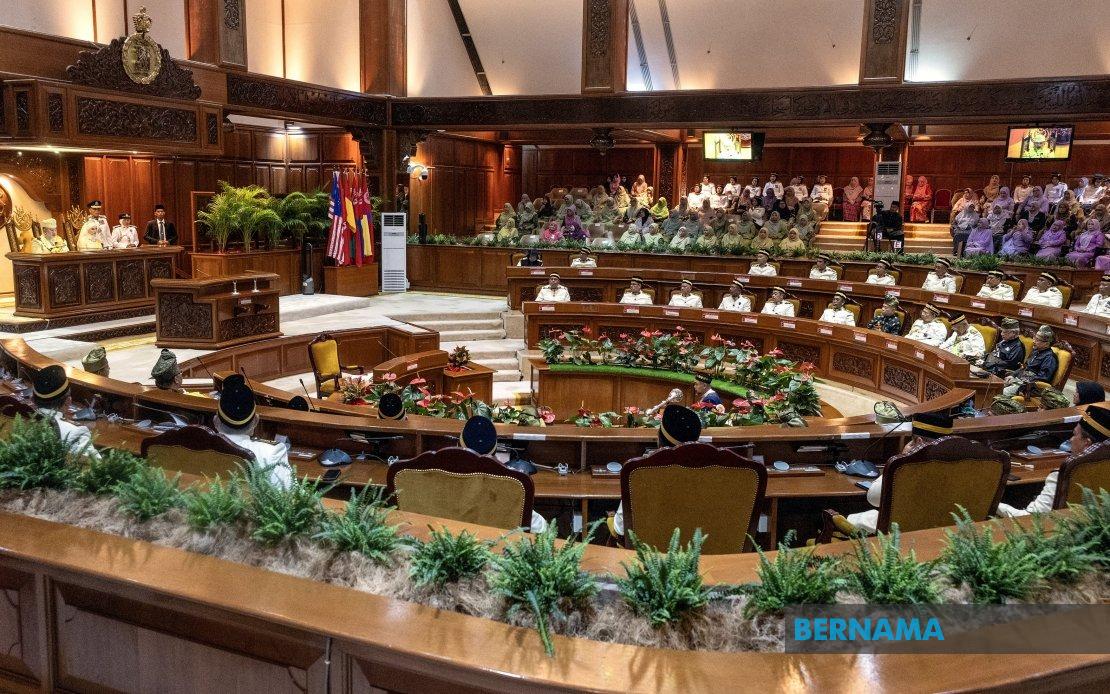
The Kelantan government is set to introduce a comprehensive rewrite of its Syariah criminal legislation, with the Syariah Offences (Kelantan) Bill 2026 scheduled for tabling at the State Legislative Assembly next Tuesday. The initiative comes in response to a significant Federal Court judgment that fundamentally reshaped the state's legislative authority in religious criminal matters, according to Kelantan Deputy Menteri Besar Datuk Dr Mohamed Fadzli Hassan.
The impetus for this legislative overhaul stems from a landmark Federal Court decision delivered on February 9, 2024, in which the court invalidated 16 of 18 provisions in the Kelantan Syariah Criminal Code (I) Enactment 2019. The 8-1 majority decision determined that the Kelantan State Legislative Assembly had overstepped its constitutional boundaries by enacting legislation on criminal matters that fall within federal Parliament's exclusive jurisdiction. The case was brought by constitutional challenge from Kelantan lawyer Nik Elin Zurina Nik Abdul Rashid and another petitioner, drawing nationwide attention to the delicate constitutional balance governing Syariah criminal law authority between state and federal governments.
Understanding the implications of this ruling required Kelantan to fundamentally reconsider how it could legitimately exercise Syariah legislative powers. The new Bill has been meticulously constructed around the constitutional doctrine of "pith and substance," a legal principle that allows states to legislate on matters if their primary purpose falls within state jurisdiction, even if such laws incidentally touch on federal domains. This theoretical framework represents the government's attempt to preserve meaningful state authority while operating within the narrower constitutional space defined by the Federal Court's interpretation.
The drafting process has been extensive and collaborative, commencing in mid-2024 following the court's judgment. Datuk Mohamed Fadzli explained that the Committee for the Amendment of the Kelantan Syariah Criminal Code (I) Enactment 2019 comprises a diverse range of expertise, including civil and Syariah legal practitioners, academics specialising in constitutional law, and serving Syariah judicial officers. This multidisciplinary approach reflects the complexity of reconciling Syariah criminal offences with federal constitutional constraints, a challenge that no other Malaysian state has confronted with such intensity.
The proposed legislation comprises nine distinct parts, 62 clauses, and one schedule, suggesting a relatively comprehensive criminal code despite the narrowed legislative scope. Rather than simply reproducing the nullified provisions, the Bill incorporates several new and reformative elements designed to strengthen Kelantan's legitimate exercise of Syariah criminal authority. The emphasis throughout has been placed on religious obligations that the state can legitimately enforce, distinguishing between offences that primarily concern individual religious observance and those with broader criminal dimensions that might properly fall to federal authority.
A critical validation step involved submission of the draft Bill to the Kelantan Council of Ulama under the Kelantan Islamic Religious and Malay Customs Council (MAIK) for scholarly religious review. This consultation process underscores that the legislation must satisfy not only constitutional requirements but also meet Islamic jurisprudential standards. The involvement of religious scholars reflects a recognition that Syariah criminal law operates within both a constitutional legal framework and a theological and Islamic jurisprudential context.
For Malaysian constitutional scholars and policymakers beyond Kelantan, this Bill represents an important test case of how states can adapt their Syariah legislation within the boundaries set by the Federal Court's February 2024 judgment. The decision itself had sparked substantial national debate about federalism and religious authority, with questions raised across multiple states about the scope of their own Syariah legislative powers. Kelantan's response, through this carefully constructed Bill, will likely influence how other states reassess their own Syariah criminal legislation.
The Federal Court's majority reasoning that state legislatures lack authority to enact laws on offences already within Parliament's jurisdiction created a significant practical problem for Kelantan, which had built its Syariah criminal framework around the 2019 enactment now substantially invalidated. The new Bill essentially represents Kelantan's attempt to salvage a coherent Syariah criminal justice system by identifying which offences can legitimately be classified as matters of religious obligation rather than general criminal law, a distinction that requires careful legal and theological analysis.
Datak Mohamed Fadzli has called for unanimous support from all State Assembly members for the Bill, suggesting the government views this legislation as transcending partisan political divisions and representing a matter of constitutional principle and religious governance. The broad-based drafting process and religious consultation also indicate an effort to build consensus across multiple stakeholder communities rather than present a narrowly partisan legislative proposal.
The implications of this Bill extend beyond Kelantan's borders. Other states with Syariah criminal enactments may face similar challenges to the validity of their legislation under the Federal Court's February 2024 precedent. How successfully Kelantan's revised framework withstands potential legal challenge will provide guidance to other state legislatures contemplating their own Syariah criminal law reforms. The Bill therefore carries significance for the broader Malaysian federal system and the ongoing clarification of which criminal matters legitimately fall within state versus federal legislative domains.

