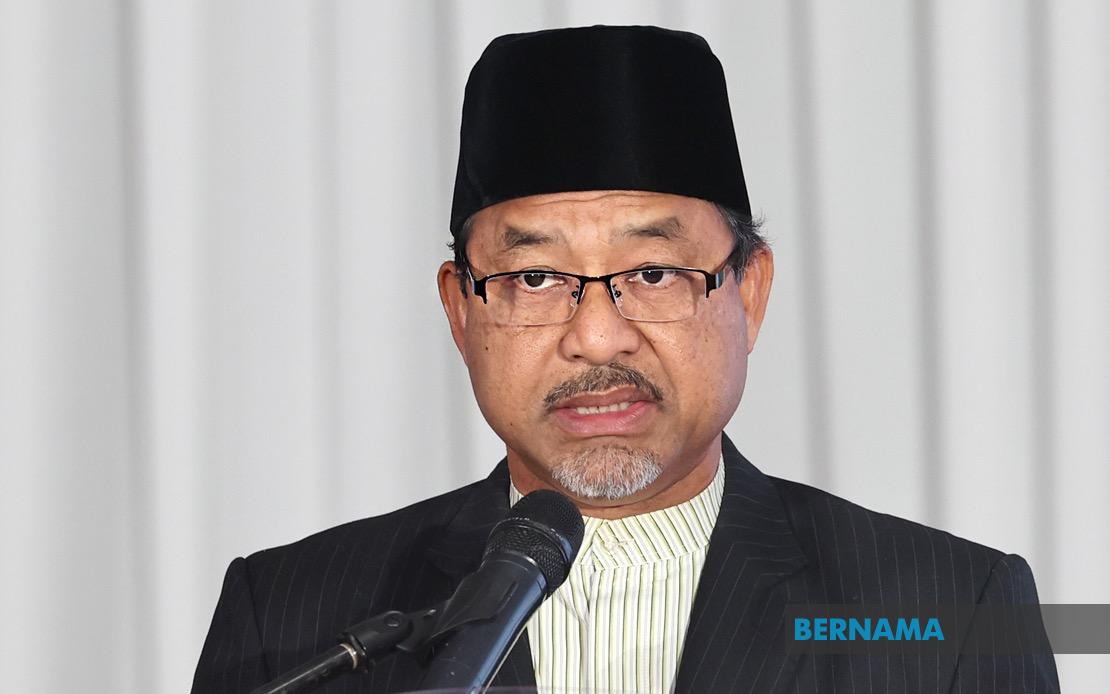
Kelantan has demonstrated sustained commitment to forest preservation, maintaining 778,708.34 hectares of forested terrain that accounts for 51.79 per cent of the state's total area. This achievement places the northeastern state ahead of the national benchmark established under the Peninsular Malaysia Forestry Policy, which mandates that at least half of the country's land mass remain under forest and tree cover. Menteri Besar Datuk Mohd Nassuruddin Daud highlighted the figure during a state legislative assembly session, framing the outcome as evidence of the government's dedication to environmental stewardship aligned with federal forestry objectives.
The state's approach to forest management extends beyond mere preservation of existing cover. Kelantan's administration has implemented a multi-faceted strategy that includes identifying government-held land suitable for gazetting as Permanent Reserved Forests, a designation that provides long-term legal protection. This systematic identification process reflects a proactive stance toward expanding protected status and securing forest areas against unauthorised conversion or degradation. Additionally, the state has proceeded with gazetting protected forests according to forest function classifications outlined in the National Forestry Enactment framework, ensuring that forest management aligns with nationally standardised criteria and oversight mechanisms.
Critical to Kelantan's conservation framework is the active engagement in forest restoration and tree-planting initiatives through participation in the Greening Malaysia campaign. Rather than relying solely on existing forest stocks, the state recognises the necessity of replenishing and expanding canopy cover through deliberate afforestation efforts. This proactive stance acknowledges that maintaining the 51.79 per cent figure requires continuous investment in ecological renewal, particularly in regions where historical land-use changes may have degraded forest quality or reduced biodiversity. The Greening Malaysia campaign provides both a structured platform and additional resources to support these landscape-level interventions.
A defining characteristic of Kelantan's strategy is the deliberate pursuit of balance between conservation objectives and economic development aspirations. The state government has articulated a commitment to sustainable development that addresses immediate economic needs while preserving the capacity of future generations to benefit from forest resources and ecosystem services. This balanced approach reflects recognition that rural communities in Kelantan depend on resource utilisation, and overly restrictive conservation policies risk generating local resistance or illegal resource extraction. By explicitly framing forest protection as compatible with measured economic activity, the state seeks to build broader stakeholder buy-in for long-term conservation commitments.
Technological advancement has become integral to Kelantan's forest monitoring and enforcement infrastructure. The state has invested in systems capable of detecting changes in forest area and identifying potential encroachment at early stages, enabling rapid response before violations become entrenched or more damaging. These technological capabilities—likely including satellite-based monitoring, geospatial analysis, and digital record-keeping—represent a significant upgrade in enforcement capacity compared to traditional ground-based approaches alone. Early detection capacity translates into more effective resource allocation for enforcement personnel and higher success rates in preventing permanent forest loss.
The verification process employed by Kelantan authorities demonstrates a commitment to accuracy and due process before enforcement action proceeds. When technological systems flag potential changes or encroachment, the state conducts field patrols and ground inspections to confirm findings before taking formal action. This methodology reduces the risk of false positives that could undermine public confidence in the enforcement system and protects legitimate stakeholders from unwarranted intervention. The deliberate approach also strengthens the evidential foundation for any legal action, making enforcement outcomes more defensible and enforceable through formal channels.
For Malaysia broadly, Kelantan's performance carries significance beyond the state level. As a jurisdiction that has surpassed the national forest cover target despite competing pressures for land conversion and resource extraction, Kelantan provides a model for other states seeking to achieve or maintain the 50 per cent benchmark. The combination of legal protection mechanisms, active restoration, technological monitoring, and stakeholder engagement offers a replicable framework that other administrations might adapt to local circumstances. The state's demonstrated ability to balance conservation with development also counters arguments that high forest cover necessarily constrains economic progress.
The broader context of the National Forestry Enactment framework, particularly the 2025 amendment referenced by the Menteri Besar, suggests an evolving legal landscape for forest management across Malaysia. These amendments likely reflect lessons learned from implementation of earlier forestry regulations and represent efforts to strengthen consistency and effectiveness of forest protection mechanisms across jurisdictions. Kelantan's alignment with these updated enactments positions the state as an implementer of best practices in a modernised forestry governance structure. The explicit reference to amendment details underscores how current forest management operations function within a continuously updated regulatory environment that aims to tighten protection while maintaining administrative clarity.
For regional audiences, Kelantan's forest conservation achievements merit attention amid broader Southeast Asian deforestation trends. The region has experienced significant forest loss over recent decades, driven by agricultural expansion, plantation conversion, and timber extraction. In this context, a Malaysian state actively maintaining and seeking to improve forest cover represents a countervailing narrative of commitment to ecological preservation. However, the state's approach also illustrates that such commitment requires sustained institutional investment, technological capacity, and political will—elements not uniformly present across all Southeast Asian jurisdictions.
The implications for Malaysian environmental policy extend to questions about how forest conservation can be mainstreamed across different state administrations and economic sectors. Kelantan's success suggests that clear numerical targets, supported by robust legal frameworks and enforcement mechanisms, can drive measurable outcomes. The emphasis on technological solutions also reflects global trends toward leveraging digital tools for environmental management, an approach increasingly relevant as climate change imperatives intensify pressure for more effective forest protection. The state's willingness to invest in monitoring and restoration infrastructure indicates recognition that forest conservation is not a static achievement but an ongoing management commitment demanding continuous resource allocation and adaptive strategies.

