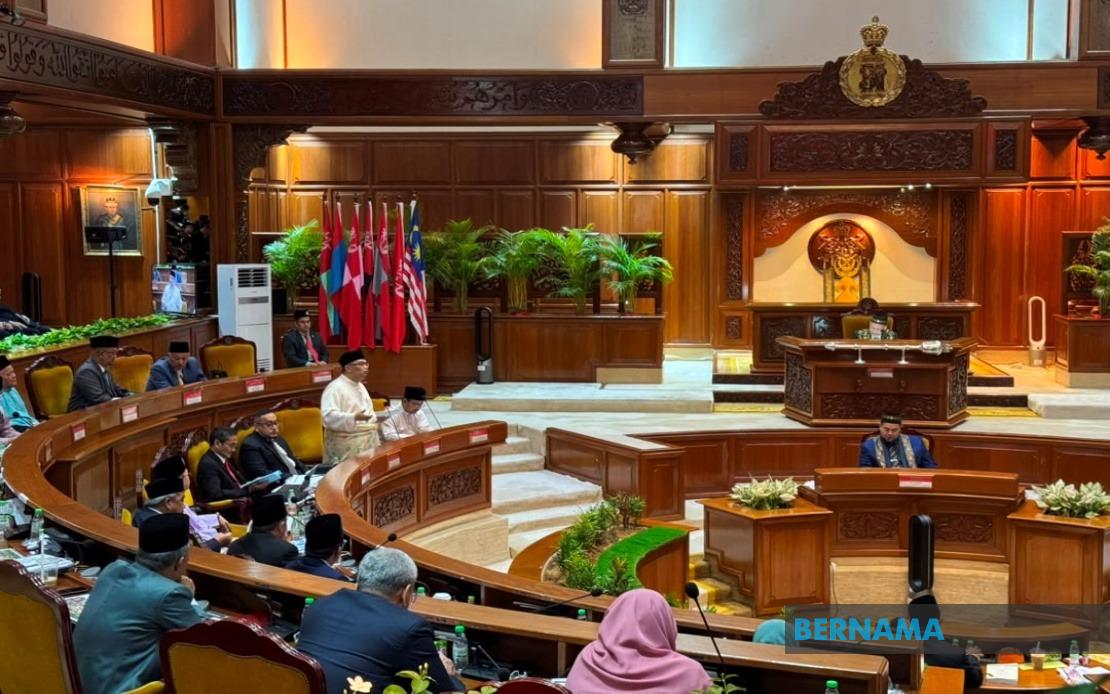
The Kelantan state legislative assembly has unanimously endorsed the Syariah Criminal Offences (Kelantan) Bill 2026, a significantly revamped legal framework intended to solidify and clarify Islamic criminal law provisions within the state. The passage of this legislation marks an attempt to navigate the constitutional complexities that emerged following a landmark Federal Court decision that struck down much of Kelantan's previous Syariah criminal framework less than two years earlier.
Deputy Menteri Besar Datuk Dr Mohamed Fadzli Hassan introduced the Bill to the assembly, with substantive debate contributed by six state representatives from the constituencies of Pasir Tumboh, Melor, Galas, Jelawat, Kota Lama and Chempaka. Following comprehensive discussion, both Dr Mohamed Fadzli and Menteri Besar Datuk Mohd Nassuruddin Daud delivered closing remarks before the legislative body advanced the measure through its second and third readings, ultimately securing unanimous approval under the gavel of Speaker Datuk Mohd Amar Nik Abdullah.
The newly enacted statute comprises nine distinct sections, sixty-two separate clauses and an appended schedule, introducing structural reforms across multiple domains of Islamic criminal jurisprudence. Among the substantive modifications are provisions reinforcing the mandatory performance of obligatory prayers, enhanced safeguards for personal bodily integrity and organ protection, mechanisms for intellectual preservation, revised approaches to restorative and corrective punishment frameworks, and a prioritisation of whipping as a disciplinary sanction alongside reformed financial penalty procedures. This recalibrated approach represents a deliberate legislative strategy to address the judicial pronouncements that had undermined the state's previous statutory authority.
Menteri Besar Mohd Nassuruddin emphasised that the Bill's development had undergone meticulous preparation across multiple stages before reaching the assembly floor. He characterised the legislation not as an entirely novel framework but rather as an enhancement of existing legal principles already embedded within the Kelantan Syariah Criminal Code (I) Enactment 2019. This framing suggests an attempt to maintain continuity with the state's Islamic legal tradition whilst accommodating federal constitutional constraints that had previously constrained legislative scope.
The context for this legislative revision originated in February 2024, when Malaysia's Federal Court delivered a decisive 8-1 majority judgment that invalidated sixteen of eighteen provisions contained within the 2019 Enactment. The court's reasoning pivoted on a constitutional interpretation question: whether state legislatures possessed jurisdictional authority to enact criminal offences legislation in matters falling ostensibly under federal purview. A legal practitioner from Kelantan had initiated the petition that precipitated this constitutional examination, igniting substantial discourse regarding the appropriate demarcation between state and federal powers in formulating Syariah criminal statutes.
This Federal Court judgment created genuine uncertainty about the scope of state authority in Islamic criminal matters, particularly concerning offences that transcended purely personal religious conduct. The decision functionally constrained Kelantan's legislative reach and prompted questions across Malaysia's other Islamic-administered states regarding the constitutional limits of their own Syariah criminal legislative powers. The Federal Court's reasoning, grounded in constitutional federalism principles rather than substantive Islamic jurisprudential objections, proved particularly contentious among state governments advocating for greater religious autonomy.
Kelantan's response through the 2026 Bill represents an effort to reconstruct its legislative authority whilst respecting the Federal Court's constitutional hierarchy. By fundamentally recasting and systematising the provisions, state legislators apparently sought to create a revised framework that addresses the specific constitutional objections raised by the federal judiciary. The emphasis on clarity, systematic organisation and authoritative language throughout the legislative process suggests a deliberate attempt to demonstrate that the new provisions fall within permissible state jurisdictional boundaries.
The unanimous passage signals remarkable consensus among Kelantan's state representatives, transcending typical partisan divisions. This unanimity may reflect genuine agreement on strengthening Islamic criminal law administration within the state, or conversely, a pragmatic acceptance that federal constitutional constraints necessitate legislative pragmatism rather than continued litigation over jurisdictional boundaries. Either interpretation carries implications for how other Malaysian states approach their own Syariah legal frameworks.
From a broader Malaysian constitutional perspective, this legislative episode illuminates the ongoing tension between state religious autonomy and federal legislative supremacy enshrined within the Federal Constitution. The Federal Court's judgment established that ostensibly Islamic criminal matters cannot automatically escape federal oversight merely because they involve religious dimensions. This principle carries significant implications for how Malaysia's thirteen states interpret their responsibilities toward Islamic administration and legal development.
The Bill's structured approach—emphasising obligatory religious observance, personal bodily sanctity, intellectual protection and rehabilitative punishment—reflects contemporary jurisprudential considerations within Islamic criminal theory. However, these substantive philosophical elements exist within the constrained federal-state constitutional framework that the 2024 Federal Court judgment established. Kelantan's legislators must therefore balance aspirations toward comprehensive Islamic criminal law with the constitutional reality of federal paramountcy.
For Malaysian legal observers and religious affairs administrators nationwide, Kelantan's revised legislation offers a practical test case demonstrating how state governments can exercise residual Syariah criminal authority whilst respecting federal constitutional limits. The bill's reception and eventual implementation may provide instructive lessons for other states contemplating their own Syariah legislative enhancement projects. Furthermore, the specific provisions chosen—ranging from prayer obligations to bodily integrity safeguards—reveal state-level priorities regarding which Islamic criminal matters demand statutory reinforcement following the Federal Court's invalidation of broader provisions.
The passage of this legislation does not definitively resolve the federal-state Syariah criminal law question, as future legal challenges could test whether the reconstituted framework successfully navigates the constitutional objections that defeated its predecessor. Nonetheless, it represents Kelantan's determination to maintain substantive Islamic criminal law administration within whatever jurisdictional space the Federal Constitution permits. The consensus shown by the state assembly suggests confidence that the revised approach achieves this constitutional balance, though ultimate validation rests with Malaysia's higher judiciary should further litigation ensue.

