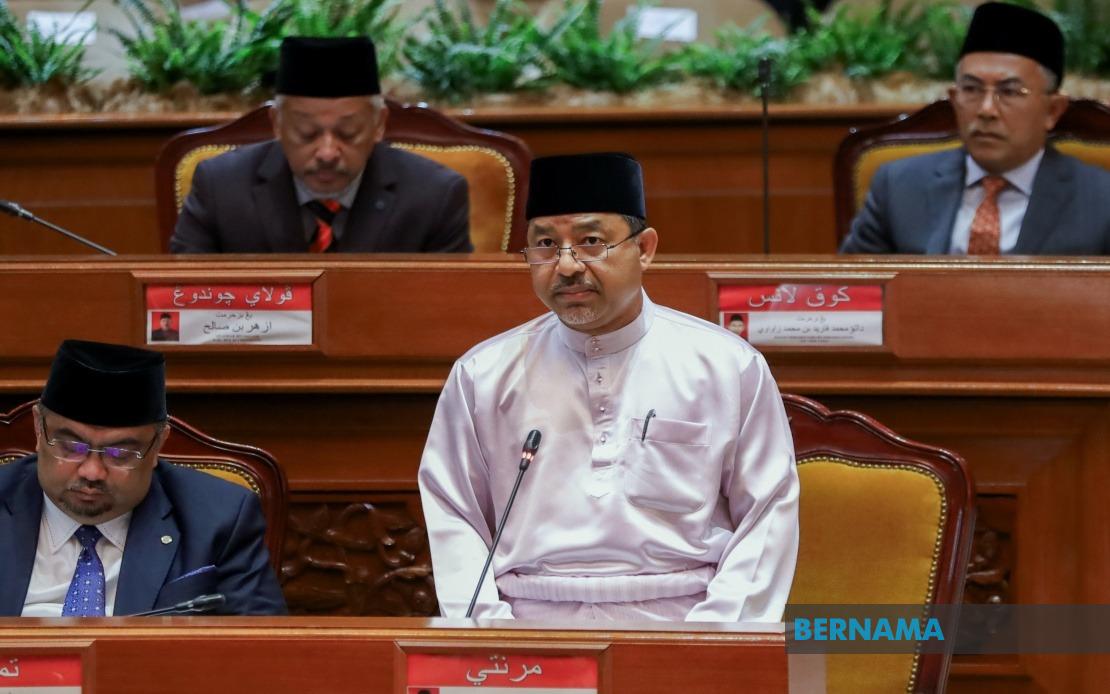
Kelantan's position as the custodian of Malaysia's most extensive Malay reserve land holdings has been reaffirmed, with official land administration records indicating that the state manages 526,083 hectares designated under Malay reservations status. This substantial land bank, which encompasses 816,020 individual ownership titles, translates to 91.5 per cent of Kelantan's entire land portfolio according to figures confirmed by Menteri Besar Datuk Mohd Nassuruddin Daud during a recent State Legislative Assembly sitting.
The remaining 8.4 per cent of Kelantan's land—totalling 48,344 hectares across 43,255 separate titles—falls outside the Malay reserve classification. These combined holdings represent a total land inventory of 574,427 hectares, figures that have been verified through comprehensive land administration audits completed as of June 2026. The overwhelming preponderance of Malay reserve designation underscores Kelantan's distinctive demographic and constitutional character within Peninsular Malaysia, distinguishing it notably from other states in the federation.
Among Kelantan's eleven administrative districts, the distribution of Malay reserve land reveals significant territorial variations. Gua Musang, the state's largest district by area, commands the greatest concentration of reserved land holdings at 122,735 hectares. This is followed sequentially by Pasir Mas with 56,656 hectares and Tanah Merah registering 56,246 hectares, while Kuala Krai completes the top tier with 53,473 hectares. When assessed through a percentage lens rather than absolute area, Tanah Merah emerges as the most intensively reserved district, with 99.9 per cent of its land falling under Malay reserve provisions. Districts including Tumpat, Pasir Puteh, Bachok, Pasir Mas, Kota Bharu, and Jeli similarly maintain exceptionally high proportions of reserved land, reflecting the state's historical commitment to preserving Malay landholdings.
The preservation of Kelantan's Malay reserve land inventory has been unwavering, with no documented reductions occurring in the protected land category. This steadfastness contrasts with the regulatory flexibility embedded within the legal framework governing these reserves. Section 13A of the Kelantan Malay Reservations Enactment permits controlled exceptions, specifically authorising non-Malay acquisition of land parcels within designated Malay reserve areas under prescribed circumstances. Rather than representing an erosion of protective mechanisms, this provision functions as a calibrated instrument enabling limited market transactions while preserving systemic safeguards.
Crucially, the legislative architecture vests state authorities with supervisory powers extending beyond mere record-keeping. The same section grants the Kelantan government discretionary authority to regulate and potentially proscribe transactions occurring within Malay reserve territories whenever such dealings pose risks to the institutional integrity or collective interests of the reservation system itself. This regulatory capacity ensures that while market mechanisms may operate within defined parameters, the state retains the prerogative to intervene protective measures when commercial activity threatens the foundational objectives of Malay land reserves.
The Malay reservation system itself derives constitutional legitimacy from Article 153 of the Federal Constitution, which mandates federal and state governments to protect Malay-Muslim interests including land rights. Kelantan's administration of this constitutional responsibility has created one of Southeast Asia's most comprehensive land tenure frameworks designed specifically to preserve community landholdings. The scale of Kelantan's reserve holdings—involving nearly 816,000 individual proprietors—demonstrates the system's extensive popular participation and its role in sustaining rural and agricultural livelihoods across diverse communities.
For Malaysian policymakers and regional observers, Kelantan's land tenure profile illustrates both the enduring relevance of constitutionally-protected land categories and the administrative sophistication required to manage them at scale. The state has successfully maintained its reserve land inventory without resorting to either rigid prohibitions that would prevent beneficial economic transactions or deregulation that might undermine collective protection objectives. This balance becomes increasingly significant as Kelantan pursues development initiatives while preserving ancestral land rights.
The implications extend beyond Kelantan's borders. Other states managing Malay reserves, whether in Peninsular Malaysia or elsewhere, may reference Kelantan's record-keeping methodologies and regulatory approaches as benchmarks for effective land administration. The precision evident in Kelantan's district-level accounting and the state's capacity to maintain comprehensive title records across hundreds of thousands of holdings suggest institutional maturity in land governance that warrants consideration within broader Malaysian administrative circles.
Moving forward, Kelantan's stewardship of the nation's largest Malay reserve land portfolio positions it as a custodian of constitutionally-protected interests whilst simultaneously requiring navigation of modernisation pressures. The state must balance heritage preservation with economic development aspirations, a challenge that becomes more acute as urbanisation and agricultural transformation reshape rural Peninsular Malaysia. The regulatory mechanisms already embedded in Kelantan's legislative framework provide flexibility for managed accommodation of these competing pressures whilst maintaining foundational protective commitments.

