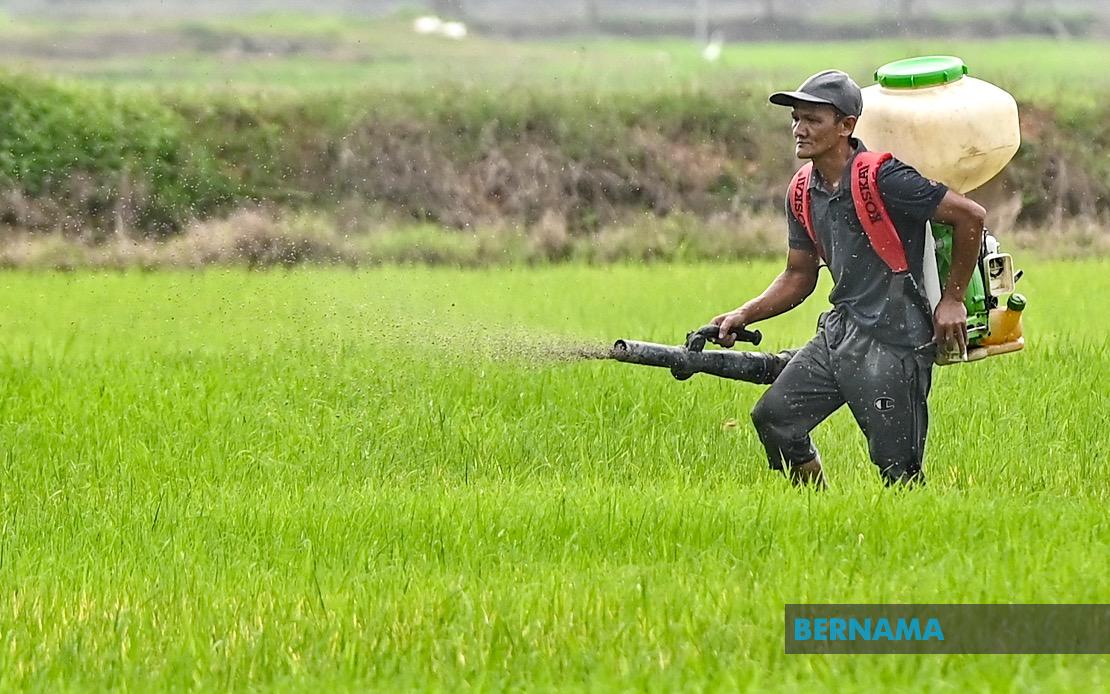
Kelantan's government is channelling RM3.64 million into agricultural development this year, targeting ten integrated projects designed to revitalise the state's farming sector and strengthen food production capacity. The allocation, unveiled during the State Legislative Assembly sitting in Kota Bharu, reflects the state's commitment to modernising rural enterprise and ensuring sustainable food security across the region.
The investment spans multiple subsectors including the utilisation of previously idle agricultural land, paddy farming, commodity crop expansion, and vegetable and fruit cultivation. Crucially, the programme also emphasises entrepreneurship development, recognising that infrastructure alone cannot succeed without skilled farmers and agribusiness operators. Datuk Tuan Mohd Saripudin Tuan Ismail, chairman of the State Agriculture, Agro-Food Industry and Commodity Committee, outlined the comprehensive approach during the assembly sitting, highlighting how each component interconnects to build resilience across the agricultural value chain.
Commercial-scale production receives particular focus through the Kelantan State Agriculture Development Corporation (PKPNK), which operates Rong Chenok Agro Valley as a modern farming hub. The facility demonstrates how Kelantan is embracing technology-intensive methods, with operational projects in chilli fertigation systems, honeydew melon cultivation, and hydroponic vegetable production. These initiatives move beyond subsistence farming, positioning Kelantan to compete in higher-value markets where premium pricing rewards technological sophistication and consistent quality. The shift towards commercial viability helps smallholder farmers escape poverty cycles and attract younger generations back to agriculture.
Livestock development has emerged as a growth pillar, with more than 380 registered breeders across the state now participating in government-supported programmes. The sector encompasses diverse livestock types—cattle, goats, sheep, deer, buffalo, and quail—allowing farmers to diversify income and manage risk across different animal products and market cycles. Beyond breeding stock provision, the state government supplies essential support equipment, reducing barriers to entry that historically excluded smallholders from commercial livestock operations. This targeted infrastructure investment multiplies the effectiveness of direct subsidies.
The fisheries and aquaculture sectors demonstrate particularly impressive momentum. Kelantan channelled RM382,094 specifically to support 122 fish and prawn breeders, reflecting the state's recognition that aquatic protein production offers scalability and export potential. Current aquaculture output reached 7,901.74 tonnes valued at RM76.2 million in 2025, with authorities setting an ambitious 8,000-tonne target for the current year. These production volumes position Kelantan as a significant contributor to national food security, especially given Malaysia's import dependency for protein sources.
Breeding infrastructure expansion underpins this growth trajectory. The state has constructed more than 130 artificial hatcheries, dramatically reducing reliance on wild-caught fry and enabling controlled, year-round breeding cycles. Release of 1.26 million fish and prawn fry into public waters supports both commercial aquaculture and community fishing livelihoods, demonstrating how state investment benefits multiple stakeholder groups simultaneously. The PKPNK's own hatchery capacity—producing up to one million catfish fry and 500,000 tilapia fry annually—provides breeders with reliable, disease-screened fingerlings, a critical factor in reducing production losses.
White prawn production at Pantai Geting in Tumpat represents a specialist high-value enterprise, generating approximately 400,000 kilogrammes annually. This niche product attracts premium prices in both domestic and export markets, creating pathways for farmers to increase returns from limited land. The focus on such specialised aquaculture products reflects strategic thinking about value addition and market differentiation in an increasingly competitive regional landscape.
Downstream infrastructure proves equally vital to production capacity. The Kota Bharu Rural Transformation Centre (RTC) functions as a crucial marketing and distribution nexus, serving agro-food entrepreneurs with business space and market access. The facility has accommodated approximately 800 entrepreneurs since inception, generating cumulative sales exceeding RM4.16 billion between 2012 and 2025. These figures underscore how aggregation infrastructure—connecting producers directly to retailers and consumers—dramatically enhances profitability and market reach. By 2025, state-provided marketing infrastructure had benefited 1,560 entrepreneurs across 74 facilities and 99 separate outlets, creating an ecosystem where even small-scale farmers can achieve commercial viability.
The programme's emphasis on entrepreneur development addresses a fundamental constraint in Malaysian agriculture: the gap between production capacity and business management skills. Many farmers excel at cultivation but lack experience in costing, pricing, marketing, and financial management. By coupling production support with business training and market access, Kelantan's approach tackles both supply and demand sides of agricultural development. This integrated model increases the likelihood that investments in infrastructure and equipment translate into sustained income growth.
For the broader Southeast Asian context, Kelantan's investment strategy offers lessons in agricultural modernisation. The state demonstrates how developing economies can leverage technology—hydroponics, fertigation, hatchery systems—alongside traditional farming to increase productivity and climate resilience. The diversification across crops, livestock, and aquaculture reduces vulnerability to single-sector commodity price shocks, a persistent challenge across the region. By emphasizing value addition and downstream marketing infrastructure, Kelantan moves beyond commodity production toward higher-margin agribusiness, the trajectory necessary for rural income growth.
The allocation also reflects political recognition that agriculture remains emotionally and economically central to Kelantan's identity and livelihoods. With farming communities representing substantial electoral constituencies, sustained investment in sector modernisation maintains political support while delivering tangible economic benefits. The state government's continued emphasis on food security aligns with national food sufficiency targets and responds to regional supply chain concerns highlighted by pandemic disruptions and geopolitical uncertainties.
Looking forward, success depends on execution quality and farmer adoption rates. Technology-intensive projects require ongoing technical support and troubleshooting, challenging state capacity in a context of limited budgets. Market linkages established through the RTC must remain competitive and transparent to maintain farmer trust. Climate variability—increasingly severe in Malaysia—may impact expected yields, requiring adaptive management and contingency planning. These implementation challenges will determine whether the RM3.64 million investment catalyses sustainable rural prosperity or represents another well-intentioned but underutilised government programme.

