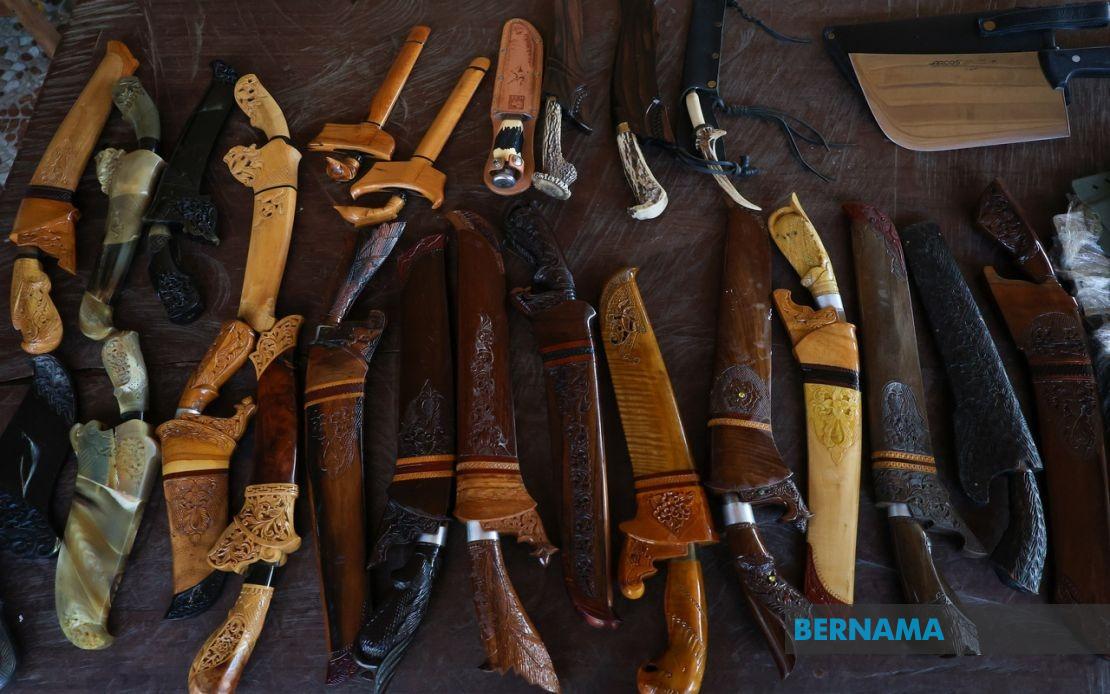
Ahmad, a 71-year-old custodian of Kelantan's blacksmithing heritage, has emerged as an unlikely guardian of a craft that faces extinction as one by one, the region's master metalworkers pass away without training successors. His personal collection of more than 100 traditional and modern weapons, valued at approximately RM20,000, represents far more than mere historical artefacts—it embodies the accumulated knowledge, artistic vision, and cultural memory of generations of Kelantan craftspeople whose names and innovations risk being erased from collective memory.
The bird-headed golok that exemplifies Kelantan's blacksmithing reputation carries profound significance beyond its functional design. The distinctive avian motif adorning the hilt serves dual purposes: it provides ergonomic advantages for grip and control, while simultaneously anchoring the blade to centuries of Kelantan's maritime and royal heritage. Ahmad explains that the bird figure draws its inspiration from the Petalawali bird imagery that once decorated the ancient vessels of the Kelantan Sultanate, those storied boats that navigated trade routes and connected kingdoms across the archipelago. Each handcrafted blade thus becomes a tangible link between contemporary users and a vanished world of royal expeditions and cultural commerce.
What distinguishes Ahmad's approach from that of conventional collectors is his philosophy regarding the irreplaceable nature of traditional craftsmanship. He has consistently rejected offers to sell individual pieces from his assemblage, despite receiving interest from domestic and international buyers. This steadfast refusal stems from a sobering reality: many of the weapons in his collection were created by blacksmiths now deceased, their techniques and distinctive styles lost forever unless documented or demonstrated to apprentices. The knowledge embedded in a single blade—the precise heat treatment, the angle of the hammer strike, the timing of the quench—cannot be reconstructed from studying the finished product alone.
Ahmad's journey into this preservation mission began approximately two decades ago when he assisted a friend engaged in traditional blacksmithing, learning the fundamentals of hilt and scabbard fabrication. That initial collaboration sparked an obsession that evolved into systematic collection-building and conservation efforts. Over the years, he has sourced weapons from across the globe, acquiring pieces from Germany, Sweden, Denmark, England, the United States, Japan, China, Spain, and Portugal. His international acquisitions include a knife featuring a deer-antler hilt from Sarawak and a keris crafted from black kemuning wood with a golden kemuning wood handle, each piece representing different schools of blade-making philosophy and aesthetic tradition.
The practical realities of preservation occupy considerable space in Ahmad's thinking and routine. Maintaining antique metalwork demands vigilance and expertise that most casual enthusiasts lack. He stores his collection in a dedicated cabinet and conducts thorough inspections at three-monthly intervals, meticulously applying protective oils to each blade's surface to forestall rust formation and degradation. This disciplined approach reflects an understanding that heritage conservation is not a one-time act but an ongoing commitment requiring consistency, knowledge, and resources. For Ahmad, these quarterly maintenance cycles represent a form of dialogue with the craftsmen who created these weapons generations ago—an acknowledgement of their labour and a promise that their work will endure.
The broader crisis facing Kelantan's blacksmithing tradition reflects patterns evident across many Southeast Asian crafts. As modernisation accelerates and younger generations pursue alternative careers offering higher incomes and less physically demanding work, the transmission of traditional knowledge faces critical juncture points. When an accomplished blacksmith passes away without having trained successors, the loss is not merely personal or economic but cultural and epistemological. Specific techniques, aesthetic principles, and problem-solving approaches vanish as if they had never existed, erased from the living knowledge base of Malaysian heritage.
Ahmad's articulation of this crisis carries the weight of lived observation and emotional investment. He describes the death of each master craftsman as a partial amputation of the broader craft itself, a diminution of the collective capability and diversity that defines the tradition. This perspective moves beyond romantic nostalgia to identify a genuine threat to cultural continuity. The handcrafted nature of traditional blades means each piece inherently reflects its maker's distinctive identity, personality, and artistic vision. In an age of industrial standardisation, this individuality has become paradoxically more valuable—yet more vulnerable—as the craftspeople who embodied these unique approaches disappear.
The implications for Malaysia extend beyond nostalgic preservation concerns. Traditional weapon-making represents an important component of national cultural identity and tourism potential. The golok and keris are not mere implements but symbols connected to royal protocol, martial heritage, and regional identity. As these crafts contract, Malaysia risks losing not only economic opportunities associated with heritage tourism and artisanal production but also tangible manifestations of pre-colonial and early-modern history. Other nations have successfully monetised and revitalised traditional crafts through strategic government support, certification systems, and integration into contemporary design and luxury markets.
Ahmad's vision extends beyond static preservation toward dynamic continuity. He advocates for innovation within tradition—an approach that maintains the essential identity and cultural values of blacksmithing while adapting forms and applications to contemporary contexts. This nuanced position rejects both pure nostalgia and wholesale abandonment of heritage in favour of modernisation. Such an approach requires institutional support, whether through apprenticeship programmes, government incentives for master craftspeople to train successors, or market mechanisms that reward authenticity and cultural provenance.
The immediate challenge facing Kelantan's blacksmithing community involves identifying and supporting potential inheritors of the craft. This requires not merely individual collectors like Ahmad but systematic interventions—perhaps through cultural agencies or heritage preservation organisations—to document existing masters' techniques, establish mentorship pathways, and create economic sustainability for those willing to dedicate themselves to this labour-intensive, knowledge-heavy craft. Without such structural support, the trajectory appears inevitable: gradual contraction until only museum pieces and collections like Ahmad's remain as evidence that Kelantan once possessed a thriving blacksmithing tradition.
As Malaysia develops economically and increasingly incorporates international influences, the preservation of craft heritage becomes simultaneously more difficult and more important. Communities and individuals like Ahmad serve as bulwarks against the homogenisation of culture and the erosion of local distinctiveness. His collection and his advocacy represent a quiet insistence that some forms of knowledge and beauty are worth protecting not because they are economically competitive but because they embody human creativity, regional identity, and historical continuity. Whether his custodianship will inspire broader efforts to revitalise Kelantan's blacksmithing tradition remains uncertain, but his commitment demonstrates that heritage preservation is not a passive activity but an active, ongoing, and deeply personal engagement with the past.

