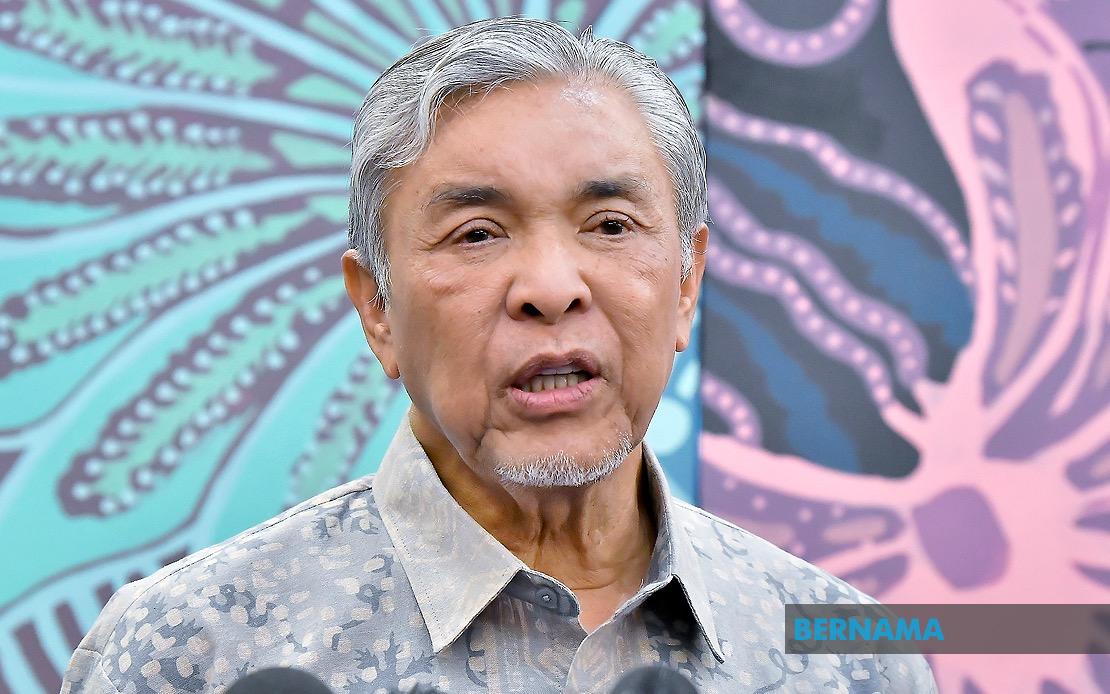
Deputy Prime Minister Datuk Seri Dr Ahmad Zahid Hamidi has moved to clarify misconceptions surrounding the proposed expansion of the South East Johor Development Authority, emphasising that the initiative concentrates on orchestrating development initiatives across the region rather than acquiring property ownership. Speaking at an awards ceremony in Kota Tinggi, Ahmad Zahid, who holds the Rural and Regional Development portfolio, stressed the distinction between coordinating development activities and taking direct control of land within the targeted expansion zones, addressing concerns that have circulated among residents in the affected districts.
The clarification appears necessary given the sensitivity around government land policies in Malaysia, where communities often express apprehension about administrative bodies obtaining direct property interests. Ahmad Zahid's reassurance suggests that KEJORA's approach would involve facilitating and harmonising development projects across south-eastern Johor rather than consolidating land ownership, a distinction he considered important enough to emphasise publicly. This messaging appears designed to build confidence among local stakeholders who might otherwise view the expansion as a centralised administrative overreach.
Central to the government's case for expanding KEJORA's mandate is the development authority's operational performance. The agency has achieved a 98.3 per cent success rate across its implemented projects, a statistic Ahmad Zahid highlighted as the primary rationale for broadening its jurisdictional scope. This track record, he argued, demonstrates KEJORA's capability to deliver meaningful development outcomes across the region, justifying an expanded operational territory that would encompass additional districts beyond its current footprint.
The expansion framework would extend KEJORA's reach into areas experiencing substantial growth trajectories, particularly Pengerang, where mega-infrastructure projects and tourism development have generated considerable economic momentum. By expanding the authority's coordination mandate into these emerging zones, the government appears intent on applying proven management and development models to new growth centres, leveraging KEJORA's established expertise and institutional capacity to ensure coherent regional development strategy.
Public sentiment appears to favour the proposal, according to findings from a KEJORA-commissioned feedback study. The survey indicated that 96 per cent of respondents supported the expansion initiative, suggesting substantial community acceptance of the proposed arrangement. Such high approval ratings typically reflect either genuine public backing or carefully designed consultation processes that effectively communicate policy rationales to residents, though the exact methodology and scope of the survey remained unspecified in official statements.
Despite the apparent groundswell of support, implementation remains contingent on formal approval from Malaysia's constitutional monarchy. Ahmad Zahid underscored that the expansion requires consent from His Majesty Sultan Ibrahim and Tunku Mahkota Ismail, the Regent of Johor, maintaining the constitutionally established requirement that significant administrative extensions in sultanate territories receive royal assent. This procedural safeguard reflects Malaysia's constitutional framework, where state rulers retain substantial powers over territorial administration and jurisdictional matters within their respective domains.
The Rural and Regional Development Ministry has backed the expansion proposal with substantial financial commitment, allocating approximately RM138 million to KEJORA for development initiatives across the region. This budget deployment encompasses 107 programmes currently implemented, with plans for approximately 350 additional smaller-scale projects to follow under the allocation framework. The capital injection represents a significant confidence vote in KEJORA's capacity to deliver development outcomes and suggests the government views the authority as a proven vehicle for translating policy intentions into tangible regional improvements.
Minister in the Prime Minister's Department Datuk Seri Azalina Othman Said, who represents Pengerang in Parliament, complemented the expansion proposal with her own administrative recommendations. She advocated for elevating Pengerang to full district status, a separate but complementary governance upgrade that would acknowledge the area's rapid economic development and growing population pressures. Azalina simultaneously proposed establishing a new hospital facility to address healthcare service gaps created by Pengerang's expanding demographic base, reflecting how infrastructure deficits often emerge faster than government capacity to address them in high-growth zones.
Ahmad Zahid publicly endorsed Azalina's proposals for district elevation and hospital development, signalling high-level government agreement on the scope of governance adjustments needed in Pengerang. These complementary initiatives—KEJORA expansion, district status elevation, and healthcare infrastructure development—collectively represent a comprehensive administrative response to transforming demographic and economic circumstances in south-eastern Johor. The coordination between KEJORA's development mandate expansion and Pengerang's potential administrative elevation suggests integrated governance planning rather than piecemeal policy responses.
For Malaysian readers and Southeast Asian observers, these developments illustrate how regional authorities attempt to balance growth management with administrative efficiency. KEJORA's expansion reflects a broader pattern across Malaysia and the region of concentrating development coordination within specialised agencies rather than distributing responsibility across multiple local government bodies. This institutional consolidation theoretically improves planning coherence and reduces bureaucratic fragmentation, though it simultaneously concentrates administrative power in ways that require robust constitutional safeguards to prevent overreach.
The Pengerang situation exemplifies the administrative pressures created when rapid economic development outpaces existing governance structures. Tourism expansion, mega-projects, and population growth generate service demands that traditional district-level administration may struggle to accommodate, creating the rationale for both KEJORA's expanded coordination role and Pengerang's potential elevation to standalone district status. These governance adjustments attempt to create administrative capacity proportional to economic dynamism, though success depends on adequate resource allocation and institutional capability.
Looking forward, the expansion's trajectory depends on royal approval and effective policy communication to address remaining public concerns about centralised administrative power. While the 96 per cent survey support appears encouraging, successful implementation requires sustained public confidence throughout the expansion process. For Johor and the broader Southeast Asian region, KEJORA's evolution represents an experiment in applying development authority models to increasingly complex regional growth patterns, potentially offering lessons applicable to other rapidly transforming territories across Malaysia and neighbouring economies.

