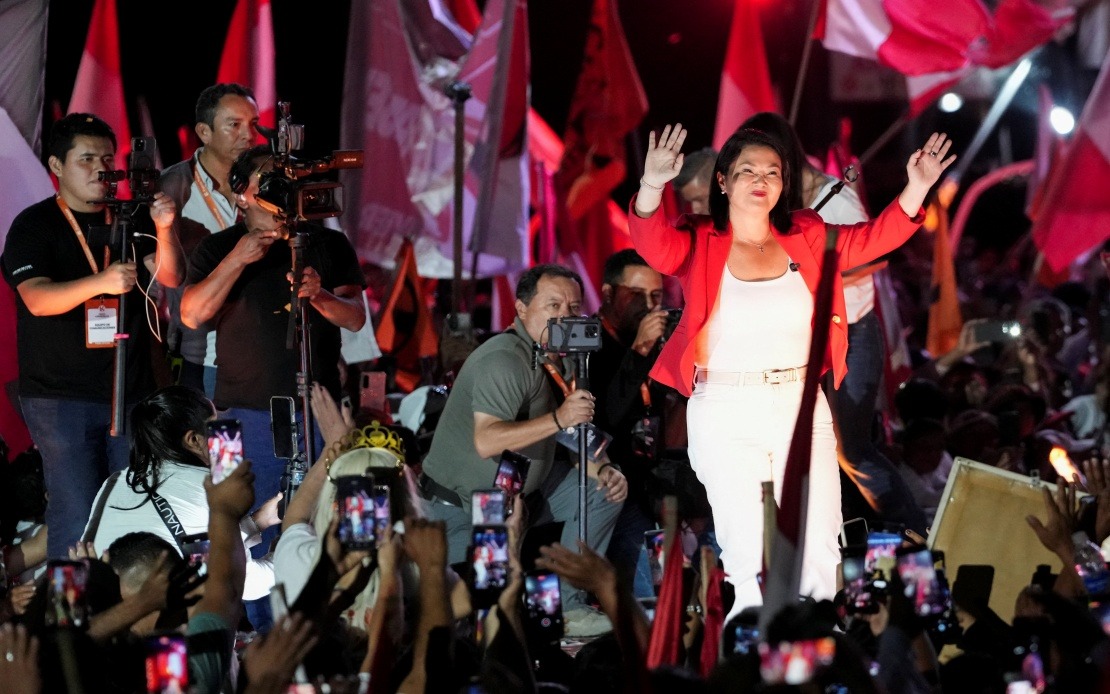
Keiko Fujimori has secured victory in Peru's presidential election after the National Office of Electoral Processes (ONPE) completed its full official tally on Monday, confirming the right-wing Popular Force candidate claimed more than half of all valid votes cast. The final figures released through ONPE's real-time vote-counting platform show Fujimori garnered 50.135 per cent of valid votes, translating to 9,223,396 ballots, compared to her closest competitor Roberto Sanchez of Together for Peru, who received 49.865 per cent or 9,173,755 votes. The razor-thin margin of 49,641 votes represents one of the closest presidential contests in recent Peruvian electoral history, highlighting the deep political divisions within the country.
This victory marks a significant political milestone for Fujimori, who is the daughter of former President Alberto Fujimori, who held office during a controversial decade spanning 1990 to 2000. The elder Fujimori's presidency remains a complex and contested chapter in Peru's modern history, characterised by both economic stabilisation efforts and serious concerns regarding democratic institutions and human rights allegations. For Keiko, this election win comes after three previous unsuccessful bids for the presidency, demonstrating her persistence in seeking the highest office despite facing persistent legal and reputational challenges throughout her political career. Her ascension to the presidency represents a potential reassertion of Fujimori family political influence in the Andean nation.
Sanchez, Fujimori's opponent, brought a different political pedigree to the race, having served as a minister under then-President Pedro Castillo from 2021 to 2022. Castillo's administration was marked by significant political turbulence and institutional instability, ultimately ending when Castillo attempted a self-coup in December 2022. Sanchez's association with that troubled period appears to have hindered his electoral prospects, despite representing a more leftward-leaning political orientation compared to Fujimori's right-wing platform. The contest between these two candidates essentially represented a referendum on Peru's political direction during a period of considerable economic and social strain.
The completion of the official count involved processing all 92,766 tally sheets from the June 7 election by Monday, a comprehensive verification process that ensures electoral integrity. This exhaustive tallying reflects Peru's commitment to transparent electoral procedures, particularly crucial given the country's recent history of disputed results and political confrontation. The ONPE's full processing of all documentation provides a definitive foundation for the electoral outcome, though the extraordinarily close margin means that any irregularities in a small number of polling stations could theoretically have altered the result. This reality underscores both the legitimacy of the final count and the acute polarisation within Peruvian society.
The National Jury of Elections, Peru's highest electoral authority chaired by Roberto Burneo, was expected to formally proclaim the official results on Friday following the completion of the ONPE count. This formal proclamation represents the final legal step in the electoral process, after which Fujimori would officially transition from candidate to president-elect. The timing of the proclamation allows for any legal challenges or formal objections to be filed and adjudicated before the actual transfer of power occurs. Such procedural steps, while potentially appearing bureaucratic, serve important constitutional functions in legitimising electoral outcomes and ensuring that all parties have exhausted legal remedies before accepting the result.
Fujimori's election carries significant implications for Peru's regional standing and economic policy direction. Her right-wing orientation suggests potential shifts toward more business-friendly policies and stronger alignment with centrist and conservative governance models in the Western Hemisphere. The tight electoral outcome indicates that Peru remains deeply divided on fundamental questions regarding the role of the state, economic distribution, and institutional reform. This polarisation will likely constrain Fujimori's ability to implement ambitious legislative agendas, particularly given the composition of Peru's Congress, which includes representatives from multiple parties with competing interests and ideological commitments.
From a Southeast Asian perspective, Peru's election outcome offers instructive parallels regarding the persistence of political dynasties in democratic systems and the challenges that countries face in navigating between populist and establishment political movements. The Fujimori family's enduring political presence, despite legal controversies surrounding the former president, illustrates how institutional weaknesses and fragmented opposition can allow political families to maintain influence across decades. Malaysian observers might note similarities with local political dynamics, where family-based political networks and historical figures continue to shape electoral competition and governance outcomes despite contemporary demands for institutional renewal and anti-corruption measures.
The election result also reflects broader Latin American trends regarding voter preferences during periods of economic difficulty and institutional stress. Peruvian voters, facing inflation, unemployment, and political instability, opted for a candidate promising order and market-oriented solutions rather than continuing with an administration associated with chaotic governance. This preference for perceived stability over radical change appears consistent with voting patterns observed across multiple Latin American democracies during recent economic downturns. Whether Fujimori's election will genuinely provide the stability that Peruvian voters sought remains an open question that will shape both Peru's trajectory and regional dynamics throughout her presidential term.

