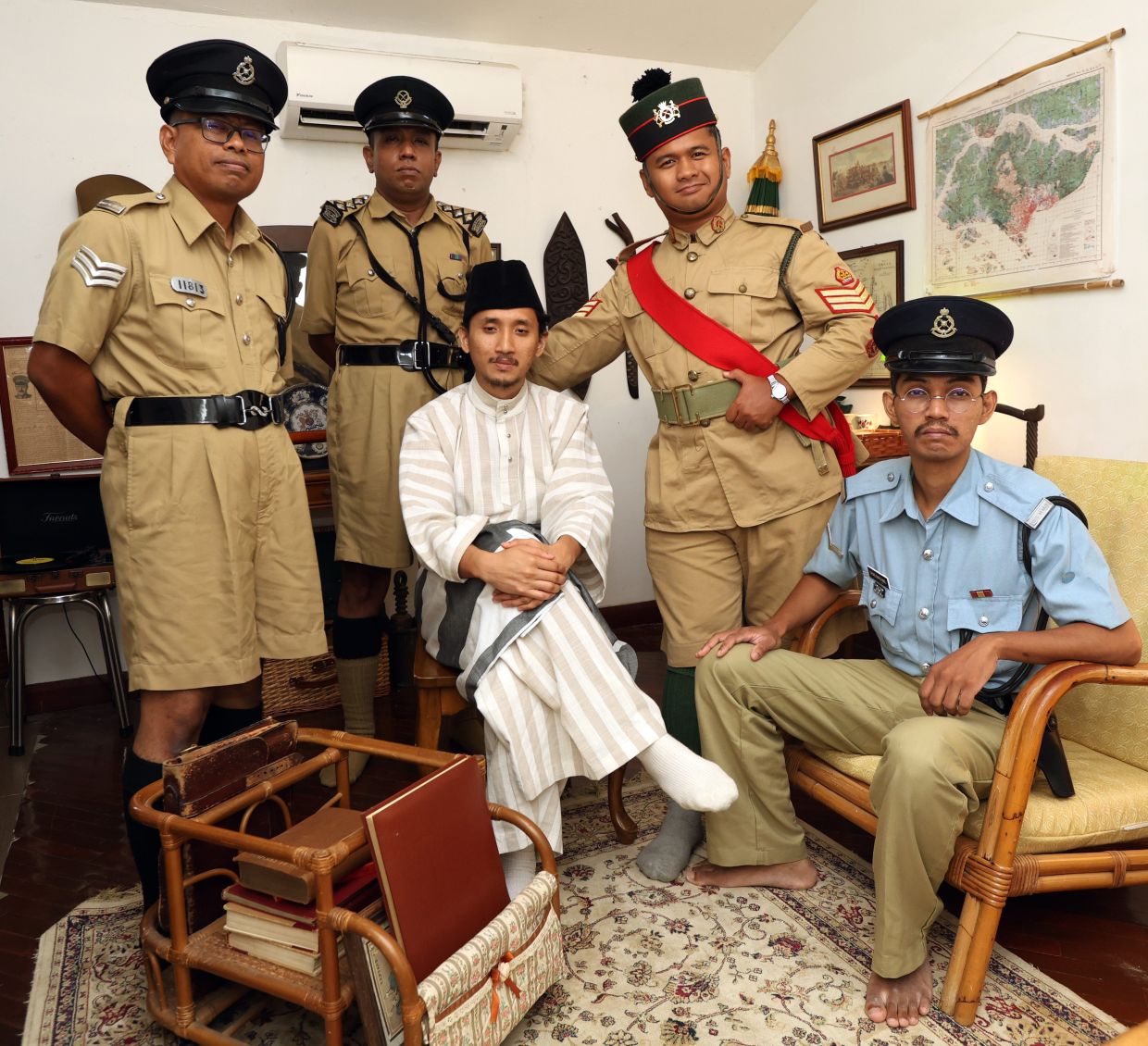
Persatuan Reka Ulang Sejarah, or PRUS, transforms ordinary weekends into windows onto Malaysia's past. Members dressed meticulously in historical military uniforms gather around coffee tables in what outsiders might mistake for costume theatre, but what participants describe as something far more serious: an educational mission to resurrect and preserve national memory through immersive demonstration. The group has evolved from informal meetups of uniform enthusiasts into a formally registered society determined to confront a troubling reality—that young Malaysians increasingly lack connection to their own history.
What began in the early 2010s as casual conversations between vintage military uniform collectors at an event organised by the Port Dickson Army Museum has grown into a structured movement. Those early gatherings, held under the casual banner "We Are Re-enactors" at various public events, eventually crystallised into formal registration as PRUS in 2023. The transition from hobby community to registered society proved significant, granting legitimacy and access to educational institutions, museums, and public spaces where the group's message could reach broader audiences. This evolution reflects a deliberate strategic choice to leverage official status for amplified impact on historical awareness.
The driving force behind PRUS's mission stems from practical observations about historical literacy. Chairman Abdul Hakim Abdul Rani, who works as a tour guide, noticed widespread confusion surrounding Malaysian military uniforms, particularly from eras when photography existed only in monochrome and soldiers from different forces appeared visually interchangeable to untrained eyes. This gap between public perception and historical reality motivated him and colleagues to weaponise their accumulated knowledge as educators. Their stated objective transcends simple costume appreciation; instead, they position themselves as arbiters of historical accuracy, determined to counter misinformation and aesthetic guesswork with evidence-based representation.
The commitment to authenticity extends far beyond donning the correct jacket and trousers. Different military periods carried distinct protocols governing posture, marching technique, verbal communication patterns, and comportment. Replicating these behavioural dimensions requires extensive research into period-appropriate manuals and training methodologies. Members invest considerable personal time studying historical documents to ensure their demonstrations reflect not merely appearance but the lived experience of soldiers from specific eras. This obsessive attention to detail distinguishes PRUS from casual historical costume activities, positioning the group as serious custodians of material culture rather than entertainers engaged in playful pageantry.
The depth of this commitment became evident during PRUS's July jamboree, a two-day intensive training exercise that reconstructed pre-Independence military instruction. Members participated in structured sessions covering marching formations, map reading, navigation techniques, and tactical manoeuvres drawn directly from original military manuals. Abdul Hakim, leveraging his background in the Territorial Army, facilitated these sessions with authentic knowledge rather than speculation. Notably, combat re-enactments substituted sticks for weapons to comply with regulations, a pragmatic compromise that preserved educational value while acknowledging modern legal constraints. The jamboree's purpose aligned with PRUS's broader educational philosophy—understanding how soldiers actually functioned operationally, rather than romanticising warfare through spectacle.
PRUS's engagement with Malaysia's film industry represents another dimension of their historical preservation work. The group provides technical consultation on period-appropriate uniforms and appearances, occasionally appearing as extras to ensure visual authenticity in productions. Vice chairman Mohd Fadzreeq Mokti emphasises that this role extends beyond acting; it constitutes a form of public history education where film audiences encounter historically accurate representation without necessarily recognising the labour and research underlying such accuracy. This behind-the-scenes influence on visual media proves particularly valuable given cinema's profound impact on public historical consciousness, especially among younger demographics who may encounter more information through screens than through formal educational channels.
August and September mark peak activity seasons for PRUS, coinciding with National Month celebrations and Malaysia Day observances. During these periods, members transport their collections to public exhibitions, specifically targeting schools and youth-oriented venues. This strategic timing reflects calculated understanding that historical consciousness develops during moments of national reflection, when curiosity about collective identity intensifies. The group recognises schools as particularly fertile ground for intervention, given that Abdul Hakim has observed troubling gaps in students' familiarity with pivotal historical figures and events. By bringing tangible evidence of Malaysia's military past directly into educational environments, PRUS bypasses the abstraction inherent in textbook learning.
Mohd Fadzreeq, who teaches school, has witnessed firsthand the transformative impact of embodied historical representation. When he appears at his school in full historical uniform—approved by school administration—student engagement intensifies dramatically. Children consistently inquire when he will wear the uniform again, signalling genuine interest that textbooks alone fail to generate. He attributes this enthusiasm to the hands-on, sensory nature of direct encounter; young people learn through observation, interaction, and tactile experience rather than passive absorption of printed information. His observations align with pedagogical research demonstrating that experiential learning produces superior retention and conceptual understanding compared to traditional lecture-based approaches.
The concept of PRUS members functioning as "walking museums" encapsulates their educational philosophy. Members consciously perform historical authenticity, embodying not merely the appearance but the behavioural patterns and operational logic of specific military periods. When public encounters individuals dressed in historical uniform, curiosity naturally emerges, prompting questions that members deliberately position themselves to answer comprehensively. This spontaneous educational encounter proves particularly valuable because the learning occurs voluntarily through genuine interest rather than imposed curriculum requirements. The extensive preparation—studying historical texts, practising manoeuvres, perfecting technical details—transforms individual members into repositories of embodied historical knowledge.
The significance of PRUS's work extends beyond nostalgic antiquarian interest into territory concerning national identity formation and historical literacy. Malaysia's young population increasingly disconnects from foundational historical narratives, a phenomenon that concerns educators and cultural custodians alike. By translating abstract historical concepts into concrete, observable, participatory experiences, PRUS attempts to reverse this trend through alternative educational pathways. The group's emphasis on accuracy, their willingness to invest substantial personal effort in research and training, and their strategic engagement with schools and public institutions suggest a sophisticated understanding that historical consciousness requires active cultivation.
This approach addresses a particular vulnerability in Malaysian education where history instruction sometimes compresses complex narratives into simplified frameworks insufficient for nuanced understanding. PRUS provides supplementary depth, allowing young people to encounter history as lived experience rather than memorisable facts. The uniformed members become intermediaries between archival documents and contemporary consciousness, translating static historical records into dynamic human contexts. Their presence at exhibitions and school events creates opportunities for genuine dialogue about Malaysia's past that formal curriculum structures may struggle to facilitate effectively.
The broader implications for Malaysia's cultural landscape deserve consideration. PRUS exemplifies how grassroots community engagement can advance historical preservation and education without requiring substantial institutional resources or government funding. The group's success in attracting members, organising events, and accessing educational venues demonstrates public appetite for alternative historical experiences. As Malaysia navigates contemporary challenges, this investment in historical literacy and accurate representation of the nation's military heritage contributes to informed citizenship and authentic national consciousness. The group's modest ambitions—educating through uniforms, training authentically, appearing at schools—accumulate into meaningful contributions toward reversing historical amnesia among younger generations increasingly distant from pre-Independence Malaysia's lived realities.

