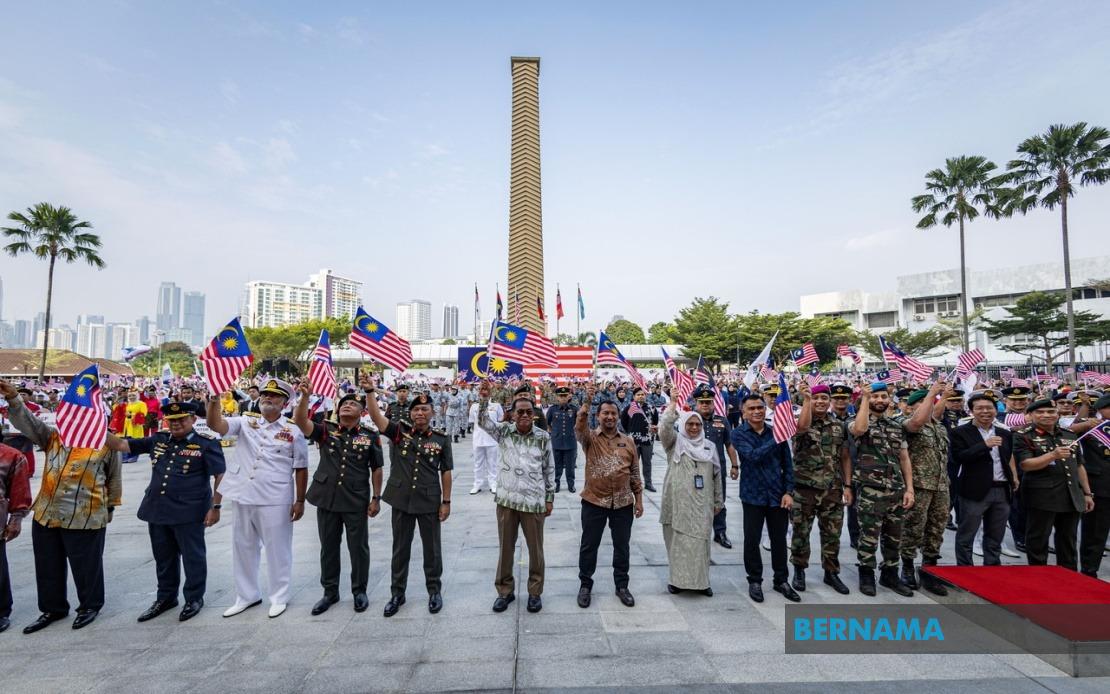
Defence Minister Datuk Seri Mohamed Khaled Nordin has urged Malaysians to approach the upcoming National Day and Malaysia Day festivities with genuine patriotic spirit rather than allowing them to become arenas for political dispute and emotional rhetoric. Speaking at the Defence Ministry's launch of the National Month and Fly the Jalur Gemilang campaign in Kuala Lumpur on August 27, Mohamed Khaled emphasised that these significant occasions should serve as unifying moments for the nation rather than platforms for advancing particular causes or grievances.
The Defence Minister's remarks represent a direct response to growing calls from certain quarters to boycott National Day celebrations over specific contentious issues. He specifically referenced the Rohingya humanitarian crisis as an example of the type of sentiment-driven activism that he believes should not overshadow the patriotic significance of the commemorative dates. While acknowledging the legitimacy of various social concerns, Mohamed Khaled drew a distinction between addressing such matters through appropriate channels and using national celebrations as vehicles for protest or political messaging.
Central to Mohamed Khaled's argument is the contention that Malaysia's foundational strength rests upon the values of mutual understanding and harmony across its diverse racial and religious communities. He emphasised that these principles—built into the nation's constitutional framework since independence—must remain actively nurtured and defended by all segments of Malaysian society. The Defence Minister framed the preservation of these values not as an abstract ideal but as essential infrastructure for maintaining the country's peace, stability, and territorial sovereignty in an increasingly complex geopolitical environment.
The timing of these comments reflects broader concerns within government circles about the potential for anniversary celebrations to become flashpoints for competing political narratives and civic divisions. By situating the National Day and Malaysia Day observances within a framework of national resilience and security, Mohamed Khaled attempted to elevate the discourse beyond individual grievances toward collective national interest. His invocation of the sacrifices made by security personnel serving at Malaysia's borders further reinforced the message that these celebrations represent a moment to acknowledge collective efforts toward national preservation.
For Malaysian citizens and observers, the Defence Minister's position encapsulates an ongoing tension within the country's democratic fabric. On one hand, Malaysia's political system theoretically permits citizens to express dissent and pursue activism around issues of conscience. On the other hand, authorities increasingly contend that certain occasions should be reserved as spaces of national unity where such expressions are deemed inappropriate or counterproductive. The question of where legitimate civic engagement ends and what constitutes unhelpful politicisation of national symbols remains contested terrain in Malaysian public discourse.
The call to fly the Jalur Gemilang with pride and gratitude that Mohamed Khaled issued carries symbolic weight extending beyond simple flag-waving. The national flag has occasionally become entangled in broader debates about national identity, with competing groups sometimes seeking to claim ownership of patriotic symbolism. By framing flag-flying as an expression of collective prayer for national well-being rather than a statement on any particular policy position, the Defence Minister attempted to reclaim these symbols as instruments of unifying rather than divisive national sentiment.
Malaysia's approach to managing national commemorations reflects patterns observed across the Southeast Asian region, where governments generally emphasise unity and stability as paramount concerns during significant national occasions. Countries including Singapore, Indonesia, and the Philippines have similarly sought to insulate their independence celebrations from becoming contested political spaces. However, the effectiveness of such efforts varies considerably, and in Malaysia's case, the increasing diversity of civil society activism has made it progressively difficult to maintain strict boundaries around the political content of public celebrations.
The specific mention of the Rohingya issue in Mohamed Khaled's remarks merits particular attention for Malaysian readers. The plight of Rohingya refugees, many of whom have sought shelter in Malaysia, has emerged as a significant humanitarian and political issue within the country. Some Malaysian civil society organisations have argued that national celebrations should acknowledge Malaysia's humanitarian obligations and moral position regarding displaced populations. The Defence Minister's apparent dismissal of such concerns as merely sentimental rather than substantive suggests an official preference for compartmentalising humanitarian activism away from patriotic occasions.
Regional implications of this messaging also warrant consideration. Malaysia's position as a multicultural democracy that has managed to maintain relative stability across religious and ethnic lines stands as a model that neighbouring countries often reference. However, the tension between preserving social cohesion and accommodating diverse expressions of conscience remains unresolved. How Malaysia navigates this balance during its annual celebrations potentially influences conversations across Southeast Asia about the relationship between patriotism, pluralism, and political space.
The Defence Minister's emphasis on Malaysia as an independent, peaceful, and sovereign nation also carries defensive connotations worth examining. International pressure regarding humanitarian crises, maritime disputes, and other foreign policy matters has at various points become entangled in domestic political discourse. By asserting that Malaysians must prevent their homeland from becoming a political battleground for external actors, Mohamed Khaled implicitly framed domestic activism around certain international issues as potentially serving foreign interests rather than national welfare.
Looking forward, the success of such appeals to unity during commemoration periods will likely depend on whether underlying grievances and policy disagreements can be adequately addressed through other venues. If citizens feel that legitimate concerns remain systematically unheard or unaddressed outside of national celebration periods, the pressure to utilise these occasions as platforms for expression may only intensify. Conversely, if government demonstrates responsiveness to substantive issues through regular democratic engagement, citizens may more readily accept invitations to reserve national celebrations as moments of collective affirmation rather than political contestation.
The Defence Ministry's broader campaign around the Jalur Gemilang and National Month represents an institutional effort to shape the emotional and symbolic landscape surrounding Malaysia's most significant patriotic occasions. By associating flag-flying and celebration with prayer for national well-being, remembrance of security sacrifices, and appreciation for intercommunal harmony, authorities seek to elevate these acts beyond partisan political expression. Whether such framing successfully channels popular sentiment toward unity or instead appears to citizens as an attempt to suppress legitimate expression will likely shape how these commemorations evolve in coming years.

