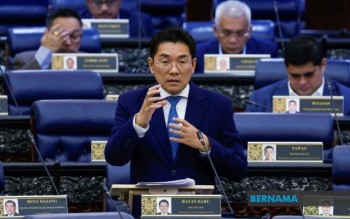
Deputy Investment, Trade and Industry Minister Sim Tze Tzin announced that Kedah has successfully captured RM1.4 billion in approved investments spanning 50 projects during the first three months of 2026, signalling robust momentum in the state's industrial expansion drive. The figure reflects growing investor confidence in Kedah's positioning as a manufacturing and innovation hub within Malaysia's northern economic corridor.
The investment influx centres on three strategically designated industrial clusters that the government has identified as regional growth engines. Kulim Hi-Tech Park, traditionally the northern region's flagship technology destination, continues to attract advanced manufacturing ventures, while Kedah Rubber City and the Kerian Integrated Green Industrial Park represent diversification into specialised sectors with global export potential. These concentrated development zones are designed to create economies of scale and cluster effects that benefit participating firms through shared infrastructure and supply chain proximity.
A crucial element of the government's economic strategy extends beyond the major industrial zones themselves. Sim emphasised that neighbouring districts including Sik, Baling, and Padang Terap stand positioned to capture tangible economic gains through multiple channels, particularly job creation in support services and the emergence of local supplier networks. Rather than allowing industrial wealth to concentrate in established corridors, policymakers are explicitly designing spillover mechanisms to ensure peripheral rural areas participate in the investment boom.
The emphasis on inclusive development reflects broader political sensitivities around regional inequality in Malaysia's economic narrative. When Deputy Minister Sim addressed a parliamentary question from Ahmad Tarmizi Sulaiman representing the Sik constituency, the exchange highlighted ongoing concerns about whether high-technology industrial expansion genuinely translates into improved living standards for residents in less-urbanised areas. The government's response positioned itself as committed to distributing benefits equitably across the northern region rather than concentrating prosperity in existing industrial nodes.
Beyond pure job creation, the government recognises that rural districts possess distinct competitive advantages when properly developed. Baling, Sik, and Padang Terap maintain established agricultural foundations spanning food processing, rubber production, and agro-industries. Rather than attempting to transform these areas into tech manufacturing hubs that would contradict local economic structures, the strategy leverages existing sectoral strengths while modernising them through value addition and technological upgrade. This pragmatic approach acknowledges that sustainable rural development builds on indigenous economic foundations rather than imposing external models.
Critical to realising these spillover benefits is a substantial infrastructure modernisation programme currently underway. The government is undertaking significant improvements to Federal Route FT004, widening the strategic corridor connecting Kulim Hi-Tech Park through to Bukit Karangan, with completion anticipated by April 2028. Superior road infrastructure removes transportation bottlenecks that historically isolated peripheral agricultural areas from major industrial markets, effectively collapsing distance and reducing logistics costs for rural-based suppliers serving larger manufacturers and processors located in the main industrial parks.
The infrastructure investment represents a long-term commitment to regional integration that extends beyond short-term political cycles. Once FT004 improvements conclude, Baling in particular will experience reduced travel times to Kulim, fundamentally altering the economic geography of the district and enabling food processing entrepreneurs to service larger industrial clients operating within the tech parks. This physical connectivity translates into genuine commercial opportunity for local businesses previously constrained by logistical friction.
Complementing infrastructure development, the government introduced the New Incentive Framework in March 2026, fundamentally reorienting investment incentives toward greater localisation throughout supply chains. Rather than rewarding companies solely for establishing operations in designated zones, the NIF provides enhanced government support to investors who demonstrably increase their utilisation of local vendors, locally manufactured inputs, and domestic supporting services. This creates financial incentives for multinational and large-scale domestic investors to develop relationships with rural-based suppliers rather than relying exclusively on established industrial suppliers concentrated in major urban centres.
The NIF framework represents a sophisticated policy intervention recognising that investment location decisions alone do not automatically generate broad-based local benefits. By financially rewarding companies that commit to local supply chain integration, the government effectively internalises the costs of supplier development for the investors themselves, aligning private incentives with public objectives around inclusive growth. A company receiving RM50 million in capital investment incentives will find it financially rational to invest additional resources in identifying, training, and integrating local vendors into their operations.
These incentive structures are designed to facilitate technology transfer and skills upgrading throughout rural supply chains. When multinational electronics manufacturers or advanced materials companies source inputs from local processors, they necessarily engage in technical collaboration, quality assurance processes, and capability development with suppliers. Over time, rural-based businesses accumulate technical expertise, manufacturing discipline, and quality standards that enable their participation in increasingly sophisticated global supply chains. The framework therefore treats local supplier development not as corporate social responsibility but as embedded business logic rewarded through the formal incentive structure.
For Malaysian policymakers specifically concerned with regional economic disparities, the Kedah investment performance and supporting policy infrastructure offer a potential replicable model. Rather than viewing high-technology industrial development and rural economic revitalisation as competing priorities, the integrated approach demonstrates how strategic infrastructure positioning, deliberate supply chain localisation incentives, and sectoral focus on rural competitive advantages can synchronise advanced manufacturing expansion with inclusive prosperity distribution. The RM1.4 billion Q1 2026 figure therefore represents not merely an investment total but evidence of whether this integrated model translates into measurable economic outcomes across Malaysia's northern periphery.

