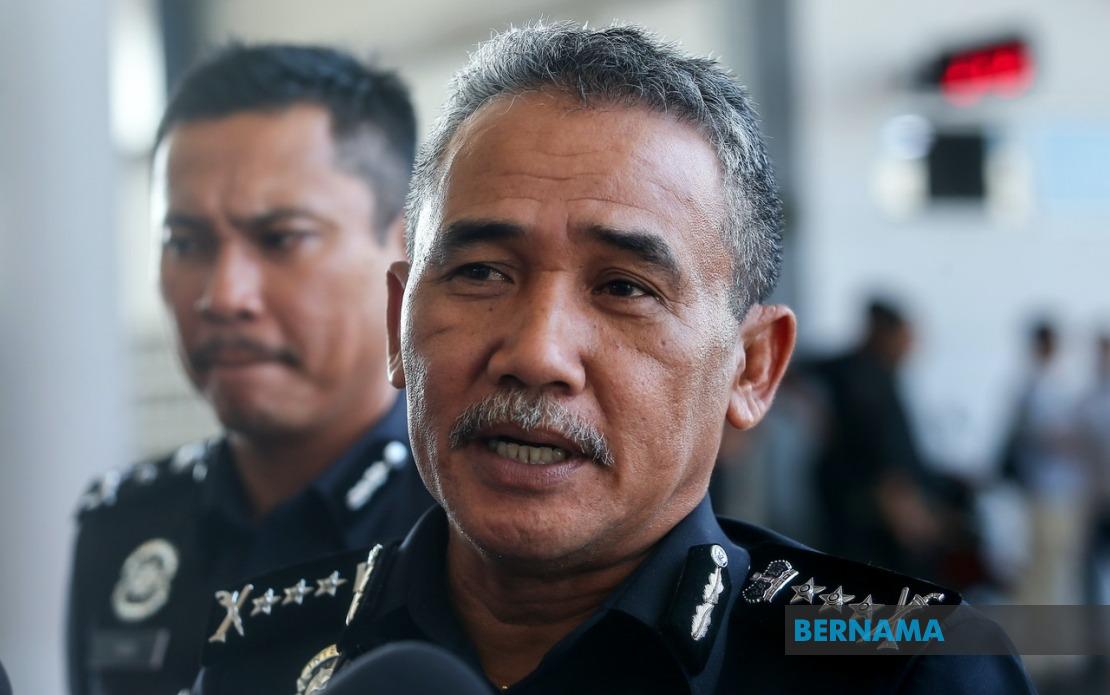
The Kedah police contingent has opened 69 disciplinary investigation papers affecting 90 officers and civil servants during the opening six months of 2026, according to figures released by state police chief Datuk Adzli Abu Shah. The disciplinary action taken against the implicated personnel comprises 11 senior police officers, 76 junior officers, and three civil servants attached to police operations within the state. The disclosure comes at a time when public confidence in police accountability remains a critical concern across Malaysia, with persistent questions about internal discipline mechanisms and their effectiveness in maintaining professional standards.
The year-to-date figure represents a notable improvement compared with 2025, when authorities registered 155 disciplinary investigations involving 294 individuals across all ranks and civilian staff. That substantial reduction signals either improved compliance with departmental regulations or a shift in enforcement priorities during the current period. The breakdown of offences investigated this year includes three cases linked to shariah law violations, four commercial crime matters, seven corruption allegations, eleven traffic-related misconduct cases, twenty-four drug offences, thirty-three criminal conduct cases, and one hundred forty-two miscellaneous disciplinary breaches. This distribution underscores the breadth of misconduct that police management must address, ranging from serious criminal activity to minor procedural violations.
Datuk Adzli emphasised during a remarks at the monthly contingent assembly that the department maintains an uncompromising stance toward personnel who compromise institutional integrity. The chief reiterated that no officer, irrespective of rank or tenure, receives preferential treatment when evidence substantiates wrongdoing. Detentions, work suspensions, and terminations have been implemented against individuals determined to have violated departmental codes and legal statutes. This messaging appears directed at persistent public scepticism regarding police self-regulation, a longstanding concern in Malaysian law enforcement discourse where allegations of internal protection and minimal consequences for misconduct surface regularly in community discussions and civil society commentary.
A critical clarification emerged during Adzli's statement regarding the nature of work suspensions imposed on implicated officers. The police chief distinguished between suspension as an interim administrative measure and suspension as disciplinary punishment, a distinction often misunderstood by the general public. According to Adzli, suspending an officer from active duties does not constitute the final disciplinary outcome but rather functions as a protective mechanism preventing further opportunity to commit identical or related offences. The statement reflects widespread public perception that internal police discipline amounts to nothing more than lateral transfers, where problematic officers simply relocate rather than face substantive consequences.
Datuk Adzli elaborated on the rationale underlying this differentiation through a practical example involving officers implicated in robbery and extortion schemes. In such instances, the chief explained, suspended personnel face reassignment to administrative positions lacking community access, thereby eliminating the operational context enabling their misconduct. This administrative repositioning serves the immediate public safety imperative while investigative processes continue toward final disciplinary determination. The approach acknowledges that suspension represents merely the initial phase of a lengthier accountability process rather than its conclusion, a nuance frequently absent from public discourse surrounding police discipline.
The continued investigation of suspended officers until appropriate final action is determined represents a procedural safeguard embedded in Malaysian police protocol. This extended investigative timeline occasionally extends over months, creating intervals during which suspended officers theoretically remain on the force despite being withheld from operational duties. The duration of such investigations and the transparency surrounding their progression remain subjects of legitimate public interest, particularly when high-profile or serious misconduct allegations remain pending resolution. Establishing clearer timelines and progress markers for disciplinary proceedings could strengthen public confidence in the accountability mechanisms Datuk Adzli champions.
Beyond disciplinary statistics, the police chief addressed community safety concerns emerging in specific Kedah localities, particularly mysterious knocking disturbances reported across Kota Setar district residential areas. Police acknowledged resident apprehension regarding these unexplained incidents and responded by intensifying patrol presence throughout affected neighbourhoods. This particular issue, while seemingly peripheral to the disciplinary discussion, illustrates how operational police legitimacy and institutional accountability intersect in public perception. When citizens perceive effective response to local safety matters alongside demonstrated willingness to enforce internal standards, confidence in police authority strengthens proportionally.
The reduction in disciplinary cases from 2025 to 2026 invites cautious interpretation. While lower numbers could reflect genuine improvement in officer conduct and compliance culture, alternative explanations merit consideration. Stricter reporting thresholds, resource constraints limiting investigation capacity, or officers developing sophisticated evasion methods might equally account for diminished case volumes. Malaysian police leadership bears responsibility for clarifying which factors underlie statistical improvements, as transparency regarding disciplinary trends directly impacts public assessment of institutional health. Releasing comprehensive annual reports detailing investigation outcomes, including prosecution rates and penalty severity, would enhance accountability perception across Malaysian society.
The geographical focus on Kedah disciplinary statistics offers a provincial perspective on broader national police reform efforts. As Malaysia's police service undergoes ongoing modernisation and professionalisation initiatives, state-level performance metrics gain significance in evaluating reform traction. Kedah's contingent operates within the same institutional framework as federal and other state police forces, yet regional variations in discipline culture, leadership priorities, and resource availability necessarily influence locally recorded outcomes. Comparative analysis across states and contingents could identify jurisdictions demonstrating superior accountability practices worthy of adoption system-wide.
Datuk Adzli's emphasis on unambiguous police commitment to accountability speaks directly to Malaysian civil society expectations following decades of public discourse regarding institutional reform. The police service recognises that sustained legitimacy depends upon demonstrable willingness to address internal misconduct with rigour comparable to that applied against civilian transgressions. The Kedah contingent's published disciplinary statistics, whatever their precise interpretation, represent an acknowledgment that transparency regarding internal standards enforcement constitutes essential accountability practice. Moving forward, police leadership must sustain this transparency momentum while continuously refining investigation procedures, prosecution standards, and penalty frameworks to maintain public confidence in institutional integrity across Malaysia's diverse communities.

