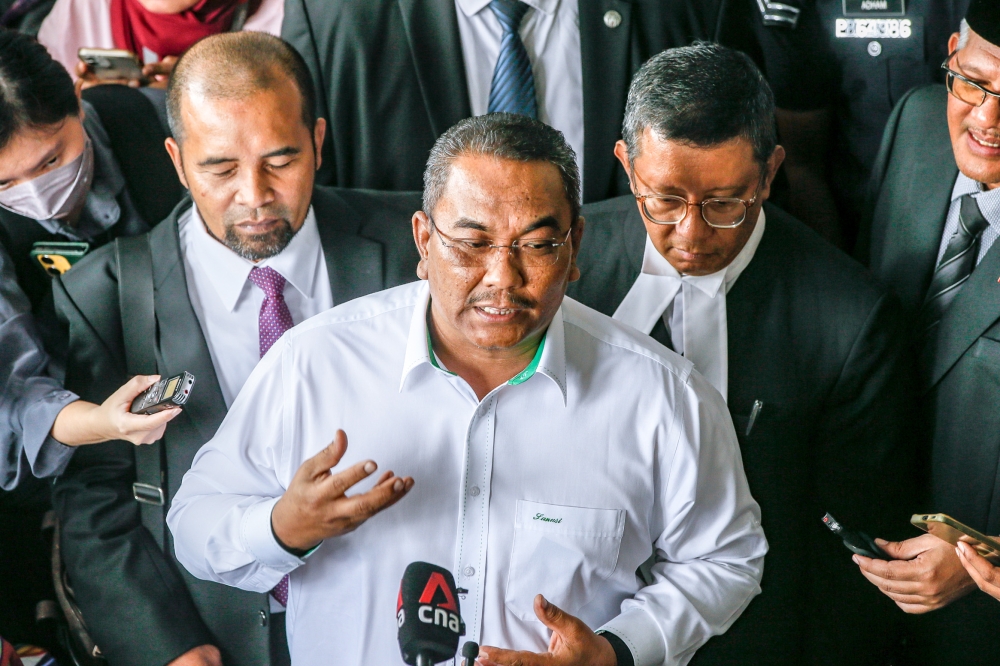
Kedah Menteri Besar Datuk Seri Muhammad Sanusi Md Nor has escalated a political dispute by issuing formal letters of demand to DAP national deputy chairman Nga Kor Ming and two other opposition figures, claiming they deliberately misrepresented his statements in ways that damaged his standing and professional reputation. The legal action marks a notable intensification of tensions between Kedah's leadership and the Democratic Action Party, reflecting deeper divisions within Malaysia's fractious political landscape.
The decision to pursue formal legal remedies rather than rely on political rebuttals underscores the seriousness with which Sanusi views the alleged misstatements. Letters of demand serve as precursors to potential defamation suits, signalling that Sanusi intends to hold the recipients accountable through the judiciary if they do not provide satisfactory responses or retract their claims. This approach transforms what might ordinarily remain confined to the realm of political debate into a civil legal matter with significant consequences.
Nga Kor Ming, a prominent figure within DAP's national leadership structure, has become a particular focus of Sanusi's ire, though the identities of the other two recipients remain part of the broader pattern of tension between the Kedah administration and the opposition coalition. Nga's position as deputy chairman gives his statements considerable weight within DAP circles and amplifies their reach among the party's supporters and the broader public, making any alleged distortions more consequential from Sanusi's perspective.
The specifics of how Sanusi's remarks were allegedly twisted or taken out of context have not been fully detailed in public statements, but such disputes frequently centre on selective quoting, misrepresentation of policy positions, or deliberate ambiguity about the speaker's actual intent. In Malaysia's charged political environment, where social media amplifies divisive narratives rapidly, the ability to control one's public image and correct misstatements quickly has become crucial to maintaining credibility and support.
For readers in Malaysia and the broader region, this development illustrates the increasingly legalistic approach Malaysian politicians are adopting to manage public disputes. Rather than settling disagreements through traditional political mechanisms—parliamentary debates, press conferences, or party statements—public figures now regularly resort to lawyers, courts, and formal legal processes. This shift reflects both the sophistication of modern political combat and growing awareness among politicians that their words carry legal weight beyond mere political positioning.
The timing of these legal actions, issued from Alor Star the capital of Kedah, signals Sanusi's determination to protect his authority within the state. As Menteri Besar, Sanusi holds significant executive power, and allowing his statements to be freely misrepresented without legal consequences could undermine his credibility when communicating policy positions or engaging with state stakeholders. The formal demand process provides a structured opportunity for recipients to respond, retract statements, or face escalated legal proceedings.
Within Kedah specifically, this dispute carries political weight beyond the immediate participants. The state has been a battleground between various political coalitions, and Sanusi's administration must maintain public trust and effective communication channels to govern effectively. When opposition figures challenge the Menteri Besar's statements, they necessarily engage with questions of governance and state policy, making the accuracy of those challenges relevant to how voters evaluate both Sanusi's leadership and the opposition's credibility.
For the DAP, this legal pressure represents a challenge to its ability to mount vigorous political opposition without facing legal consequences. Opposition parties have legitimate grounds to critique and question statements made by government officials, but the line between legitimate criticism and actionable misrepresentation can be contested. The letters of demand essentially force DAP to make strategic calculations about the cost-benefit ratio of continued criticism, potentially having a chilling effect on opposition speech if the party determines that legal exposure outweighs political gains.
The broader implications for Malaysia's political culture merit consideration. When politicians increasingly rely on legal mechanisms to settle public disputes, it can either elevate discourse standards by penalising provably false statements or suppress legitimate political debate by creating a climate of legal risk around criticism. The outcome depends substantially on how courts adjudicate such cases and whether they distinguish between genuine defamation and robust political disagreement.
Regionally, Malaysia's approach to managing politician-to-politician disputes differs from neighbouring jurisdictions. Some Southeast Asian democracies rely more heavily on regulatory bodies or party disciplinary mechanisms, while others, like Malaysia, increasingly see courts as arbiters of political speech disputes. These varying approaches reflect different assumptions about the proper role of judicial systems in managing political conflict.
For the recipients of Sanusi's letters of demand, the immediate task involves formulating a response that either clarifies their original statements or demonstrates that they accurately represented Sanusi's words and actions. The specifics of this response will likely determine whether the dispute escalates to actual litigation or can be resolved through the less formal demand process.
Looking forward, the outcome of this particular dispute will likely influence how Malaysian politicians calculate the risks of aggressive opposition rhetoric. If Sanusi prevails in any subsequent legal proceedings, it may encourage other officials to pursue similar remedies; if the letters are withdrawn or found without merit, it could demonstrate that such legal threats lack real consequences. Either way, this case illustrates how Malaysia's political conflicts increasingly flow through courtrooms rather than being resolved exclusively through traditional political channels.

