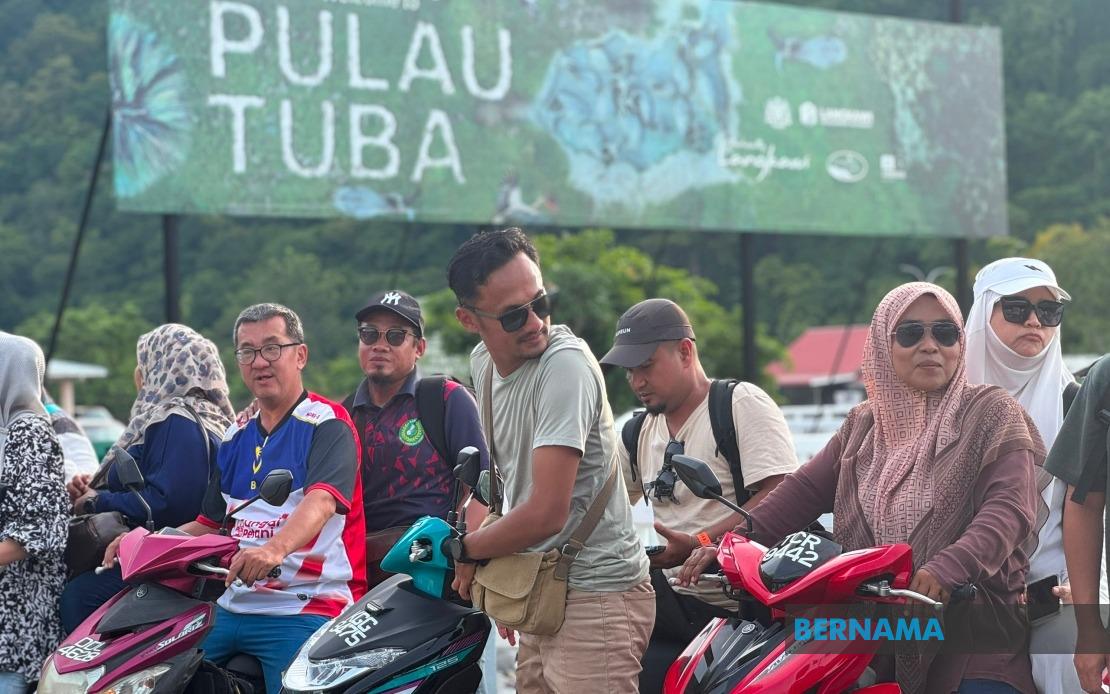
The Kedah state government has outlined an ambitious strategy to elevate Pulau Tuba into a major tourist destination that can stand alongside the established appeal of Langkawi, signalling a diversification of tourism investment across the state. Datuk Mohd Salleh Saidin, who chairs the state's Tourism, Culture and Entrepreneurship Committee, emphasised that Pulau Tuba possesses significant untapped potential and presents an array of compelling tourism experiences alongside locally-produced food offerings at accessible price points. However, he acknowledged that service standards across the island's tourism sector require systematic improvement to meet international visitor expectations and compete effectively with established rival destinations in the region.
To address service quality concerns, Kedah Tourism has been tasked with implementing comprehensive management and professional development courses tailored to tourism sector workers stationed on Pulau Tuba. This initiative reflects a recognition that infrastructure and attractions alone cannot sustain tourism growth without corresponding investments in human capital and visitor experience. By equipping local tourism operators with internationally-recognised training in customer service, hospitality management, and operational excellence, Kedah aims to eliminate a crucial bottleneck that could otherwise undermine its broader regional tourism ambitions.
The state's tourism credentials received significant validation when Kedah won seven awards at the Tourism Industry Awards 2026, a competition administered by the Malaysian International Tourism Development Association (MITDA). Four of these accolades specifically recognised Langkawi tourism products, demonstrating that the state's existing flagship destination continues to deliver experiences meeting the highest professional standards. More significantly, this marked the first occasion that mainland Kedah tourism offerings—distinct from the island tourism base—received such recognition at a major national competition, suggesting the government's diversification strategy is beginning to gain traction among industry evaluators.
Datuk Mohd Salleh used the award announcement to rebut what he characterised as deliberate misinformation campaigns that have periodically targeted Langkawi's reputation. He argued that certain negative publicity surrounding the island had been deliberately manufactured to undermine confidence in Kedah's tourism sector, a claim that reflects ongoing sensitivity to reputational damage from incidents and controversies that have affected the destination in recent years. The awards, he suggested, demonstrate that such negativity runs counter to the objective quality assessments made by professional tourism bodies, and that Kedah's products can indeed compete successfully at the highest levels when evaluated against national and regional benchmarks.
Looking ahead, state officials project that sustained marketing and infrastructure investment will continue attracting both domestic and international tourism arrivals over the coming year to two years. This timeline reflects realistic expectations for destination marketing—tourism growth typically requires a lag period between promotional activities, investor confidence, and actual visitor arrivals. The projection also suggests that Kedah is planning medium-term sustainability rather than pursuing unsustainable short-term growth targets that could overwhelm local infrastructure or community resources.
A pivotal development emerged when JetAsia (M) Sdn Bhd, the Kedah Tourism Development Cooperative (KKPK), and Kedah Tourism formalised a Memorandum of Understanding focused on educational tourism. This partnership architecture involves thirteen organisations working collaboratively to create structured tourism packages targeted at international school and university cohorts. The collaboration addresses a significant gap in Southeast Asian educational tourism—the tendency of many institutions to direct overseas learning experiences toward Thailand, Vietnam, and Indonesia, often overlooking Malaysia's diverse educational, cultural, and agricultural tourism potential.
Through this EduTourism initiative, international students will gain exposure to Kedah's educational institutions, cultural heritage sites, agricultural operations, and broader state tourism products in a structured, educationally-enriched framework. For Kedah, this approach offers multiple advantages: educational tourism typically generates higher spending per visitor, extends length of stay, encourages repeat visitation as alumni return with families, and builds long-term brand awareness among global university networks. The strategy also distributes tourism benefits beyond Langkawi's concentrated infrastructure, supporting economic development across mainland communities that currently receive minimal international visitor attention.
The partnership structure involving strategic collaborators signals recognition that sustainable tourism development requires coordination across multiple stakeholder interests. Rather than attempting top-down destination management, the initiative leverages private sector expertise (JetAsia's transport operations), community-based tourism cooperation (KKPK), and government coordination (Kedah Tourism) to create more resilient, locally-embedded tourism operations. This tripartite approach mirrors international best practices in destination marketing, particularly in Southeast Asian contexts where tourism success increasingly depends on building trust and economic benefit-sharing among diverse local stakeholders.
For Malaysian policymakers and investors beyond Kedah, this development strategy offers instructive lessons about diversifying tourism portfolios within established destinations. Rather than allowing an entire state's tourism economy to depend on a single location—Langkawi in Kedah's case—strategic development of secondary destinations can distribute environmental pressures, reduce over-concentration of visitor arrivals, and create more resilient tourism sectors less vulnerable to reputational damage or sector-wide disruptions. Pulau Tuba's development, if executed effectively, could model how Malaysian states can develop sustainable multi-destination tourism strategies.
The educational tourism angle also responds to broader Southeast Asian market trends, where international school networks increasingly seek destination partnerships offering cultural immersion alongside formal educational programming. Malaysia's positioning as a multicultural nation with diverse heritage sites and agricultural traditions aligns well with such demand, yet this segment remains underdeveloped compared to competitor destinations. Kedah's EduTourism initiative essentially attempts to capture market share in an expanding regional tourism category before more aggressive competitors establish dominant positions.
From an economic resilience perspective, Kedah's approach to tourism diversification addresses vulnerabilities exposed during pandemic-driven tourism collapses. Educational tourism partnerships, characterised by advance bookings and institutional commitments, provide more stable income streams than discretionary leisure tourism. By developing multiple destination options and revenue streams, Kedah reduces the sectoral exposure that concentrated, leisure-dependent destinations face during global disruptions.

