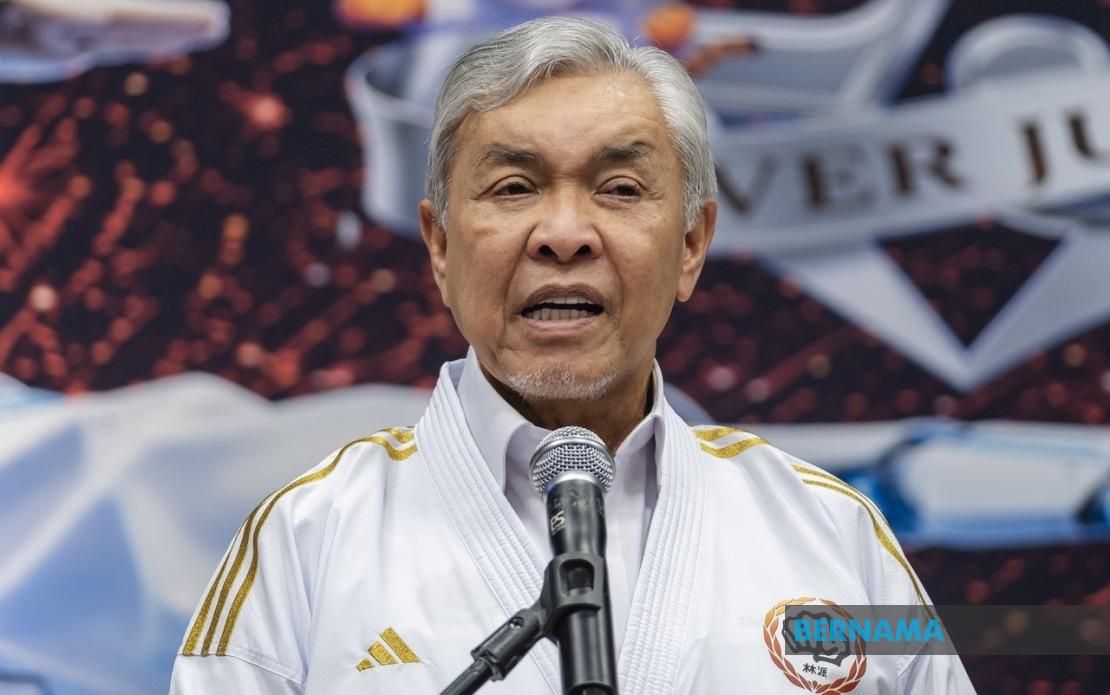
The Malaysian government is moving forward with a significant proposal that could reshape school sports participation across the nation. Deputy Prime Minister Datuk Seri Dr Ahmad Zahid Hamidi announced that karate will be submitted to the Cabinet for consideration as an official sport at the Malaysian Schools Sports Council (MSSM) championships, marking a potential turning point for the discipline at the grassroots level. Speaking after opening the International Open Karate Championship 2026 at Titiwangsa Stadium in Kuala Lumpur, Ahmad Zahid confirmed the matter would reach the Cabinet table within days, with Education Minister Fadhlina Sidek expected to evaluate the proposal alongside other policy considerations.
Ahmad Zahid, who chairs the Cabinet Committee on Sports Development, positioned the initiative as part of a broader strategy to strengthen youth participation in competitive sports. The proposal reflects growing recognition that karate has already established significant traction in Malaysian schools, despite not yet holding official MSSM status. This distinction is crucial: while karate competitions operate independently at the national level, formal inclusion in the MSSM calendar would grant the sport equal standing with established disciplines like badminton, athletics, and swimming, potentially triggering greater institutional support and resource allocation.
The timing of this push coincides with the International Open Karate Championship 2026, which demonstrated the sport's burgeoning appeal in Southeast Asia. Now in its 25th consecutive year, the tournament attracted over 1,850 participants competing across divisions, with representation spanning 17 countries. The event's scale underscores karate's evolution from a niche martial art into a mainstream sporting pursuit, particularly among younger demographics. The championship's international character also positions Malaysia as a regional hub for the discipline, an advantage that could be leveraged further if the sport gains official school recognition.
Local karate leadership has been instrumental in championing the MSSM inclusion campaign. Datuk P. Thiagu, president of the Putrajaya Karate Association and organiser of the international championship, has articulated a clear rationale for formalising the sport's place in the school system. Thiagu argues that karate's present popularity in Malaysian educational institutions creates an immediate opportunity to channel existing student enthusiasm into structured, competitive pathways. By institutionalising karate through MSSM, the sport could transition from informal participation to comprehensive development frameworks that identify and nurture talent from the grassroots upward.
The strategic case for karate's inclusion rests on well-established principles of sports development. Grassroots participation forms the foundation of any national sporting structure, creating the talent pool from which elite athletes eventually emerge. Malaysia's recent focus on Olympic sports and medal-generating disciplines has yielded results, yet diversification of the school sports portfolio can only strengthen overall athletic culture. Karate's inclusion would signal that the government values martial disciplines alongside conventional team and individual sports, potentially attracting students who might not gravitate toward traditional offerings.
From a regional perspective, karate's position in Southeast Asia carries particular significance. The discipline has deep roots in the region's cultural and sporting traditions, with several neighbouring countries already recognising karate as a mainstream school sport. Thailand, Indonesia, and the Philippines have integrated karate into their educational systems with varying degrees of success, creating a regional model that Malaysia could adapt to its own context. Formalising karate's status would align Malaysian school sports policy with regional peers, ensuring Malaysian students can compete on equal terms in international school championships and regional competitions.
Education Minister Fadhlina Sidek faces a straightforward but consequential decision. Approving karate's MSSM entry would require modest administrative adjustments, as the sport already possesses a functioning national federation, competition infrastructure, and established coaching pathways. The primary consideration would be resource allocation—specifically, whether the Education Ministry can accommodate karate competitions within existing MSSM logistics and funding structures. Early indications suggest this is feasible, particularly given that karate competitions can operate alongside existing championship calendars without requiring extensive new facilities or personnel.
The potential consequences of approval extend beyond immediate school sports administration. Formalising karate would create a pipeline effect: schoolchildren competing in MSSM karate tournaments could progress to university-level competition and eventually national representation. This progression model has proven effective in other disciplines and would provide Malaysian karate with the institutional scaffolding necessary for sustained excellence. Moreover, the decision would legitimise karate coaching as a recognised school employment path, encouraging qualified instructors to work within educational institutions rather than private academies alone.
Globalisation of sports education makes MSSM inclusion increasingly important for Malaysian competitors. International youth karate competitions are proliferating, with World Karate Federation developmental championships occurring annually across multiple age categories. Students unable to access school-based pathways often compete through private clubs, creating disparities based on family financial capacity. Democratising access through MSSM would ensure that talented karate students from less affluent backgrounds receive equal opportunity for development and international exposure, aligning with Malaysia's stated commitment to sports equity.
The proposal also intersects with Malaysia's broader sporting ambitions. The nation continues to invest heavily in elite athletic development while also recognising the public health benefits of widespread sports participation. Karate's inclusion would contribute to both objectives: it encourages physical activity among schoolchildren while simultaneously creating competitive structures for those with elite aspirations. The discipline's emphasis on discipline, respect, and self-improvement also aligns with educational values that many Malaysian schools seek to reinforce.
Putting karate on the Cabinet agenda reflects how marginalised sporting disciplines can achieve policy recognition through sustained advocacy and demonstrated grassroots demand. Datuk P. Thiagu and the karate community have built a compelling case based on participation numbers, international standing, and developmental promise. The Cabinet's expected consideration next week will determine whether this advocacy translates into formal policy. For Malaysian karate, MSSM inclusion represents not merely administrative status but the opening of institutional pathways that could transform the sport's future trajectory in the nation.

