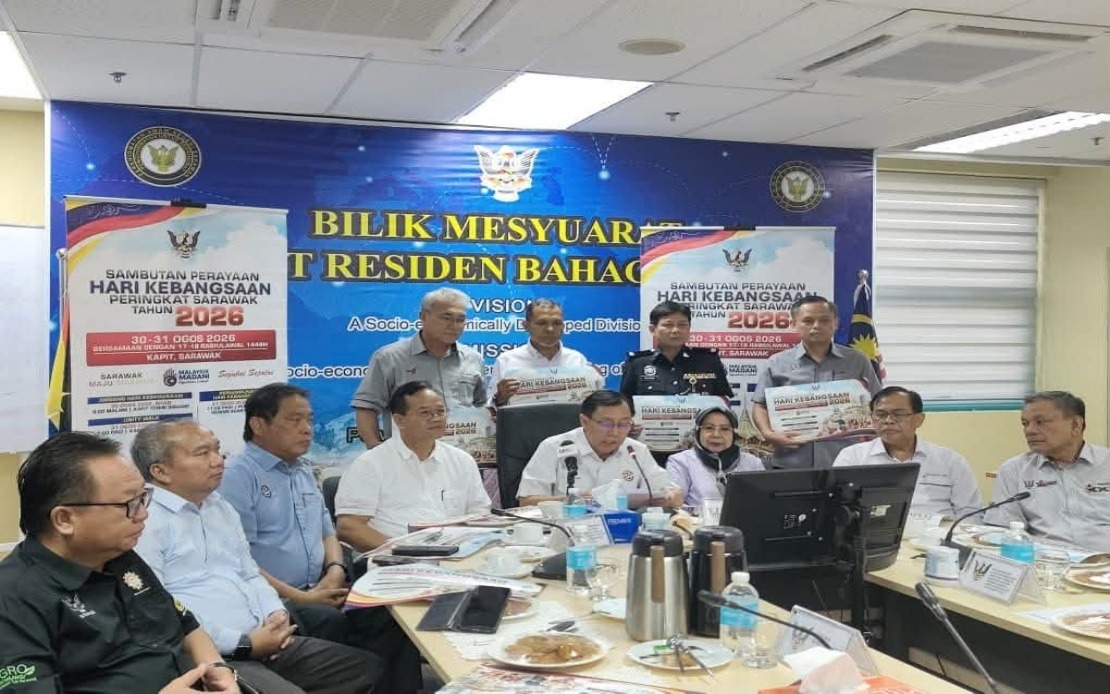
Kapit has been selected as the venue for Sarawak's official state-level National Day celebration, with festivities scheduled for August 30 and 31. The two-day programme represents a significant occasion for the division, bringing together residents and regional leadership to commemorate Malaysia's independence while emphasising themes of national pride, social cohesion, and collective identity.
Datak Seri Dr Stephen Rundi Utom, the Sarawak Food Industry, Commodity and Regional Development Minister and the official coordinator of the celebration, outlined the programme's strategic purpose in a recent statement. Beyond the ceremonial aspects of marking National Day, the minister emphasised that the gathering aims to reinforce bonds of unity across communities, acknowledge the historical contributions of pioneering national leaders, and cultivate deeper patriotic sentiment among attendees and Sarawak residents broadly.
The celebration will attract high-profile dignitaries from Sarawak's political hierarchy. Tun Dr Wan Junaidi Tuanku Jaafar, the Sarawak Governor, and Tan Sri Abang Johari Tun Openg, the Sarawak Premier, are both anticipated to participate, lending gravitas and institutional weight to the occasion. Their presence signals the importance Sarawak's leadership attaches to this particular commemoration, particularly its staging in Kapit rather than more urbanised centres.
The event schedule comprises three distinct components across the two days, each designed to accommodate different participation styles and reach diverse audiences. On the evening of August 30, Kapit Town Square will host the National Day Eve celebration, initiating the festivities with entertainment and communal gathering. This opening programme sets the tone for more formal proceedings the following morning.
August 31 itself features two sequential events beginning at dawn. The Unity Walk, commencing at 7 am, invites participants to demonstrate collective solidarity through physical participation in a march or procession format. This active component appeals particularly to younger residents and fitness-conscious community members. Governor Wan Junaidi is scheduled to lead or participate in this segment, effectively endorsing the unity message and encouraging broad public engagement.
The centrepiece gathering unfolds later that morning at 11 am at the grounds of Dewan Suarah Kapit, a public assembly venue. This National Day Gathering will host the formal ceremonial components, address-giving, and official proceedings. Both the Governor and Premier are expected to attend this culminating event, providing opportunities for official remarks and direct interaction with participating Kapit residents.
Choosing Kapit for a state-level celebration holds particular significance for interior Sarawak. Kapit, situated in the Rajang River valley deep within the state's hinterland, represents a more rural and traditionally marginalised region compared to coastal urban centres like Kuching. Hosting the official Sarawak-level National Day celebration in Kapit demonstrates political commitment to regional equity and acknowledges the Kapit Division's standing within the broader Sarawak polity.
Organisers have explicitly welcomed public participation, particularly from Kapit Division residents and neighbouring communities. This inclusive messaging aims to maximise attendance and demonstrate that National Day celebrations extend beyond ceremonial observance by government officials to genuine community participation. The invitation carries implicit recognition that genuine national unity requires active grass-roots engagement rather than top-down commemoration alone.
For those unable to attend in person, organisers have incorporated digital access pathways reflecting contemporary media consumption patterns. TVS, the Sarawak television service, will broadcast proceedings live, while the Sarawak Public Communications Unit (UKAS) will stream content across official social media channels. These technological accommodations ensure residents unable to travel to Kapit physically can still witness and participate in the celebration, particularly relevant given interior Sarawak's geographic dispersal and transportation challenges.
The scheduling during late August positions the celebration precisely around Malaysia's August 31 independence anniversary, maintaining established commemorative traditions while allowing flexibility for multi-day programming. This timing provides working people opportunity to participate on a Friday-Saturday weekend configuration, potentially increasing attendance compared to weekday-only events.
For Malaysian observers and regional analysts, Kapit's selection underscores evolving dynamics within Sarawak's political governance. By elevating an interior division to host the state's premier National Day event, Sarawak's leadership demonstrates renewed attention to regional development and political inclusion beyond the capital region. This approach reflects broader Southeast Asian trends toward recognising peripheral regions' political significance and ensuring national commemorations genuinely represent diverse geographic constituencies.
The celebration ultimately represents more than ceremonial obligation. In the Malaysian and Sarawakian contexts, National Day commemorations serve as vehicles for reinforcing constitutional nationalism, acknowledging historical federation agreements, and performing collective identity that transcends ethnic, religious, and socioeconomic boundaries. Kapit's elevation as host venue signals that such unifying national moments are deliberately and equitably distributed across the state's communities.

