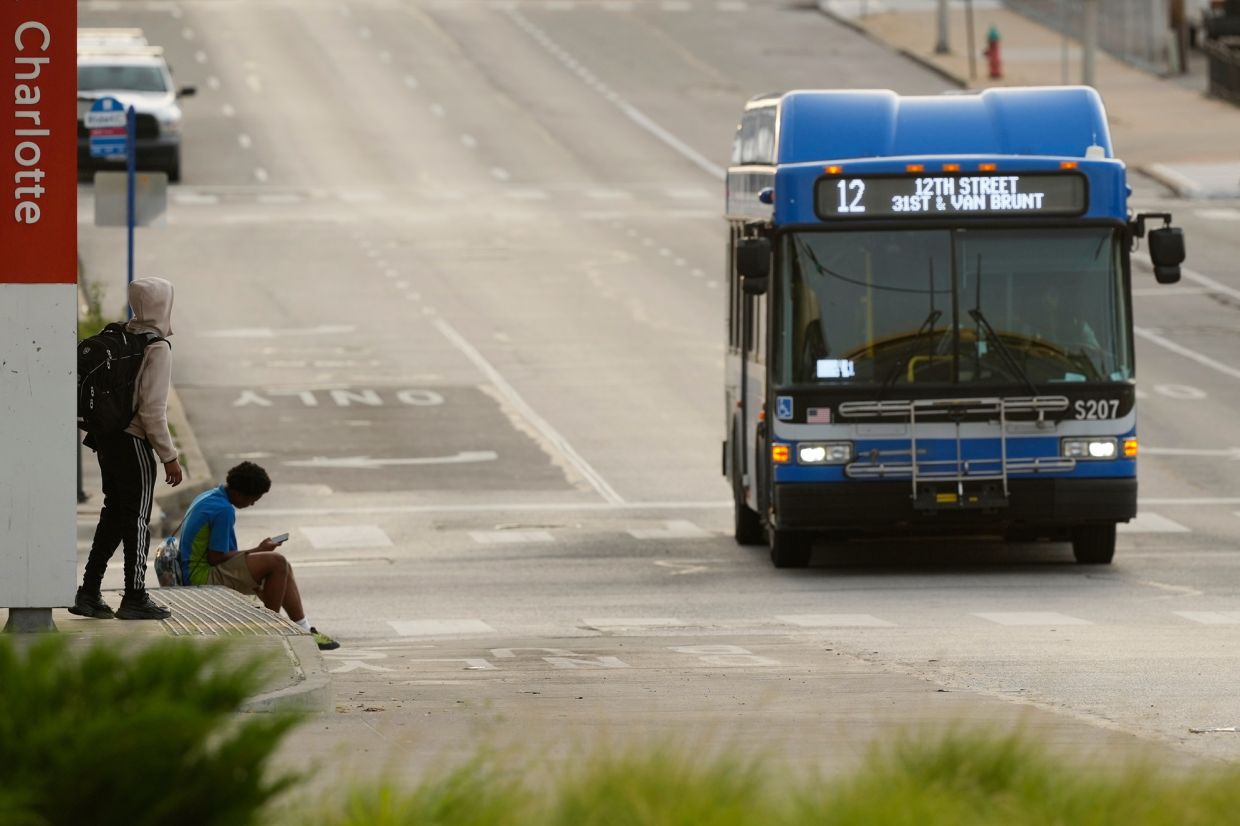
Kansas City, Missouri, stands at the centre of one of America's most contentious debates over artificial intelligence and public surveillance. The city's transportation authority is moving forward with plans to outfit cameras on its buses with facial recognition capabilities designed to identify passengers flagged as banned riders, missing persons, or subjects of law enforcement interest. The project has become a focal point in discussions about whether the security advantages of emerging technology justify the privacy implications for ordinary citizens going about their daily lives.
The initiative represents uncharted territory for public transportation systems in the United States. According to Jay Stanley, a senior analyst with the American Civil Liberties Union's Project on Speech, Privacy and Technology, the live deployment of facial recognition on cameras pointed at crowded public spaces would break a barrier that has existed for the past quarter-century. This distinction matters significantly—while surveillance cameras themselves are ubiquitous in urban environments, the analytical layer that artificial intelligence adds transforms passive recording into active, real-time identification and tracking. The distinction resonates across Southeast Asia as well, where rapid urbanisation and technology adoption have similarly raised questions about the balance between security infrastructure and individual freedoms.
Kansas City's transportation authority is proceeding despite considerable political headwinds. The state of Missouri declined to provide anticipated funding specifically because of concerns surrounding the facial recognition component, forcing city planners to cobble together support from local sources and federal grants. Tyler Means, the chief mobility and strategy officer at the Kansas City Transportation Authority, has adopted a pragmatic stance, characterising the technology as merely an evolution of existing surveillance infrastructure. "We've always had cameras on our buses," he argued, suggesting that the public will eventually accept facial recognition as simply another incremental advancement rather than a fundamental shift in how their movements are monitored.
SafeSpace Global, a Knoxville, Tennessee-based company, is the private partner implementing the system. The firm has already deployed similar technology in nursing homes to prevent resident wandering, in correctional facilities to maintain security, and in schools to manage access—making Kansas City's transit system its first foray into transportation. The company's approach involves immediate comparison of captured facial data against active watch lists generated when missing persons or banned riders are flagged by authorities. Critically, if no match occurs and no safety concern is identified, the facial information is discarded; only standard video footage is retained on local servers for up to five years. SafeSpace Global's Chief Executive Officer Scott Boruff emphasises this transient nature of the facial data, presenting it as a safeguard against indefinite tracking.
Yet privacy advocates see troubling expansionary potential embedded within this framework. The ACLU's Stanley warns that once artificial intelligence surveillance infrastructure becomes operational, historical precedent suggests its scope inevitably broadens over time. What begins as a narrow watch list can easily metastasise into broader categorical monitoring—tracking individuals based on behavioural patterns, associative networks, or demographic profiling. This concern is not merely theoretical; other American cities have experienced this mission creep firsthand. New Orleans police secretly operated facial recognition cameras despite explicit municipal ordinances against the technology, demonstrating how institutional enthusiasm can override formal prohibitions.
The historical record offers sobering lessons about facial recognition deployment in American policing. Following the 9/11 terrorist attacks, Tampa, Florida, experimented with facial recognition cameras in the Ybor City neighbourhood to identify crime suspects, but the program faced immediate public backlash and was abandoned. More recently, Detroit's experience illustrates the pattern: the city partnered with private businesses to install high-definition cameras providing real-time feeds to law enforcement, but encountered such substantial community opposition that authorities were forced to implement stricter policies governing usage. Former Detroit Police Chief James Craig acknowledges the political sensitivity but argues that abandoning the technology entirely would mean surrendering a valuable investigative tool—provided it operates under robust policy frameworks and genuine accountability mechanisms.
The technical and financial obstacles facing Kansas City underscore the substantial barriers American municipalities encounter when attempting to implement facial recognition systems. Installations initially scheduled for spring fell victim to both technical requirements and funding complications. Supporting the new camera and fare collection systems simultaneously required upgrading Wi-Fi routers across the transit network, while the state government's withdrawal of financial support created additional complications. These delays forced Kansas City to abandon hopes of having facial recognition operational during World Cup matches held in the city. Yet rather than abandoning the effort, the transportation authority has responded by planning a potentially expanded deployment of up to thirty buses rather than the originally envisioned nine-bus pilot program.
The postponement has created space for more deliberative consideration of the implications involved. Ryana Parks-Shaw, serving as mayor pro tem on the City Council, expressed cautious support for the delay, emphasising the necessity of careful implementation with transparent policies and clear boundaries on usage. This stance reflects growing recognition among municipal leaders that facial recognition demands fundamentally different governance frameworks than conventional security infrastructure. The technology's capacity to identify individuals at scale, combined with its integration into broader law enforcement databases and intelligence networks, requires establishing explicit limits before deployment rather than attempting to impose restrictions after the fact.
Security concerns remain legitimate, particularly for transit systems that serve diverse urban populations and face genuine safety challenges. However, the Kansas City case illustrates a critical tension: the impulse to deploy technological solutions often outpaces the development of adequate legal, ethical, and procedural safeguards. Will Owen, communications director for the Surveillance Technology Oversight Project, frames the issue starkly, arguing that city residents should not function as test subjects for unproven commercial surveillance technologies developed by Silicon Valley firms. This perspective has particular relevance for developing economies across Southeast Asia, where imported surveillance systems are frequently deployed without corresponding local policy frameworks or democratic deliberation.
The broader question transcends Kansas City's specific circumstances. As artificial intelligence capabilities proliferate and surveillance hardware becomes increasingly sophisticated, societies must determine whether integration of this technology into everyday public spaces represents progress or represents a fundamental alteration of the relationship between citizens and state institutions. The transportation authority's adjustment to rely on traditional foot patrols—deploying forty additional officers to bus stops and transit centres during the World Cup—inadvertently illustrates that older approaches remain viable alternatives, even if less technologically elegant. This low-technology solution, while more labor-intensive and economically expensive, avoids the permanent infrastructure of algorithmic surveillance and preserves the possibility of individual anonymity in public spaces.

