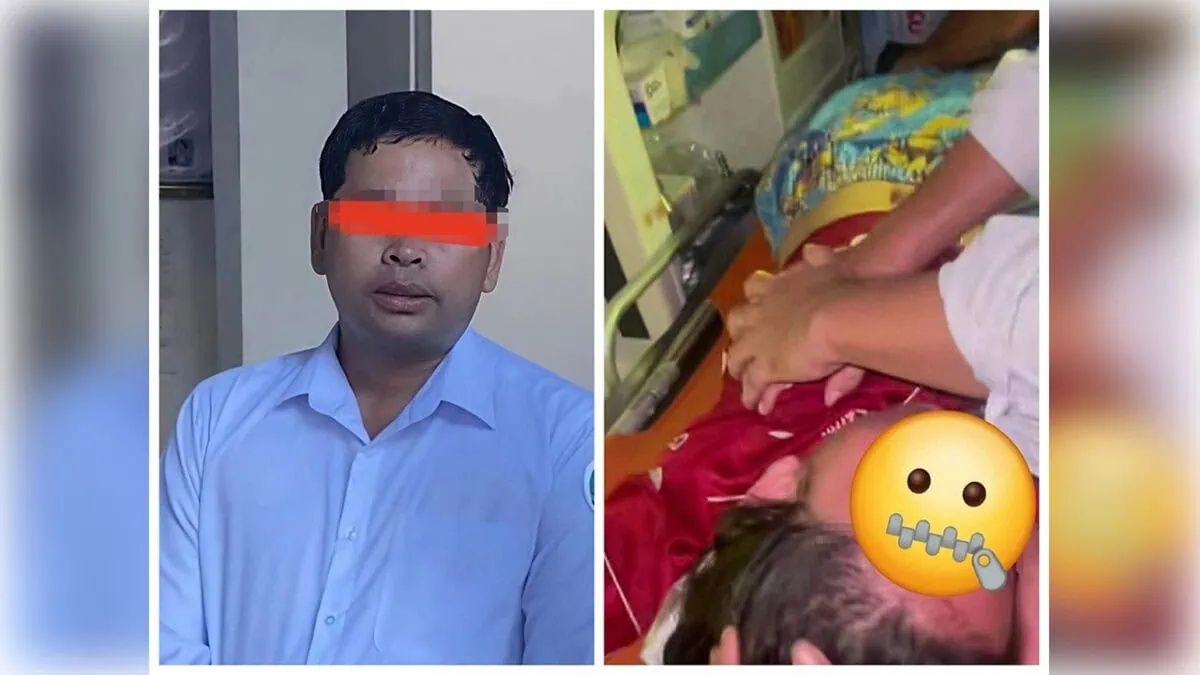
The administrative machinery in Cambodia's Kandal province moved swiftly this week to contain a controversy that exploded across social media, with provincial governor Kuoch Chamroeun issuing an order on Tuesday removing Chhun Phally from his role as chief of Setbo Health Centre. The decision, which took immediate effect, came in response to a video showing Phally providing emergency first aid to a 17-year-old patient that generated intense public scrutiny and raised serious questions about both medical propriety and patient dignity during crisis intervention.
The chain of events began when the teenager was brought to the health facility experiencing seizures and severe breathing complications. A family member present at the scene recorded footage of the treatment being administered, intending to document the girl's condition for other relatives who were not present. However, this medical documentation took on a different character once it entered the social media ecosystem, where it circulated rapidly and prompted observers to question whether the emergency procedures had adhered to standard medical protocols and ethical guidelines.
Online commentary quickly escalated from technical medical critique to broader allegations of impropriety. Numerous social media users contended that the manner of handling the patient constituted a violation of her personal dignity and amounted to a form of harassment. Others raised concerns about whether the treatment methods deployed during the resuscitation effort aligned with internationally recognised emergency medical standards and best practices for patient care. The cumulative weight of these concerns created sufficient public pressure to prompt administrative action.
Although Governor Chamroeun's official order contained no explicit reference to the circumstances prompting Phally's removal, the timing and context left no ambiguity. The directive reassigned Phally to a position within the broader Kandal provincial health administration, effectively removing him from direct patient-facing responsibilities at the health centre. This administrative repositioning represents a middle ground—acknowledgment that the incident warranted action while stopping short of outright dismissal, at least at this initial stage.
The Kandal provincial health department responded to the mounting controversy by launching a formal investigation into the incident. Acting provincial health director Kiem Piseth outlined the scope of the inquiry, stating that authorities would examine whether the medical procedures complied with professional standards and whether any misconduct or violations had occurred. Notably, Piseth suggested the investigation could result in consequences more severe than administrative reassignment, warning that if evidence of sexual harassment or professional misconduct emerged, the response would extend beyond internal discipline to potential criminal proceedings.
For Malaysian and Southeast Asian observers, this incident illuminates persistent challenges within regional healthcare systems regarding the intersection of emergency medicine, patient protection, and professional accountability. Many developing healthcare institutions across the region struggle to establish robust frameworks for ensuring both effective emergency response and comprehensive patient safeguarding. The tension between rapid life-saving intervention and meticulous adherence to procedural norms remains a genuine dilemma in crisis settings, particularly in facilities with limited resources and training infrastructure.
Phally's response to the allegations came in the form of a public statement in which he expressed regret for any misunderstanding generated by his actions while defending his medical judgment. He emphasised that his singular motivation during the emergency was preserving the patient's life, categorically denying any intention to harass or behave inappropriately toward the teenager. This framing—the physician as well-intentioned professional in a high-stress situation—represents the narrative commonly advanced in such cases, though it does little to address public concerns about whether informed consent protocols, gender-sensitive procedures, and fundamental respect for patient autonomy were observed during treatment.
The broader implications of this case extend throughout Cambodia's healthcare sector and resonate across Southeast Asia more generally. The incident has catalysed renewed discussion about professional ethics standards, the adequacy of emergency medical training, and institutional mechanisms for protecting vulnerable patients in healthcare settings. Advocacy groups and commentators have called for comprehensive measures including enhanced staff training in both technical emergency procedures and patient-centred care approaches, clearer protocols governing treatment administration, and improved grievance mechanisms enabling patients and families to raise concerns about care quality.
The investigation remains ongoing with authorities yet to announce their findings or determine whether additional disciplinary or legal consequences will follow Phally's administrative removal. This extended timeline reflects the complexity of adjudicating incidents where emergency medical necessity intersects with questions of propriety and ethics. Depending on investigative outcomes, the case could establish important precedent regarding healthcare worker accountability in Cambodia, potentially influencing how other regional health systems approach similar scenarios. The resolution will signal whether administrative convenience or substantive accountability for patient protection ultimately prevails in the provincial health bureaucracy.

