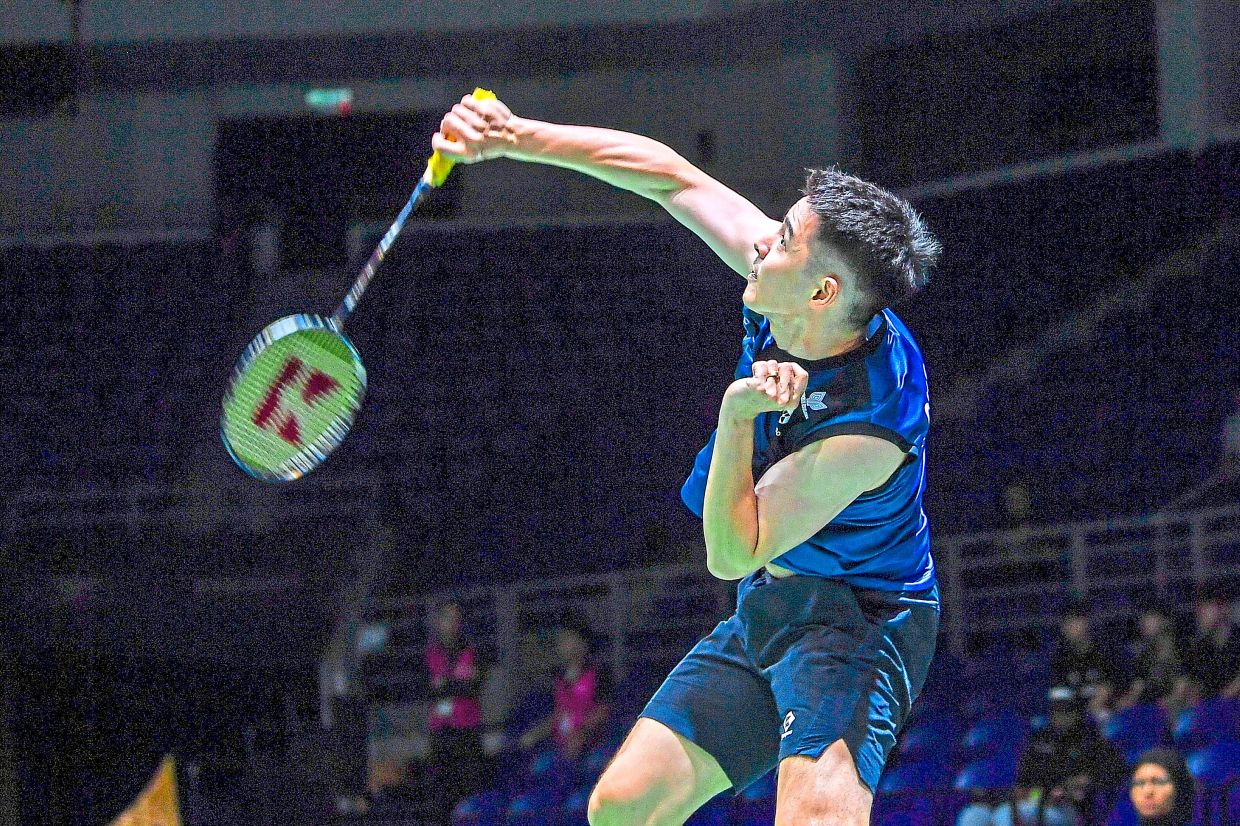
Cheam June Wei's fairytale run at the Korean Masters gathered fresh momentum on Friday when the Malaysian men's singles shuttler toppled another seeded opponent, this time seventh seed Su Li-yang of Taiwan, to secure a semi-final berth at the Asan Yi Sun-sin Gymnasium. The independent player showcased remarkable composure and fighting spirit in the quarter-finals, dispatching Li-yang 23-21, 10-21, 21-18 in a match characterised by extended rallies and tactical intensity that tested both competitors' endurance and mental resilience.
June Wei's progression represents a significant achievement for Malaysian badminton, particularly given his independent status outside a major state-backed programme. His journey through the draw has been marked by a series of upsets that few observers predicted when the tournament commenced. The 23-year-old's ability to remain composed in crucial moments, converting tight early-game situations into victories, suggests a player whose confidence and belief are mounting with each successive victory. His deliberate, point-by-point approach in the third game proved especially effective, allowing him to recover from dropping the second set and maintain the pressure necessary to prevail against a seeded opponent.
In candid post-match remarks, June Wei acknowledged the surprise nature of his advance through multiple rounds while emphasising his psychological approach to competition. Rather than allowing the magnitude of facing seeded players to overwhelm his thinking, he has consciously fragmented each match into its smallest components—individual rallies stripped of their broader context. This mental stratagem appears to be serving him well, as he remains insulated from the pressure that sometimes accompanies encounters against higher-ranked opposition. His earlier performances had already demonstrated his capacity to trouble established names, having upset world number 29 Jason Teh in the opening round before navigating past China's world number 49 Dong Tianyao in subsequent action.
June Wei's progress stands in contrast to mixed fortunes experienced by other Malaysian shuttlers at the event. The men's doubles pairing of Man Wei Chong and Soh Wooi Yik proved devastatingly efficient in their quarter-final encounter against India's Krishna Prasad Garaga and Pruthvi Krishnamurthy Roy, requiring just 42 minutes to complete a dominant 21-7, 21-8 victory that left their opponents with no meaningful response to their attacking execution and court positioning. The decisive nature of their triumph suggests a partnership operating with considerable synchronisation and mutual understanding.
Another notable Malaysian success story emerged from an all-Malaysian men's doubles quarter-final clash between two separate pairings. Tee Kai Wun and Yap Roy King overcame the partnership of Aaron Chia and Aaron Tai with authoritative scorelines of 21-12, 21-15, controlling proceedings throughout both games and never allowing their compatriots to establish meaningful competitive footing. This intra-Malaysian contest highlighted the depth of local men's doubles talent, though ultimately only one pairing could advance further in the competition.
The mixed doubles category presented less encouraging outcomes for Malaysia's representatives, as three separate pairings found themselves eliminated at the quarter-final stage—a collective disappointment that suggests relative weakness in this discipline compared to nations fielding stronger mixed pairings. Jimmy Wong and Cheng Su Yin encountered South Korea's second-seeded Kim Jae-hyeon and Jang Ha-jeong, suffering a narrow defeat with scores of 17-21, 18-21 that suggests competitive engagement but ultimately insufficient execution in crucial moments to overturn seeded opposition.
The partnership of Loo Bing Kun and Noraqilah Maisarah Ramdan similarly exited against China's third-seeded combination of Gao Jiaxuan and Wu Mengying, falling 14-21, 15-21 in what appeared to be an increasingly one-sided affair. Neither Malaysian pair proved capable of sustaining competitive intensity throughout their respective matches, suggesting that Chinese and South Korean mixed doubles programmes currently maintain technical and tactical advantages in this increasingly specialised discipline. The exits underscore a broader regional trend whereby mixed doubles has become increasingly dominated by East Asian nations with dedicated training infrastructure and long-standing competitive traditions.
Chen Tang Jie and Clarissa San encountered Japan's Haruki Kawabe and Kokona Ishikawa, suffering the tightest defeats of the three Malaysian mixed doubles exits with a 20-22, 17-21 result that illustrated competitiveness but ultimately fell fractionally short in both games. For Malaysian badminton, mixed doubles remains a development priority, particularly as the discipline carries significant weight in international badminton hierarchies and Olympic competition structures. The tournament performances suggest that sustained investment and specialised coaching attention may be necessary to close current gaps with dominant East and Southeast Asian rivals.
June Wei's continuation in the championship represents Malaysian badminton's remaining realistic medal prospect at this Korean Masters iteration, given the earlier mixed doubles eliminations and the need to assess his capacity to overcome semi-final opposition drawn from Asia's strongest players. His independent pathway, operating outside traditional state academy structures, provides an alternative success model worthy of consideration by Malaysian badminton administrators as they contemplate talent development strategies. Should he progress further, his achievement would carry considerable symbolic weight within Malaysian sporting discourse, demonstrating that excellence remains achievable through unconventional pathways supported by personal determination and strategic coaching guidance.
The tournament serves as a barometer for current Malaysian badminton competitiveness across different disciplines. While singles players like June Wei generate positive headlines, the systematic exits in mixed doubles point toward areas requiring renewed focus and resource allocation. As Malaysian badminton looks toward major competitions including the Thomas and Uber Cups, the Korean Masters results offer both encouragement regarding individual talent development and cautionary lessons about maintaining competitive standards across all discipline categories essential for comprehensive international success.

