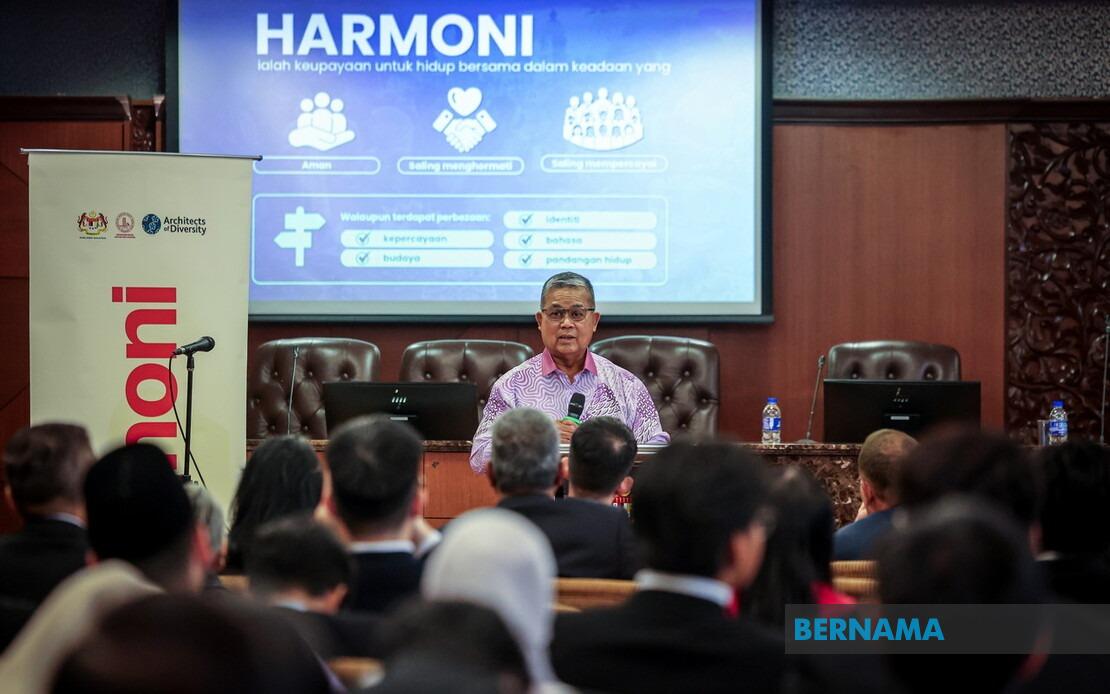
The Department of National Unity and National Integration (JPNIN) has embarked on a significant research initiative to create a Community Tension Index, a measurement framework designed to assess the state of social cohesion across Malaysia while tracking emerging tensions related to sensitive community issues. Minister of National Unity Datuk Aaron Ago Dagang revealed the initiative at the 2026 Harmony Symposium held at Parliament, emphasising that this tool would provide the government with crucial intelligence for developing preventive strategies and maintaining stability in the nation's multicultural landscape.
The index represents a response to mounting challenges in preserving national harmony, particularly as divisive narratives increasingly migrate from traditional media into the digital realm. Between January and the end of the first month of 2026, the Malaysian Communications and Multimedia Commission (MCMC) took enforcement action against 1,493 online posts and content pieces that breached standards around religion, royalty and race—collectively known as the 3R issues. This figure underscores the persistent threat posed by coordinated online campaigns and grassroots polarisation campaigns that exploit social media platforms to amplify discord among communities.
What makes the current environment particularly concerning is the structural nature of digital platforms themselves. Social media algorithms, designed primarily to maximise user engagement, inadvertently create what researchers term "filter bubbles" and "echo chambers"—digital spaces where individuals encounter predominantly information and viewpoints that align with their existing beliefs. This algorithmic sorting mechanism narrows exposure to diverse perspectives, making it progressively difficult for communities to engage in balanced discourse. The result is a widening gap in mutual understanding between different ethnic and religious groups, fragmenting the social fabric that successive Malaysian governments have worked to strengthen since independence.
The strategic importance of developing such an index cannot be overstated for policymakers in Southeast Asia's largest economy. By establishing quantifiable metrics for measuring social tension, JPNIN can move beyond anecdotal observations and reactive responses to divisive incidents. Instead, the government gains the capacity to identify emerging flashpoints before they escalate into full-blown communal conflict. Early warning systems of this nature have proven valuable in other multicultural democracies facing similar polarisation challenges, allowing administrations to deploy targeted intervention measures before tensions metastasise into violence or institutional breakdown.
According to Aaron, the insights derived from this research will serve as a foundation for government policy across multiple domains—from education and media regulation to law enforcement priorities and inter-community dialogue initiatives. The index will effectively become a dashboard for monitoring national unity, providing regular readings on the health of Malaysia's plural society and highlighting specific domains or demographic segments where intervention is most urgently needed. This represents a shift toward evidence-based governance in an area traditionally managed through institutional experience and political intuition.
Complementing this measurement initiative, JPNIN has simultaneously initiated a comprehensive consultation process with diverse stakeholders—representing business, civil society, religious organisations, academic institutions and community groups—to gather feedback on a proposal to establish a National Harmony Commission (SKN). This proposed institution would function as a dedicated mechanism for early conflict prevention, mediation services and formal dispute resolution processes. By centralising these functions within a single, well-resourced body rather than scattering them across multiple agencies, Malaysia could enhance the coherence and effectiveness of its unity-building efforts.
The proposed commission's mandate would extend beyond mere conflict management to include investigative authority over incidents that threaten national harmony. This investigative capacity is particularly significant given the digital dimension of contemporary polarisation. Online campaigns coordinating divisive narratives often operate across jurisdictional boundaries and involve actors with varied motivations, making traditional law enforcement responses inadequate. A dedicated harmony commission with investigative powers could trace the origins of viral divisive content, identify coordinated disinformation campaigns and provide intelligence to relevant authorities for prosecution under existing laws.
For Malaysia's diverse population of Malays, Chinese, Indians and indigenous communities alongside numerous religious minorities, the establishment of such institutional infrastructure carries profound implications. A functioning early-warning system coupled with a dedicated harmony commission could prevent the escalation patterns that have historically led to communal violence in plural societies. The 1969 riots remain a cautionary reference point in Malaysian consciousness; subsequent efforts to rebuild trust have centred on institutional mechanisms including the Rukunegara, inter-faith councils and parliamentary committees. This latest initiative represents a contemporary adaptation of that preventive approach, calibrated for the digital age.
The involvement of MCMC in enforcing standards around 3R content indicates that the government recognises online platforms as the primary battleground for social cohesion in contemporary Malaysia. Unlike print media or broadcast channels subject to established regulatory frameworks, social media operates largely beyond effective government oversight in real time. The sheer volume of user-generated content makes comprehensive monitoring impossible, necessitating algorithmic detection systems, community reporting mechanisms and partnership with platform operators. The 1,493 items removed over one month suggest that MCMC is identifying problematic content, yet questions persist about whether these enforcement actions represent a fraction of total divisive material circulating online.
Implementing the Community Tension Index will require significant technical expertise, adequate funding and access to reliable data across government agencies and civil society organisations. The methodology must balance sensitivity to genuine grievances within communities against overreach that suppresses legitimate political expression and criticism. Malaysian researchers and policymakers will need to study international precedents—including conflict early-warning systems developed for post-conflict societies—while adapting frameworks to Malaysia's specific context of constitutional multiculturalism, constitutional monarchy and federalism. The index cannot become a tool for suppressing dissent or minority viewpoints; rather, it should identify when legitimate discourse is sliding toward incitement or coordinated polarisation.
Stakeholder consultation on the National Harmony Commission offers an opportunity to build broad ownership of Malaysia's unity agenda beyond government circles. Including opposition political figures, religious leaders from minority faiths and civil society actors representing marginalised communities in the design process enhances legitimacy and ensures that the institution reflects diverse perspectives on what threatens harmony. The Malaysian Parliamentary Cross-Party Group on Racial and Religious Harmony, which hosted the symposium where Aaron announced these initiatives, itself represents the potential for cross-party consensus on national unity—an increasingly valuable resource in polarised political environments.
The timing of these initiatives matters significantly. Malaysia faces mounting regional pressures as geopolitical competition between great powers intensifies and disinformation campaigns target Southeast Asian societies with increasing sophistication. Internally, demographic shifts, economic anxieties and the maturing of social media as a primary information source for younger Malaysians create conditions where divisive narratives can gain traction rapidly. By developing institutional capacity to measure, understand and respond to community tensions now, Malaysia positions itself to navigate these challenges more effectively than societies that continue relying on ad hoc crisis management.
Ultimately, the success of these initiatives will depend on implementation fidelity and sustained political commitment. Creating an index or commission means little if findings are ignored or if institutional actions become politicised. The government must demonstrate that data from the Community Tension Index actually shapes policy decisions and resource allocation. Similarly, the National Harmony Commission must operate with sufficient autonomy to investigate and mediate impartially, even when conclusions prove inconvenient to political leaders. For Malaysian readers and policymakers, these developments signal acknowledgment that maintaining unity in an increasingly digitalised, polarised world requires continuous adaptation and investment—not periodic response to crises.

