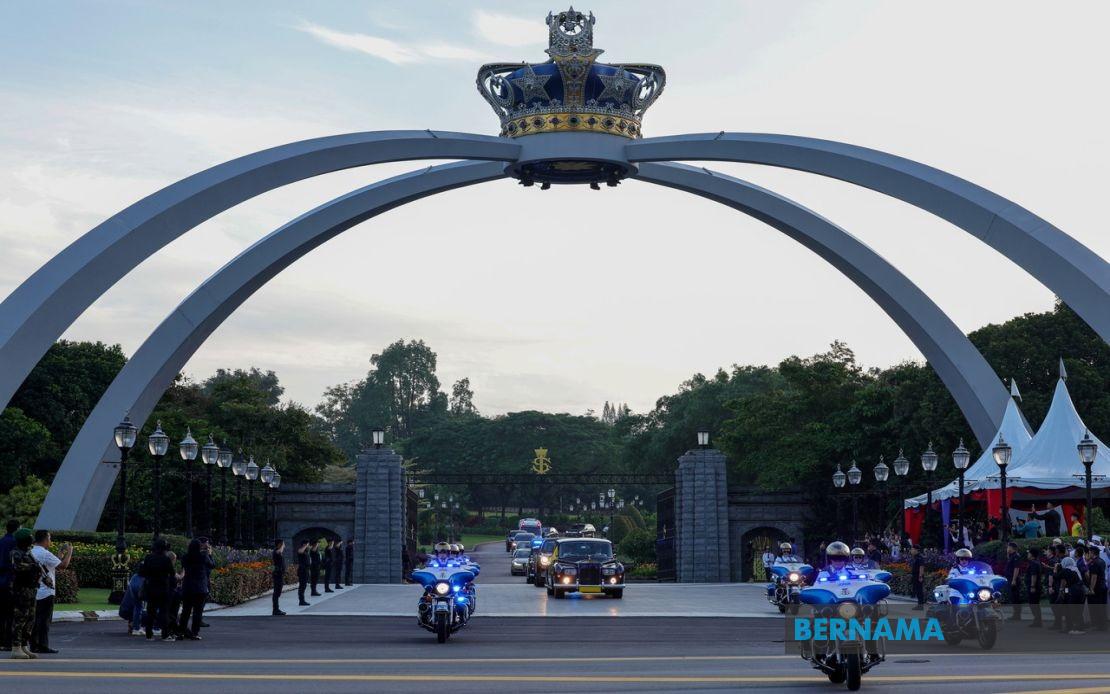
The formal inauguration of Johor's new Menteri Besar will proceed at Istana Bukit Serene this afternoon at 3 pm, according to an official announcement distributed through the Johor Palace's communications channels. The swearing-in ceremony represents a significant moment in the state's political calendar, following the decisive outcome of the recent electoral mandate.
Details regarding the ceremonial proceedings have been carefully coordinated by palace officials. Members of the press have been granted access to observe the event from the Crown Arch entrance of the palace, permitting media coverage of this constitutional moment. The invitation circulated via WhatsApp specified the precise timing and venue, though notably refrained from publicly identifying the individual poised to assume the position until the formal ceremony itself.
Antipation has been building throughout Johor's administrative centre since midday, with journalists and media personnel establishing positions both at the Menteri Besar's official residence in Saujana and at the palace gates. The heightened media attention reflects the significance of the transition occurring within the state government, with representatives from various outlets monitoring developments as the afternoon approached.
The swearing-in ceremony follows a pivotal meeting between Sultan Ibrahim Iskandar and senior Barisan Nasional leadership at Istana Pasir Pelangi earlier on July 12. The audience involved Datuk Seri Ahmad Zahid Hamidi, the coalition's national chairman, alongside Datuk Onn Hafiz Ghazi, who leads the BN's Johor division. The approximately one-hour discussion between the Sultan and BN officials likely encompassed matters related to government formation and the incoming administration's direction, though specific details of their conversation remained undisclosed.
The palace meeting occurred within the context of Barisan Nasional's commanding performance in the Johor state election held the previous day. The coalition captured 48 of 56 contested state assembly seats, delivering a decisive mandate that substantially strengthens its political position within one of Malaysia's largest and most economically significant states. This electoral dominance provides the new Menteri Besar with a considerable parliamentary majority for implementing the government's agenda.
Barisan Nasional's performance in Johor represents a crucial development in Malaysian politics, particularly given the state's historical importance and economic clout. The coalition's ability to secure such a decisive majority signals continued confidence from Johor's electorate and positions the state government to pursue its developmental objectives with relative legislative stability. The swearing-in ceremony thus symbolises not merely a change in individual leadership, but the affirmation of the coalition's governance mandate within the state.
For Malaysian political observers, the formal ceremony carries broader implications regarding the coalition's trajectory at both state and national levels. Johor's governance outcomes frequently influence broader political dynamics, and the strength of the mandate delivered through the election results will likely embolden BN leadership as the party navigates its strategic positioning in Malaysia's complex political landscape. The new administration enters office with substantial parliamentary support, potentially enabling more confident policy implementation.
The identity of the incoming Menteri Besar, while strategically withheld from the formal invitation, reflects traditional protocols observed during such state ceremonies. The palace maintains convention by revealing the appointee's name through the formal constitutional process rather than through advance media disclosure. This approach preserves the ceremonial significance of the oath-taking and respects the formal procedures governing executive appointments within Malaysia's constitutional monarchy framework.
Regionally, developments in Johor carry relevance for Southeast Asia's broader political context. As a major Malaysian state with substantial economic influence and cross-border significance, particularly regarding its relationship with Singapore and broader regional integration, the state's political stability and governmental direction attract international attention. The Barisan Nasional victory and the forthcoming administration therefore constitute elements of Malaysia's wider political and economic positioning within Southeast Asia.
The ceremonial proceedings at Istana Bukit Serene will formally conclude the state's transitional period following the election, establishing the institutional framework for the incoming government's operations. Through the traditional oath-taking process, the new Menteri Besar will acquire the constitutional authority to exercise executive functions and lead the state administration. The ceremony thus represents both a symbolic affirmation of democratic processes and the concrete transfer of governmental responsibility.
For Johor's civil service and state institutions, the swearing-in marks the beginning of their engagement with the new political leadership. The incoming administration will inherit existing governmental structures, ongoing policy initiatives, and commitments made by the previous government, alongside the opportunity to introduce new directions aligned with the fresh mandate received through the electoral process. The next hours will therefore establish the tone for the relationship between the state's political leadership and its administrative machinery.
Media personnel covering the afternoon ceremony will document the formal proceedings for public record, ensuring that Malaysians and international observers gain visibility into this significant constitutional moment. The coverage will provide insights into the composition of the state government and the priorities articulated during the official proceedings, offering clarity regarding the new administration's intended direction as it commences its term in office.

