Political tension in Johor peaked on July 10 as the 16th state election entered its decisive closing chapter, with all major parties executing carefully calibrated final manoeuvres to secure voter support before the official campaigning period ended at midnight. The intensifying race to control the state government saw leaders from Pakatan Harapan, Barisan Nasional, Perikatan Nasional, and smaller opposition groups converging on key constituencies with contrasting strategies that reflected their respective campaign philosophies and organizational strengths.
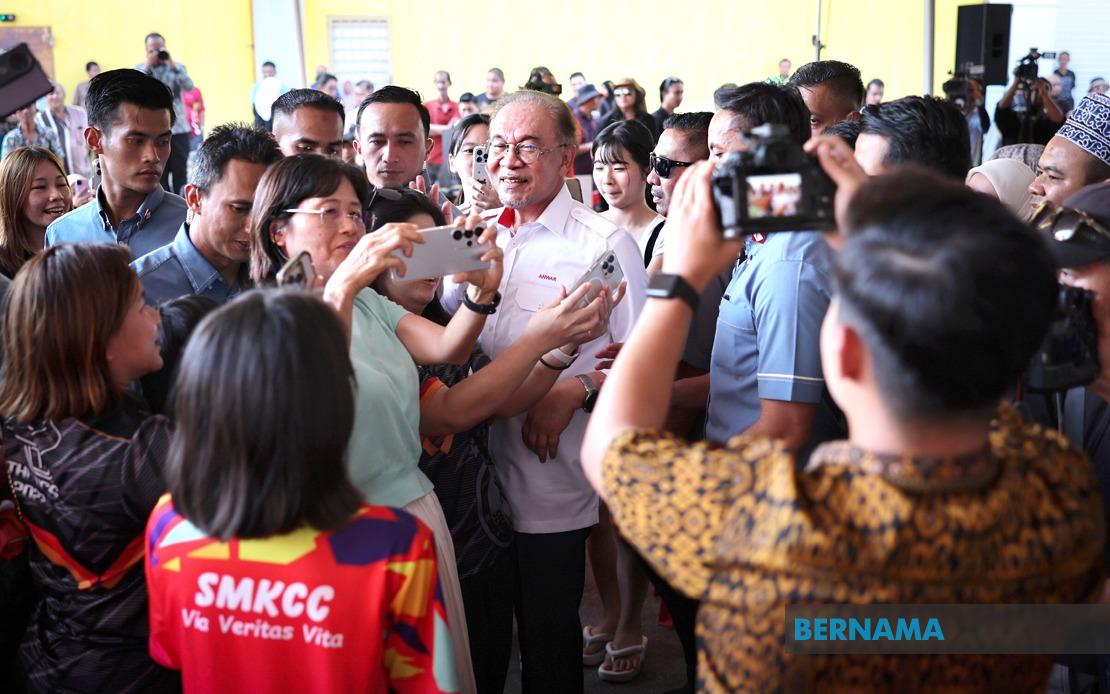
Pakatan Harapan's coordinated offensive proved particularly visible, with Prime Minister Datuk Seri Anwar Ibrahim personally shepherding the coalition's closing narrative through a methodical five-location tour across strategically significant areas. Beginning in Bukit Gambir, the tour proceeded through Bukit Batu and Layang-Layang before culminating in Pasir Gudang with the "Johor Ke Depan, Undi Harapan Grand Finale Programme," symbolizing the coalition's attempt to present a comprehensive vision for the state's future. Anwar's direct involvement at this crucial juncture underscored how central Johor's election result remains to the federal government's political fortunes and stability, given the state's significant representation in the national parliament and its traditional role as a bellwether for broader Malaysian electoral trends.
The ground-level dimension of PH's campaign manifested through candidates employing more intimate engagement tactics, exemplified by Larkin state seat contender Suhaizan Kaiat conducting a shopping mall walkabout accompanied by Parti Amanah Negara Vice President Datuk Seri Dr Dzulkefly Ahmad. This grassroots approach allowed candidates to demonstrate accessibility and gather direct constituent feedback during the final hours of campaigning. Suhaizan's public acknowledgement that feedback received throughout the campaign period constituted a significant responsibility reflected broader awareness among PH candidates that the campaign messaging and constituent interactions would shape expectations for performance if elected.
Barisan Nasional adopted a markedly different closing posture, with Chairman Datuk Seri Dr Ahmad Zahid Hamidi opting for a spiritual and supplicatory tone by convening the "BN Grand Supplication & Doa Selamat" event in Kulai. This choice revealed how BN sought to frame the election within a religious and moral context rather than purely policy-driven terrain. The approach appeared calculated to appeal to Johor's predominantly Muslim population and to shift the electoral conversation toward values and community cohesion rather than performance metrics or policy specifics. Incumbent Johor Menteri Besar Datuk Onn Hafiz Ghazi, BN's Machap candidate, adopted a notably humble posture by publicly apologizing for perceived shortcomings during his administration, an unusual acknowledgement that suggested BN recognized public dissatisfaction with certain governmental outcomes and sought to preempt accusations of arrogance or complacency.
Perikatan Nasional's presence through Bersatu President Tan Sri Muhyiddin Yassin took on an educational character, with Muhyiddin urging voters to synthesize information gathered across the two-week campaign period to make informed electoral decisions. This framing positioned PN as the rational choice for constituents who had conducted sufficient due diligence on competing parties' track records and policy propositions. The messaging suggested confidence that PN's case would prove persuasive among voters who had thoroughly evaluated available options.
Smaller opposition parties attempted to carve distinctive positions in the final campaign sprint. PKR-affiliate Bersama enlisted prominent figures Datuk Seri Rafizi Ramli and Nik Nazmi Nik Ahmad for their closing "Ceramah Finale," with Rafizi promising to synthesize, dissect, and counter issues raised throughout the campaign period. Meanwhile, MUDA employed the "Puteri Wangsa Grand Finale Lecture" as their culminating event, with President Amira Aisya Abd Aziz emphasizing the decisive power held by Johor's electorate. These closing messages from smaller parties attempted to distinguish themselves through either combative policy engagement or empowerment rhetoric.
The election's structural parameters shaped strategic considerations for all participants. A total of 172 candidates competed across 56 state seats, creating a fragmented competitive landscape where coalition coordination and ticket management proved crucial determinants of electoral outcomes. The relatively high candidate-to-seat ratio indicated intense intra-party competition in certain constituencies and reflected how firmly all parties contested virtually every available position.
Weather considerations added a practical dimension to campaign planning. Malaysia's Meteorological Department forecasted clear morning conditions with potential afternoon rainfall or thunderstorms, factors that campaign managers would consider when scheduling final activities and assessing anticipated voter turnout patterns across different constituencies. Unpredictable weather could potentially suppress participation in certain areas, benefiting parties with superior ground organization and voter mobilization infrastructure.
The intensity of final-stage campaigning reflected the genuine electoral uncertainty surrounding the outcome. Neither BN nor PH appeared positioned to secure overwhelming majorities, suggesting that smaller parties and independents might exercise disproportionate influence in government formation negotiations. This created incentives for all parties to compete aggressively across constituencies, including those traditionally held by opponents, as marginal gains could prove decisive in achieving viable governing coalitions.
The election's significance extended beyond Johor's boundaries, carrying implications for federal-level political dynamics and the sustainability of the current national government's parliamentary majority. A substantial PH performance could validate Anwar Ibrahim's federal leadership and strengthen the coalition's parliamentary position, while a strong BN showing would reverse recent electoral momentum favoring the ruling coalition and potentially embolden calls for ministerial or policy adjustments at the national level. For Perikatan Nasional, demonstrating electoral competitiveness in Johor could reinvigorate the coalition's national political profile after recent setbacks and internal tensions.
The closing campaign phase witnessed all major political actors attempting to frame the election within narratives favoring their respective organizational interests and policy platforms. Whether through spiritual appeals, grassroots engagement, youth empowerment rhetoric, or policy synthesis, each coalition sought to position itself as the legitimate custodian of Johor's future development. The convergence of these competing narratives, campaign strategies, and organizational mobilization efforts would resolve itself definitively once polling commenced, rendering the intensive final sprint ultimately subject to the electoral judgment of Johor's voting population.

