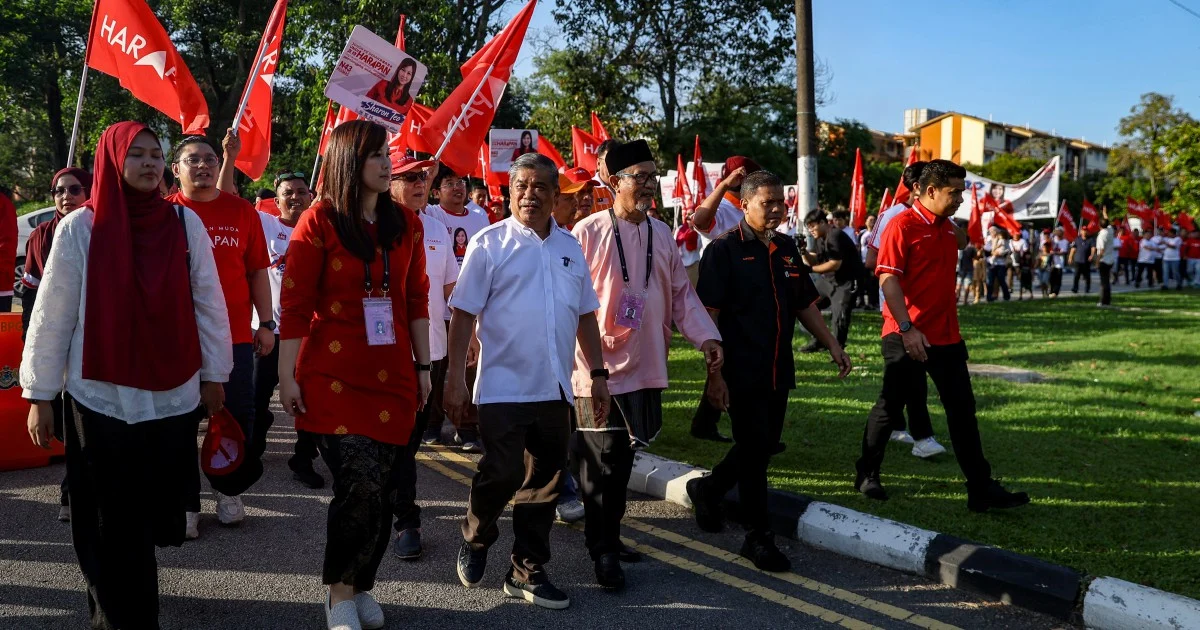
Sharon Teo's arrival at the Permas state constituency nomination centre in Pasir Gudang on Wednesday drew considerable public backing for Pakatan Harapan, with supporters gathering at Dewan Muafakat Taman Mawar to voice their endorsement of the opposition coalition. The visible enthusiasm demonstrated by voters chanting "Johor undi Pakatan Harapan" — or Johor votes for Pakatan Harapan — underscores the coalition's efforts to consolidate support in a state that has remained under Barisan Nasional control through successive electoral cycles.
The nomination filing represents a critical milestone in Pakatan Harapan's campaign strategy for the Johor state elections, as the coalition seeks to translate public sentiment into electoral gains. Permas, a state constituency within the Pasir Gudang parliamentary zone, has historically been contested ground between the ruling coalition and opposition forces. The turnout of supporters at Teo's nomination filing reflects the coalition's attempt to energise its base and demonstrate organisational capacity in what promises to be a hotly contested election cycle.
Johor has long been a stronghold for Barisan Nasional, with the state government maintaining consistent majorities through multiple election cycles. However, recent political developments across Malaysia have created openings for opposition parties to challenge the traditional power structures. Pakatan Harapan's ability to field competitive candidates and mobilise voter enthusiasm in Johor could reshape the political landscape in Southeast Asia's most developed state economy. The coalition's presence in Pasir Gudang and surrounding constituencies suggests a deliberate effort to contest seats previously considered secure for the ruling coalition.
Sharon Teo's candidacy represents a deliberate choice by Pakatan Harapan to present diverse representation to Johor voters. The nomination filing process itself carries ceremonial and strategic significance, serving as an opportunity for candidates to introduce themselves to local communities and demonstrate their commitment to constituency-based politics. The public reception Teo received indicates that coalition messaging has gained traction among sections of the Johor electorate, particularly in urban and semi-urban constituencies like Permas.
The chants favouring Pakatan Harapan suggest that voter sentiment may be shifting across demographic groups in Johor, reflecting broader patterns observed in other Malaysian states. Urban constituencies have increasingly shown susceptibility to opposition messaging, particularly around governance, transparency, and economic management. Pasir Gudang, as an industrial and manufacturing hub, contains significant populations of working-class voters who may be responsive to opposition narratives on cost of living and economic equity.
Packatan Harapan's campaign strategy appears focused on translating grassroots enthusiasm into consolidated voting blocs. The coalition has faced internal challenges in recent years, including defections and leadership transitions, yet continues to field candidates and mobilise supporters across multiple state contests. Johor represents a significant prize in Malaysian politics given its economic importance, large population, and strategic position within Peninsular Malaysia's political geography.
The nomination centre at Dewan Muafakat Taman Mawar became a focal point for coalition supporters to demonstrate solidarity and express electoral preferences. Such public gatherings serve dual purposes: they reinforce supporter morale while generating media coverage that amplifies campaign messaging beyond immediate attendees. The decision to concentrate supporters at nomination filings reflects calculated campaign planning designed to create visual and auditory impressions of organisational strength.
Johor's electoral significance extends beyond state-level politics. The state has historically influenced national political outcomes due to its large number of state assembly seats and parliamentary constituencies. Barisan Nasional's control of Johor has provided a stable base for the federal ruling coalition, contributing to legislative majorities at the national level. Any shift in Johor's electoral balance could have cascading effects on national coalition dynamics and parliamentary arithmetic.
The reception for Sharon Teo's nomination filing demonstrates that Pakatan Harapan retains capacity to generate electoral engagement in Johor despite historical disadvantages. Opposition parties have invested significant organisational resources in Johor in recent years, recognising that demographic changes, urbanisation, and shifting economic conditions have altered the state's political calculus. Younger voters and urban professionals may prove more responsive to opposition messaging than previous generations.
As the Johor state election approaches, nomination filings and campaign events will provide successive opportunities for candidates to gauge voter sentiment and refine messaging strategies. The enthusiasm demonstrated at Permas suggests that the opposition coalition will contest the election competitively across multiple constituencies rather than concentrating resources selectively. This broad-based approach could stress Barisan Nasional's campaign operations and force the ruling coalition to defend seats previously considered secure.
The chanting at Dewan Muafakat Taman Mawar represents more than symbolic support; it reflects underlying voter sentiment that may translate into actual electoral performance. Johor's political trajectory in the coming election cycle will provide important indicators of broader Malaysian political trends, including the durability of traditional ruling coalition support and the resilience of opposition coalition structures following years of organisational strain and leadership transitions.

