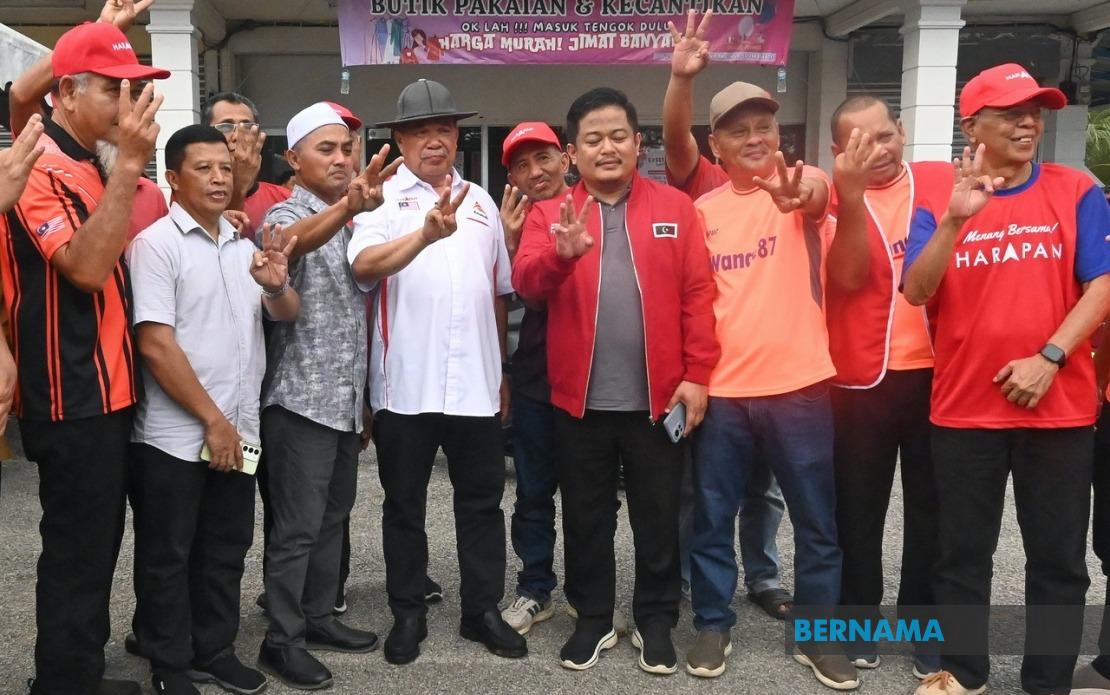
The Pakatan Harapan coalition is making a direct appeal to Johor voters ahead of this Saturday's state election, with Amanah president Datuk Seri Mohamad Sabu arguing that the party deserves a mandate to prove its policy commitments are genuine rather than superficial pledges. Speaking in Rengit after the Johor Tour with Bang Mat programme, Mohamad Sabu emphasised that without electoral victory, the coalition cannot translate its newly launched manifesto into concrete action that would benefit ordinary Johoreans facing everyday challenges.
The underlying argument reflects a strategic calculation by the opposition coalition that voters remain sceptical about campaign promises, particularly given accusations from competing parties that the PH manifesto amounts to little more than recycled rhetoric. Mohamad Sabu's response is direct: anyone can draft attractive policies, but genuine change materialises only through rigorous implementation. This distinction between rhetoric and execution has become increasingly important in Malaysian electoral politics, where manifestos are often forgotten after election day. The minister's framing suggests PH views this election as an opportunity to rebuild credibility through demonstrated performance rather than aspirational language.
A particularly telling element of Mohamad Sabu's campaign messaging concerns the party's growing visibility in rural constituencies. He noted a marked contrast between conditions in 2018, when Pakatan Harapan remained relatively unknown in village communities and farming areas, and the present moment, when the coalition reports significantly warmer receptions from rural voters. This observation carries implications for how Malaysian electoral dynamics are shifting, suggesting that information dissemination networks and grassroots political awareness have expanded substantially over the past five years. The minister's anecdotal accounts of being recognised in markets and asked for photographs may appear modest, yet they indicate a fundamental change in rural political engagement patterns across the state.
The PH manifesto itself was developed through what party leaders characterise as extensive community consultation, with representatives claiming to have spent considerable time listening to voter concerns and understanding local grievances. This methodological approach contrasts with opposition portrayals of the manifesto as hastily assembled or lacking substantive grounding in genuine public needs. If Mohamad Sabu's claims about the consultation process are accurate, the document represents a deliberate attempt to anchor policy positions in identifiable voter demands rather than ideological preferences or organisational dogma. For Malaysian voters evaluating different coalition offers, this claimed responsiveness to grassroots input could differentiate PH from alternatives promising top-down solutions.
Moreover, the minister's role as Minister of Agriculture and Food Security provides particular relevance to Johor's electoral considerations. As a state with significant agricultural sectors and rural populations dependent on food production and agribusiness, policy positions affecting farming communities, food prices, and rural development represent material concerns for many voters. Mohamad Sabu's dual identity as both a national minister and Amanah leadership figure creates potential for demonstrating how federal-level ministerial authority could translate into state-level benefits should PH gain control of the Johor state government. This intersection of national and state politics adds layering to what might otherwise appear as a purely local electoral contest.
The timeline specified by Mohamad Sabu suggests operational urgency should his coalition prevail. He indicated that implementation of manifesto commitments would commence as early as July 12, the day after polling concludes, signalling an intention to translate electoral victory into swift governmental action. This emphasis on rapid implementation serves multiple purposes: it demonstrates PH's eagerness to deliver on promises, contrasts with perceptions of administrative lethargy, and establishes performance benchmarks against which voters can measure success. For Johor residents considering whether to support the coalition, such explicit commitment to immediate action provides measurable criteria for evaluating whether post-election reality matches pre-election assurances.
The political context surrounding this election reflects broader Malaysian concerns about governance quality, cost of living pressures, and whether established political formations can meaningfully address everyday hardships. Johor, as Malaysia's southernmost peninsula state and a region with distinct economic characteristics spanning agricultural, manufacturing, and services sectors, presents a microcosm of nationwide political tensions. Voter response in Johor will likely influence calculations about electoral viability across other states, making this particular contest strategically significant beyond local considerations. Opposition parties' characterisation of the PH manifesto as derivative suggests they perceive genuine competitive threat, otherwise such attacks would be unnecessary.
For Southeast Asian observers monitoring Malaysian political evolution, the Johor election demonstrates how opposition coalitions attempt rebuilding legitimacy following previous electoral disappointments. Pakatan Harapan faced significant setbacks in recent years, and this campaign represents an opportunity for organisational renewal and voter confidence reconstruction. The coalition's emphasis on rural voter engagement and grassroots consultation reflects recognition that electoral mathematics in Malaysian state contests depend substantially on rural constituencies, where Umno and its allies have traditionally maintained strongholds. PH's apparent success in improving rural reception since 2018 could indicate shifting rural political preferences, though definitively establishing such trends requires examining actual voting behaviour rather than anecdotal campaign observations.
The security force early voting scheduled for July 10, preceding general polling on July 11, demonstrates administrative preparation for the electoral exercise. Such logistical details, while procedurally routine, underscore the formal governmental commitment to conducting competitive elections with appropriate security arrangements. Johor's significance as a state proximate to Singapore and containing substantial maritime and logistics infrastructure means election administration involves coordination across multiple governmental agencies and security frameworks.
Looking toward polling day, Mohamad Sabu's messaging encapsulates PH's broader campaign strategy: emphasising that genuine change requires not only attractive policy platforms but voter willingness to grant electoral authority. The coalition's investment in articulating how its manifesto responds to public concerns reflects understanding that modern electoral competition increasingly focuses on performance credibility rather than ideological purity or organisational history. Whether Johor voters ultimately find such arguments persuasive will significantly shape both state politics and broader national political trajectories in coming months.

