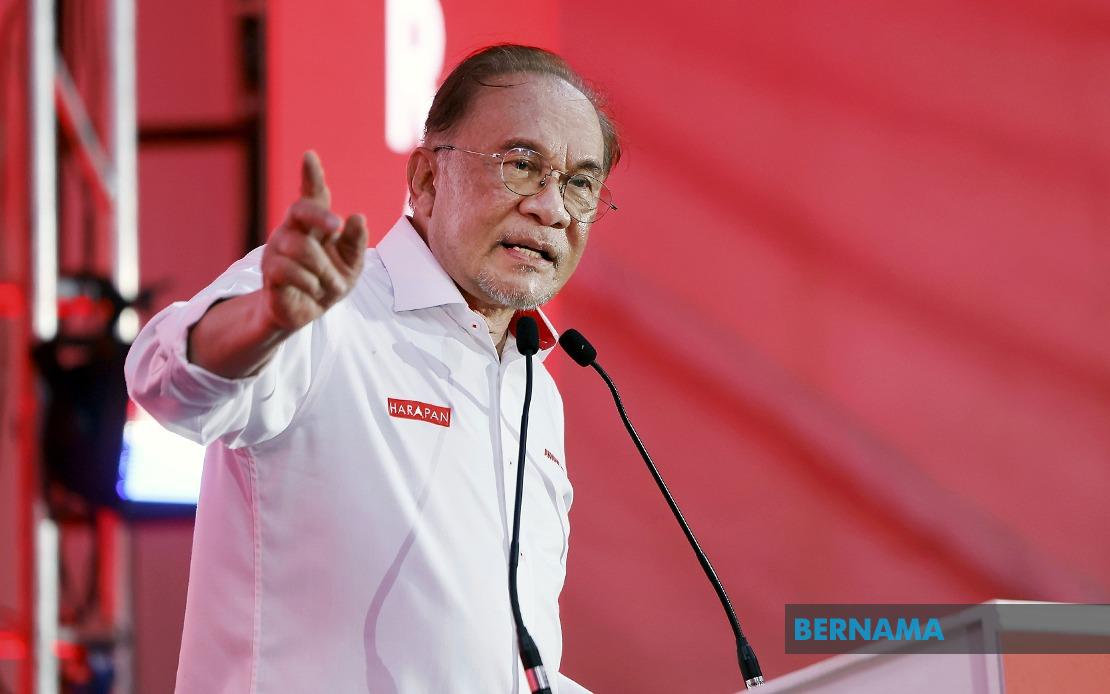
Prime Minister Datuk Seri Anwar Ibrahim highlighted a favourable fiscal relationship between the Federal government and Johor, revealing that the state has received substantially more in allocations and development spending than it has contributed in revenue over the past three years. Speaking at a Pakatan Harapan candidate announcement ceremony in Tangkak on June 22, Anwar emphasised that this pattern demonstrated Kuala Lumpur's sustained commitment to the southern state's progress, a message particularly significant ahead of the Johor State Election.
According to records from the Finance Ministry, Johor generated approximately RM14 billion in revenue for federal coffers during the 2023-2025 period. However, the Federal government has reciprocated by channelling RM16 billion back into Johor through a combination of capital development projects, operational budgets, and targeted assistance programmes. This two-billion-ringgit surplus, while relatively modest in percentage terms, represents a clear policy choice to invest more heavily in the state than it extracts in taxation and resource revenues.
As Finance Minister, Anwar framed these figures as evidence of deliberate federal prioritisation of Johor's welfare and infrastructure needs. He stressed that articulating this comparison was essential to counter perceptions that the Federal government neglects state interests or extracts disproportionate resources from the economy. The numbers serve as a political counternarrative, particularly relevant for Pakatan Harapan's electoral positioning in Johor, a state where federal-state fiscal relations have historically been a contentious issue.
The allocation increases under the MADANI Government are more pronounced when examining operating expenditure trends. Between the previous administration and the current government, Johor's annual operating expenditure allocation has grown from approximately RM6-7 billion to RM8.7 billion. This represents a meaningful boost to the state's budget for recurrent spending on civil service salaries, utilities, and maintenance of existing infrastructure, directly affecting the quality of public services delivered to residents.
Development expenditure allocations have expanded even more dramatically. The capital budget available for new infrastructure projects and long-term investments in Johor has nearly doubled, climbing from RM2.3 billion in 2022 to RM4.8 billion in the current fiscal year. This trajectory suggests accelerated investment in roads, ports, hospitals, schools, and other economic infrastructure that could enhance the state's long-term competitiveness and attract private investment.
Johor's ranking within the national allocation hierarchy also underscores its significance within federal fiscal planning. For 2026, the state ranks as the third-largest recipient of combined operating and development expenditure, trailing only Sabah and Sarawak, the two largest Malaysian states by landmass. This positioning reflects both Johor's substantial population and economic weight as well as strategic federal priorities in developing the southern region as a counterweight to the economic dominance of the Klang Valley.
Support through direct cash assistance programmes further reinforces Johor's elevated status in federal welfare spending. The state ranks second nationally in recipients of Sumbangan Tunai Rahmah (STR) and Sumbangan Asas Rahmah (SARA) assistance, trailing only Selangor. These monthly cash transfers to lower-income households represent a direct form of poverty alleviation and have become increasingly central to the MADANI administration's social protection framework.
The fiscal narrative Anwar presented carries implications for Malaysian federalism and regional development policy. By quantifying federal support and demonstrating that Johor receives more than it contributes, the Prime Minister is signalling that the relationship between federal and state governments need not be purely extractive. Instead, he suggests an investment model where the centre directs resources toward states based on development needs and strategic priorities rather than solely on revenue-raising capacity.
For Johor residents, these allocations translate into tangible outcomes: more funding for schools and hospitals, faster infrastructure development, and broader social safety nets. The RM8.7 billion operating budget and RM4.8 billion development budget provide the financial foundation for expanding public services and maintaining existing assets. The cash assistance programmes reach vulnerable populations directly, buffering them against inflation and rising living costs.
However, the fiscal comparison also raises questions about sustainability and efficiency. While receiving more than it contributes may benefit Johor in the short term, it raises queries about whether such spending levels can be maintained, particularly if national revenue growth slows. Additionally, the value of allocations depends significantly on implementation quality and whether funds are deployed effectively toward development outcomes that genuinely improve living standards and economic competitiveness.
The timing of Anwar's fiscal presentation, coinciding with the Johor State Election campaign, reflects political calculation. By anchoring the Federal government's development narrative in concrete figures and comparative data, Pakatan Harapan attempts to consolidate voter support by demonstrating tangible federal investment in the state. This approach resonates particularly in constituencies where voters perceive federal neglect or where infrastructure deficits remain visible.
For Southeast Asian observers, Johor's position as a major federal investment recipient also highlights Malaysia's evolving regional economic strategy. With substantial federal capital flowing into the southern state, particularly for port infrastructure and cross-border projects with Singapore, the federal government is clearly positioning Johor as a major economic hub within the Southeast Asian landscape. These investments aim to leverage Johor's geographic proximity to Singapore and its position along major trade routes to drive growth that benefits the broader region.