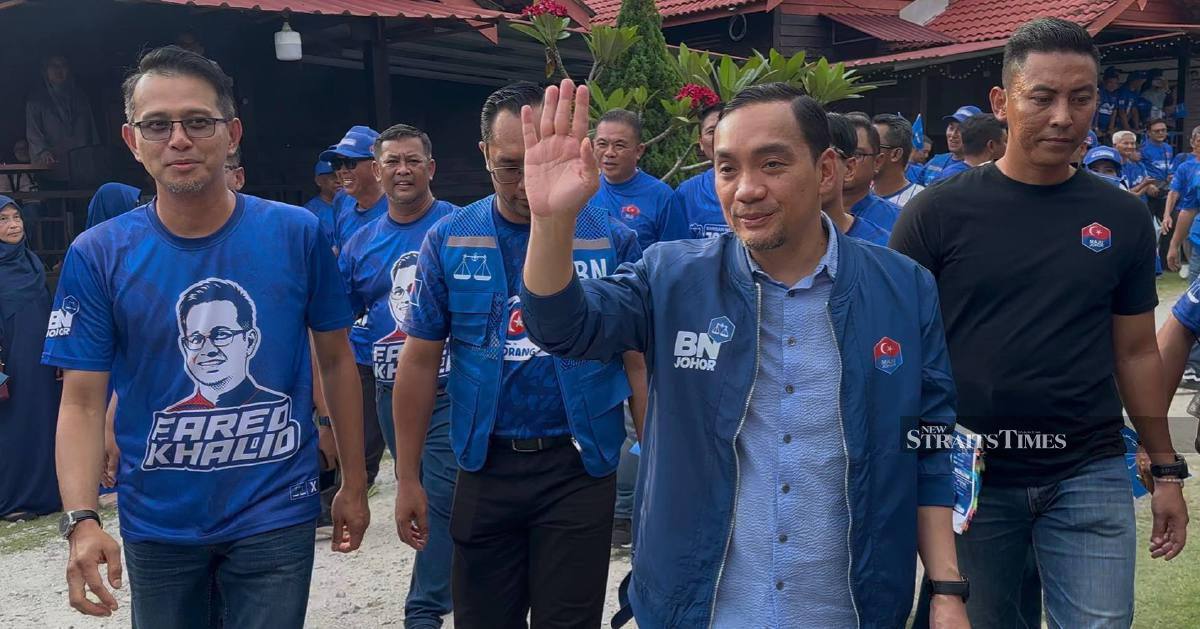
Caretaker Menteri Besar Datuk Onn Hafiz Ghazi has moved to reframe the narrative around Johor's impending state election, asserting that the exercise is chiefly designed to restore democratic choice to the electorate rather than pursue alternative political agendas. Speaking in Batu Pahat, he addressed mounting speculation about the true motivations behind dissolving the state assembly and calling for fresh polls.
Onn Hafiz's statement comes amid heightened political discourse surrounding the timing and context of Johor's election campaign. The caretaker chief minister sought to anchor the conversation on what he framed as the core principle of electoral legitimacy—allowing voters to determine their next state administration through their direct participation at the ballot box. This positioning reflects an effort to counter interpretations that the election might be serving other strategic objectives within the broader political landscape.
The distinction Onn Hafiz attempted to draw is particularly significant in Malaysia's contemporary political climate, where state elections frequently become entangled with federal agendas and factionalism within party structures. By explicitly stating that the poll is not designed to facilitate the liberation or exoneration of political figures from legal challenges, the Menteri Besar appeared to be directly addressing allegations that electoral manoeuvres are being orchestrated for purposes beyond the standard renewal of the government's mandate.
For Malaysian voters, and particularly those in Johor, this clarification matters because it touches on questions of electoral integrity and whether elections are being held according to constitutionally sound principles or in service of other interests. The Johor electorate has historically demonstrated strong engagement in state politics, and public confidence in the transparency of electoral motivation remains important for participation rates and democratic legitimacy.
The timing of Johor's dissolution carries weight in the national context. The state has long served as a significant political battleground and a source of parliamentary votes, making its composition a matter of interest to both Putrajaya and opposition coalitions. Recent shifts in Johor's political alignment and internal party realignments have generated considerable commentary about whether the election serves to consolidate certain power structures or reflect genuine shifts in voter preferences.
Onn Hafiz's emphasis on the mandate represents an attempt to anchor the narrative in traditional democratic principles. The concept of seeking a fresh mandate is conventionally understood as a mechanism through which governments—after a period in office or following significant political developments—return to voters to renew their authority to govern. This framing positions the election as a routine, even necessary, exercise of democratic governance rather than an extraordinary manoeuvre designed to achieve ancillary objectives.
However, the very need for such clarification suggests that opposition voices and media observers have questioned whether Johor's election timing and context align with standard electoral cycles. The caretaker Menteri Besar's statement effectively acknowledges this scepticism while attempting to redirect focus toward what his administration presents as the legitimate, foundational purpose of any democratic election—renewing the people's voice in governance.
Regionally, Johor's electoral dynamics influence broader Southeast Asian observations of Malaysian democracy. The state's size, economic importance, and political influence mean that how Johor conducts and frames its elections carries implications for perceptions of Malaysian institutional health. International observers and regional analysts often look to significant state elections in Malaysia as indicators of democratic functionality and political stability.
For the business community and investors in Johor, clarity around the election's motivations and expected timeline matters considerably. Economic policy continuity and the stability implications of state-level political transition remain practical concerns that influence investment decisions and operational planning. Onn Hafiz's reassurance that the election is about straightforward mandate renewal may be partly intended to stabilise business confidence during the caretaker period.
The caretaker chief minister's position also reflects the challenging nature of Johor's recent political history. The state has experienced significant realignments over the past few years, including shifts in coalition alignment and internal party tensions. Against this backdrop, a simple return to voters for renewed legitimacy might appear more palatable to multiple constituencies than acknowledgment of more complex factional or strategic motivations.
Looking forward, the actual campaign period will test whether Onn Hafiz's framing resonates with voters or whether the electorate perceives the election through a more sceptical lens. Voter turnout, campaign messaging from competing parties, and the margins of victory will all provide subsequent indicators of how Johor residents ultimately interpreted the poll's significance and whether they accepted the caretaker government's characterisation of the election's purpose and meaning.

