The Johor state government has committed RM50 million to an extensive refurbishment programme targeting low-cost flats, privately owned low-medium-cost residential units, and public housing blocks throughout the state. The initiative represents a significant investment in improving the physical living environments of lower-income communities, reflecting a broader policy focus on social welfare and urban renewal in one of Malaysia's most economically active states.
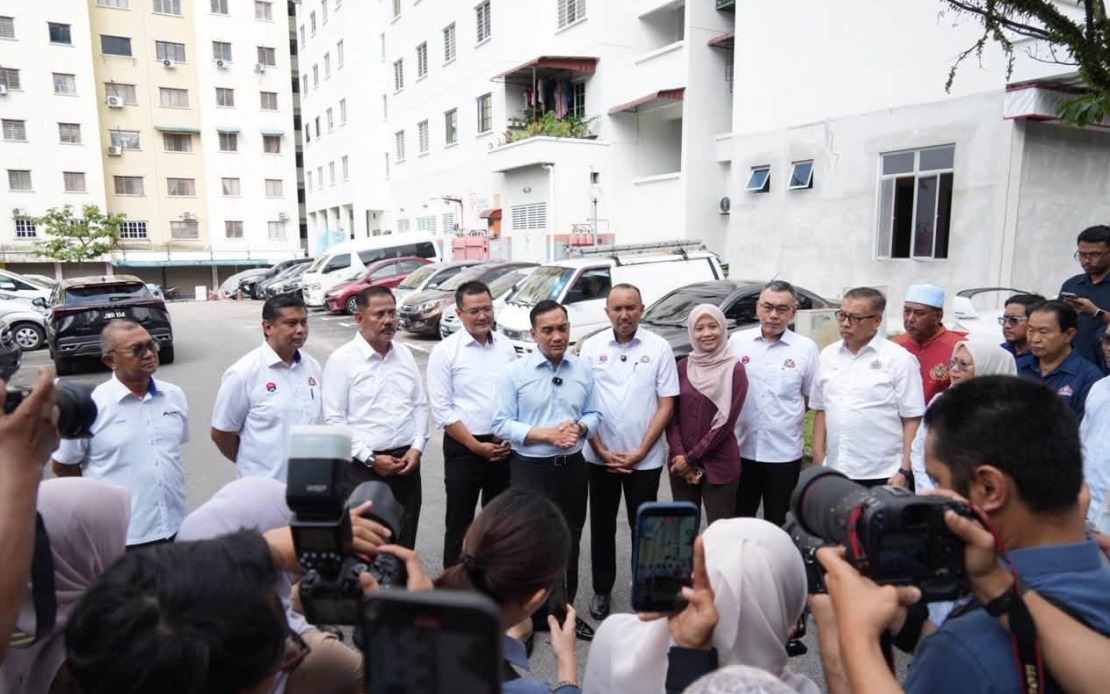
The scale of the undertaking is substantial, encompassing 170 housing blocks containing 11,693 residential units strategically located across 26 sites throughout Johor. Datuk Mohd Jafni Md Shukor, the state Housing and Local Government Committee chairman, outlined the project's scope during a site inspection at Desa Muafakat Apartments alongside Menteri Besar Datuk Onn Hafiz Ghazi. The combined effort is expected to directly impact nearly 46,772 residents, making it one of the larger community-focused infrastructure improvements undertaken in the state in recent years.
While repainting projects might initially appear superficial, state officials argue that the initiative carries deeper significance for community welfare and social dynamics. Mohd Jafni emphasised that a well-maintained, visually appealing residential environment extends beyond mere aesthetics, contributing to resident comfort, fostering stronger community bonds, and demonstrating government commitment to improving quality of life. This perspective aligns with urban planning research that links environmental conditions to psychological well-being and social cohesion, particularly in high-density housing areas where residents may otherwise feel neglected by public authorities.
The implementation structure involves multiple state agencies working in coordination, including the Johor State Housing Development Corporation (PKPJ) and the Local Government Division within the Johor State Secretary's Office. Supporting bodies include the Johor Bahru City Council (MBJB), Iskandar Puteri City Council (MBIP), Pasir Gudang City Council (MBPG), and the Kulai Municipal Council (MPKu). This multi-agency approach reflects the complexity of managing large-scale projects across diverse municipal jurisdictions, though it also raises questions about coordination efficiency and accountability mechanisms among the participating entities.
The inspection visit to Desa Muafakat Apartments revealed the broader scope of housing challenges facing the state. Beyond the repainting initiative, officials were briefed on slope subsidence issues near apartment parking facilities and internal road damage within the housing complex. These additional infrastructure concerns suggest that the government recognises the necessity of comprehensive maintenance approaches rather than isolated cosmetic improvements. The visit also included inspection of a Tabika KEMAS Bangsa Johor construction site at the same location, indicating concurrent efforts to improve educational and community facilities alongside housing upgrades.
Quality assurance appears to be a central concern for state leadership, with Mohd Jafni emphasising that contractors and implementing agencies have been instructed to maintain rigorous standards throughout the project. The state official specifically cautioned against projects that deliver immediate visual improvements but subsequently deteriorate rapidly or generate unforeseen problems for residents. This warning suggests previous negative experiences with substandard execution, a common challenge in large-scale public works projects across Malaysia where contractor accountability and supervision standards vary considerably.
The initiative carries particular significance in Johor given the state's economic dynamism and rapid urbanisation. As a major manufacturing and logistics hub attracting both domestic and international investment, Johor's urban areas have experienced considerable population growth. Many residents of low-cost housing developments form the backbone of the state's workforce, yet housing conditions have not always kept pace with economic development. This programme therefore addresses a tangible gap between Johor's economic status and the living standards of its most vulnerable residents.
From a political perspective, the project also reflects the Menteri Besar's administration's emphasis on visible, community-focused development initiatives. Housing maintenance and environment improvement resonate strongly with lower-income voters, particularly in urban constituencies where such residents are concentrated. By personally inspecting project sites and emphasising government commitment to improving living conditions, state leadership demonstrates responsiveness to grassroots concerns, an increasingly important factor in competitive Malaysian electoral politics.
The RM50 million allocation, while substantial, must be contextualised within broader state development budgets. Per-unit costs for comprehensive repainting of 11,693 units work out to approximately RM4,270 per unit, a reasonable figure for exterior and common area refurbishment in Malaysian urban housing. However, the adequacy of this budget depends on the quality specifications, extent of preparation work required, and whether the programme encompasses structural repairs beyond painting, which remains unclear from current details.
Looking forward, the success of this initiative will depend on several factors beyond initial project completion. Sustained maintenance regimes must follow to prevent rapid deterioration, a common problem in Malaysian public housing where maintenance budgets frequently prove inadequate. Additionally, the project's community impact will be measured not merely by visual improvements but by resident satisfaction and whether enhanced environmental conditions translate into strengthened social cohesion as intended.
For other Malaysian states and local authorities, Johor's large-scale housing improvement programme offers both a model and a cautionary example. The comprehensive approach involving multiple agencies and the explicit emphasis on quality standards suggest careful planning, yet the initial warning about maintaining rigorous supervision hints at potential execution challenges. As housing conditions and resident welfare become increasingly central to state governance narratives, similar initiatives are likely to proliferate across Malaysia, making Johor's approach and outcomes particularly instructive for policymakers elsewhere in the region.

