Johor's ambitious education transformation is entering a new phase with the integration of religious schools into its flagship reform initiative. The state government has approved construction of the first Sekolah Agama Rintis Bangsa Johor (SARBJ), extending the successful Sekolah Rintis Bangsa Johor (SRBJ) framework that has already reshaped conventional schooling across the state. This strategic move reflects mounting recognition among Malaysian policymakers that comprehensive educational reform must address the parallel systems of secular and religious instruction that currently operate independently within the country's two-tier education structure.
Menuteri Besar Datuk Onn Hafiz Ghazi credited the Regent of Johor, Tunku Mahkota Ismail, with conceiving the SRBJ initiative as a holistic vision for reimagining how Johor educates its citizens. The Menteri Besar disclosed that four schools have already been established under the original SRBJ framework—two primary institutions and two secondary schools—demonstrating concrete progress in translating the strategic vision into operational reality. By now incorporating Islamic educational institutions into this paradigm, Johor is attempting to ensure that the same modernisation standards, pedagogical innovations, and resource investments reaching conventional schools also penetrate the religious education ecosystem.
The inaugural SARBJ will be constructed in Kota Iskandar, the administrative hub and increasingly the epicentre of the state government's development initiatives. This location choice signals serious commitment rather than tokenistic gestures, placing the institution in close proximity to government offices and emerging urban infrastructure. The timing—establishment during the current calendar year—suggests the administration views this as a priority rather than a long-term aspiration, though construction timelines for educational facilities often extend beyond initial projections in Malaysian contexts.
The existing SRBJ schools reveal the programme's geographic spread. Sekolah Menengah Kebangsaan Seri Kota Puteri 2 and Sekolah Kebangsaan Seri Kota Puteri 4 operate in Pasir Gudang, while SMK Tasek Utara and SK Tasek Utara serve Johor Bahru proper. This distribution across major population centres indicates the state government recognises education quality as fundamental to retaining talent and attracting investment to different regions within Johor.
The original SRBJ framework rests on several interdependent pillars that the SARBJ extension will presumably incorporate. Digital learning capabilities address Malaysia's broader push toward technological integration in classrooms, recognising that students educated in predominantly analogue environments face competitive disadvantages in knowledge-based economies. Multilingual proficiency—increasingly essential in Southeast Asia's interconnected labour markets—positions Johor graduates for regional opportunities beyond Malaysia's borders. Character development and moral education reflect enduring Malaysian educational philosophy, though the specifics of how these manifest in religious schools versus secular institutions remain to be clarified. Teacher empowerment acknowledges that policy intentions fail without educator buy-in and capacity development. High-quality facilities represent the physical infrastructure necessary to support pedagogical ambitions, a prerequisite often overlooked in budget-constrained educational systems.
Expanding SRBJ principles into religious schools presents distinct implementation challenges absent from conventional institutions. Islamic schools operate within specific curricular frameworks mandated by state religious authorities, creating potential tension between centrally-imposed religious learning objectives and the flexibility required for SRBJ innovations. Teachers in religious schools often possess specialised theological training rather than conventional teacher education credentials, potentially complicating efforts to universalise professional development approaches. Parental and community expectations surrounding religious education may differ fundamentally from those governing secular schooling, requiring nuanced stakeholder engagement.
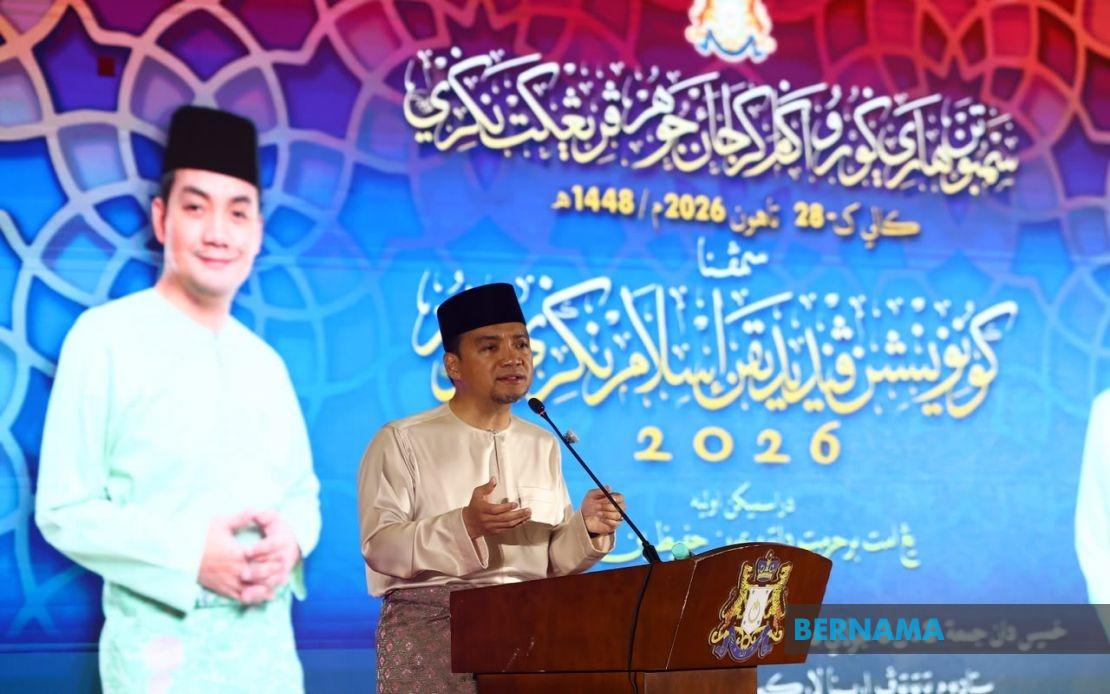
The Johor government's announcement occurred during the 28th Johor Government Religious Teachers' Day celebration and concluded the State Islamic Education Convention at Arena Larkin Indoor Stadium, venues and occasions specifically selected to communicate the seriousness of this expansion to religious education constituencies. The presence of State Islamic Religious Affairs Committee chairman Mohd Fared Mohd Khalid and Johor's police chief Datuk Ab. Rahaman Arsad signalled whole-of-government commitment, with security leadership participation suggesting coordination across multiple state agencies.
Plans to establish a pilot kindergarten indicate the Johor government intends to embed SRBJ methodologies across the entire educational spectrum, from early childhood development through secondary completion. This vertical integration contrasts with many state-level education initiatives that focus narrowly on particular levels, potentially fragmenting learning experiences as students progress through school systems. Early childhood education increasingly receives global emphasis as research demonstrates foundational cognitive development occurring before formal schooling begins.
For Malaysian observers, Johor's educational ambitions merit attention as potential models for national-level policy development. As a wealthy, administratively sophisticated state with significant fiscal autonomy, Johor can experiment with comprehensive reforms difficult to implement nationwide. Successful outcomes might demonstrate pathways toward integrated secular-religious education reform that other states and potentially the federal government could adapt. Conversely, implementation difficulties would illuminate obstacles requiring careful navigation before attempting nationwide expansion.
The initiative also reflects broader global trends toward educational transformation that recognise student success depends on multiple competencies beyond traditional academic subjects. Competition for talent within Southeast Asia and globally pressures Malaysian states to differentiate their human capital development strategies. Johor's positioning as an education destination—supported by investments in school infrastructure, teacher quality, and pedagogical innovation—potentially influences residential and business location decisions among mobile professionals and families.
As implementation proceeds, critical questions will emerge regarding resource allocation, teacher preparation timelines, curricular harmonisation between SARBJ and conventional SRBJ schools, and measurable outcomes demonstrating educational quality improvements. Whether religious school students achieve comparable results to secular school cohorts across SRBJ learning domains will prove contentious in contexts where religious and secular education have historically operated with limited coordination. The success or failure of this integration experiment may ultimately influence how Malaysian federalism addresses the persistent challenge of coordinating parallel educational systems serving overlapping populations.

