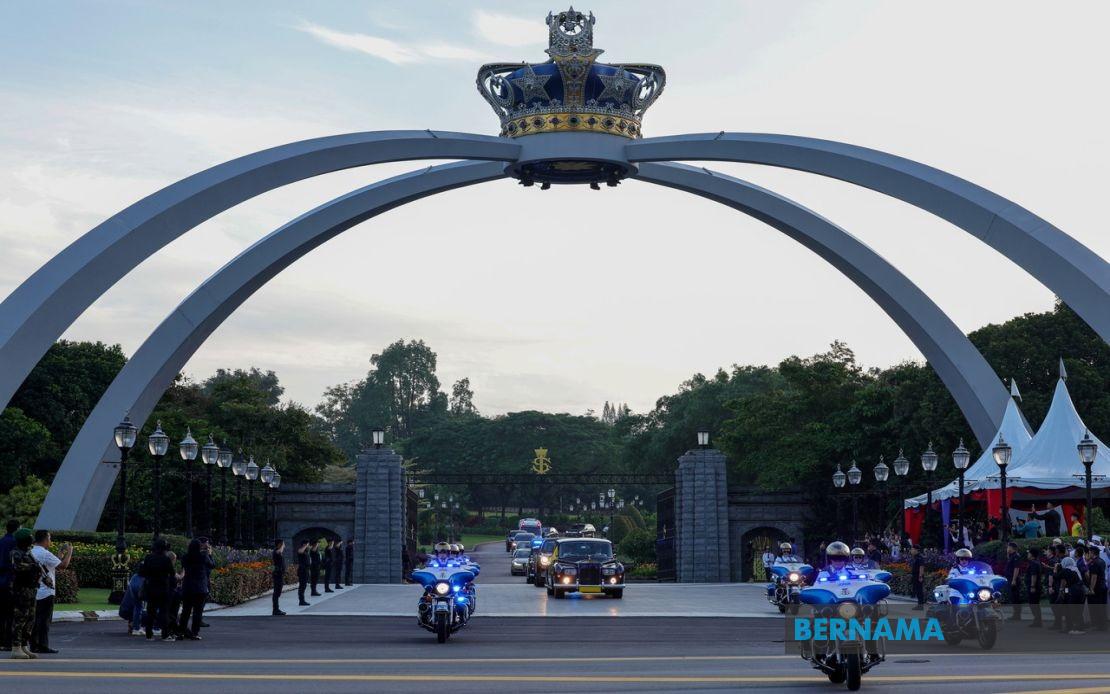
The highly anticipated swearing-in ceremony for Johor's newly constituted State Executive Council has been pushed back by a single day, with organisers moving the event from Friday to Saturday at the iconic Istana Bukit Serene in Johor Bahru. Media representatives received notification of the change early on Friday morning, though no explanation accompanied the postponement announcement, leaving observers to speculate about the reasons for the last-minute adjustment.
The delayed ceremony was originally scheduled to unfold before Tunku Mahkota Ismail, the Regent of Johor, and would have marked a formal transition following the recent electoral success of Barisan Nasional in the state. The event carries symbolic importance for the new administration, representing the official commencement of the Exco's executive responsibilities and the formal investiture of its members into their respective portfolios.
Menteri Besar Datuk Onn Hafiz Ghazi, who claimed personal victory in his Machap constituency, stands to preside over what constitutes his second consecutive term leading Johor's state government. His own swearing-in as chief minister took place just days earlier, on the preceding Sunday, following the conclusion of voting in the 16th Johor State Election. This acceleration through the constitutional processes reflects the urgency with which the newly elected government sought to establish its authority and begin policy implementation.
Barisan Nasional's commanding performance in last Saturday's election provided Onn Hafiz with a substantial legislative mandate. The coalition secured 48 of the 56 available seats in the Johor State Legislative Assembly, delivering a decisive result that strengthened his position within the party hierarchy and consolidated BN's grip on one of Malaysia's most politically significant states. This electoral dominance translated into considerable flexibility in forming the Exco and selecting portfolio allocations among party members and coalition partners.
The postponement, while administratively minor, arrives at a sensitive moment in Johor's political calendar. The state government faces mounting expectations to deliver on campaign promises and begin addressing pressing issues ranging from economic development to infrastructure improvement. Each delay in formal transition processes, however brief, invites scrutiny from opposition parties and civil society observers monitoring the new administration's competence and readiness to govern.
Several key figures were expected to witness and participate in the original Friday ceremony. Johor Royal Council president Datuk Dr Rahim Ramli and State Secretary Datuk Mohammed Ridha Abd Kadir both occupied significant positions in the protocol arrangements, reflecting the formal nature of the swearing-in process and the multi-layered institutional involvement required for such constitutional events.
For Malaysian political observers, the episode illustrates how even routine administrative proceedings can attract media attention and public interest when they involve state-level transitions and the formation of new governing structures. The absence of an official explanation for the postponement generated curiosity about potential underlying causes—whether logistical constraints, scheduling conflicts with royal commitments, or other procedural considerations prompted the change.
The Saturday rescheduling maintains the momentum of the post-election transition while allowing organisers presumably to address whatever circumstances necessitated the postponement. The Regent's availability, contingencies in formal protocols, and coordination among multiple government agencies all factor into the complex choreography of such ceremonies, suggesting that what appears a simple date change conceals considerable behind-the-scenes coordination.
For Johor's civil service and implementing agencies, swift completion of the Exco swearing-in carries practical importance. Until formally invested with their office, Exco members operate under technical constraints that limit their executive authority. The Saturday ceremony thus represents not merely a ceremonial occasion but a critical constitutional moment enabling the new cabinet to exercise full governmental powers and begin issuing binding administrative directives.
The incident also underscores the continued relevance of royal protocols and ceremonial traditions in Malaysia's federal and state governance structures. The requirement for the Regent's presence and the selection of Istana Bukit Serene as the venue both highlight how constitutional monarchy principles remain woven through the practical apparatus of regional administration, distinguishing Malaysian governance from purely secular executive systems.

