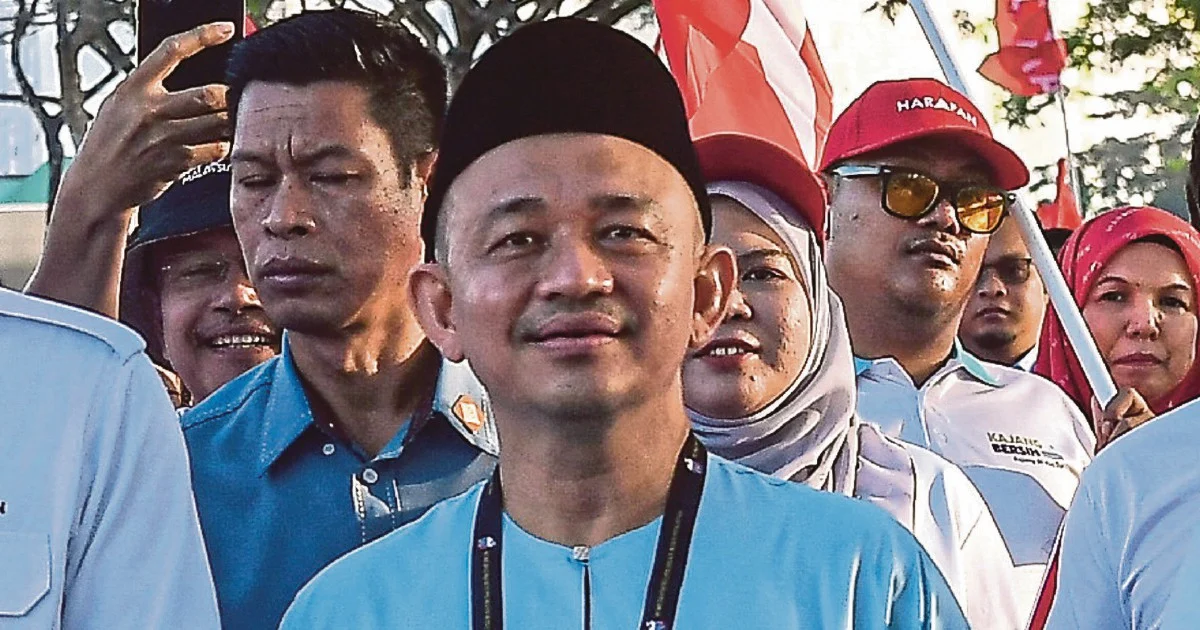
In a campaign statement from Johor Baru, former education minister Dr Maszlee Malik has predicted that a Pakatan Harapan victory across key constituencies in the Johor election would represent a watershed moment for the state's development agenda. Speaking at Puteri Wangsa, one of the focal points for the opposition coalition's efforts, Maszlee framed the upcoming polls as an opportunity for Johor to embark on a fresh developmental path under new leadership.
The remarks underscore how the Johor election has become a significant test for Pakatan Harapan's political standing in one of Malaysia's most economically important regions. Johor, home to over 4 million people and situated directly south of the Klang Valley, represents a crucial prize in Malaysian electoral contests. The state's economy relies heavily on manufacturing, logistics, and trade, sectors that have been shaped by decades of incumbent governance. A change in state leadership would inevitably trigger shifts in procurement policies, infrastructure priorities, and development incentives that could reshape the regional business landscape.
Maszlee's intervention in the campaign reflects the coalition's strategy of deploying senior figures with recognizable profiles to energize voters. His tenure as education minister under the first Pakatan Harapan federal government (2018-2020) makes him a symbolic link to the coalition's period of federal power, though that administration's tenure ended in significant controversy and internal fractures. By positioning himself as an advocate for transformational change, Maszlee seeks to revive support among those who recall the coalition's earlier promises before its collapse.
The emphasis on Puteri Wangsa specifically suggests that Pakatan Harapan views this constituency as either winnable or symbolically important. Johor's electoral landscape has traditionally been dominated by the Barisan Nasional coalition, which has governed the state since independence. Breaking through in even individual constituencies would represent a significant symbolic achievement for an opposition still recovering from the damage inflicted by its 2018-2023 federal administration and subsequent internal splits that weakened its standing nationwide.
Maszlee's framing of development as the central issue in his campaign messaging reflects an attempt to shift electoral conversations away from identity and religious politics, terrain where Pakatan Harapan has often struggled against rivals. By emphasizing infrastructure, economic opportunity, and state modernization, the opposition hopes to mobilize swing voters and younger electors concerned primarily with economic prospects and quality of life improvements. Such messaging carries particular resonance in urbanized Johor areas where concerns about traffic congestion, public transport, and employment opportunities weigh heavily on voters' minds.
The broader context for Johor's political trajectory involves uncertainty about the state's future under federal coalitions that have shifted repeatedly since 2020. Johor's government has navigated complex relationships with different federal administrations, managing development approvals and funding mechanisms that depend partly on federal-state cooperation. An opposition victory would create a co-governing scenario where state and federal authorities operate under different political banners, potentially complicating large-scale infrastructure projects that require coordinated investment.
Maszlee's appeal to voters rests partly on the premise that Johor requires fresh thinking on development priorities. The state's economy, while historically strong, faces intensifying competition from other Malaysian states and ASEAN neighbors for regional manufacturing and logistics investment. Singapore's continued dominance in regional finance and trade, combined with Thailand's and Vietnam's aggressive investment-attraction strategies, means Johor cannot rely on historical advantages alone. Developmental renewal through new governance could theoretically unlock potential through revised investment frameworks, improved regulatory efficiency, and reoriented infrastructure spending.
Pakatan Harapan's political position in Johor remains complicated by its federal coalition partners' own positioning. The DAP component's strong urban support potentially conflicts with PAS's rural base in some constituencies, creating internal tensions over seat negotiations and campaign messaging. Balancing these coalition dynamics while simultaneously attacking the incumbent Barisan Nasional represents a considerable strategic challenge that could determine whether opposition promises translate into actual electoral gains.
The election also carries implications for Malaysian federalism more broadly. If Johor's electorate produces a mixed result with opposition representation in the state assembly, it would reinforce the pattern of competitive elections across Malaysia's various states, creating a more pluralistic political environment than existed during the Barisan Nasional's uninterrupted dominance. This fragmentation across states, while potentially beneficial for democratic accountability, complicates policy coordination and major infrastructure initiatives that require sustained political commitment across multiple electoral cycles.
Maszlee's campaign intervention suggests the opposition believes sufficient electoral momentum exists to challenge Barisan Nasional dominance in Johor, or at minimum to establish a meaningful foothold in a state that has never shifted coalitions since independence. Whether this optimism reflects genuine grassroots support or aspirational messaging remains unclear until voting concludes. The campaign's outcome will significantly influence calculations about opposition viability in Malaysia's most populous states and whether the Pakatan Harapan coalition has stabilized sufficiently to mount credible electoral challenges to incumbent governments beyond its historical strongholds.

