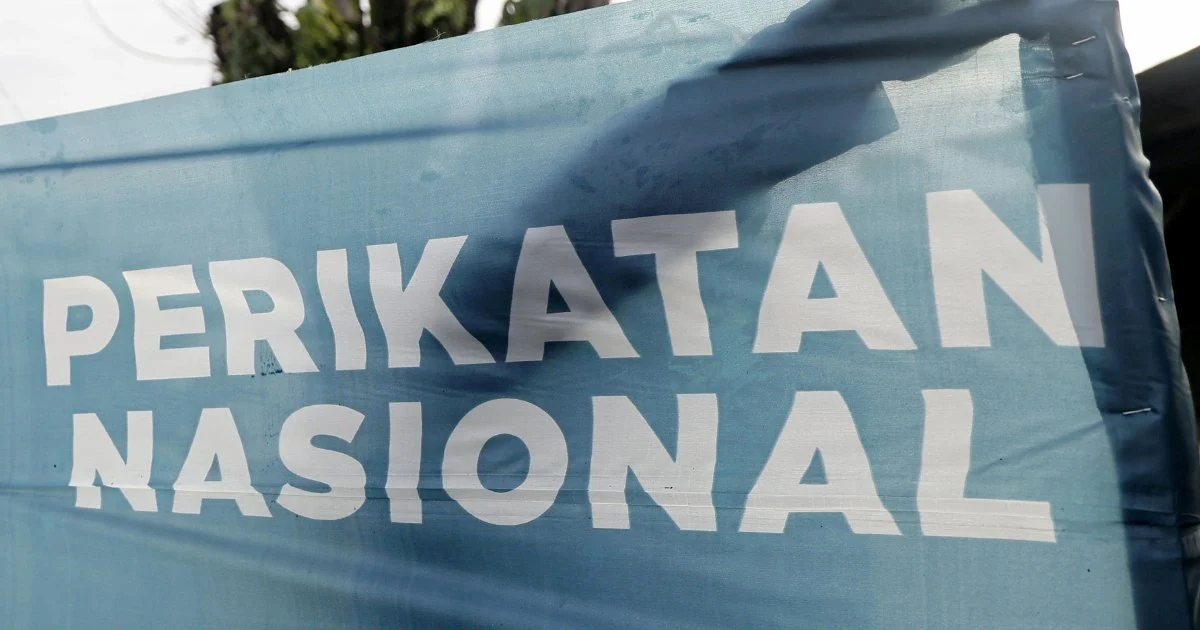
PAS has moved to dispel widespread speculation about its electoral strategies in Johor, emphatically denying that the party intends to campaign actively for Bersatu in the state election. Speaking from Kota Baru, party officials insisted that their role extends only to respecting the predetermined seat allocations established within the broader Perikatan Nasional framework, with no intention to provide substantive political cooperation on the campaign trail.
The clarification addresses mounting confusion about the nature of collaboration within Perikatan Nasional as the three-coalition bloc—comprising PAS, Bersatu, and Umno—prepares for the Johor contest. For political observers across Southeast Asia, the distinction PAS has drawn reveals the fragile nature of Malaysia's coalition politics, where formal structural arrangements often mask deeper tensions and competing electoral interests among alliance members.
Penikatan Nasional emerged as a significant political force following the 2018 general election, initially positioning itself as an alternative to the then-dominant Pakatan Harapan government. However, the coalition has long struggled with internal cohesion, particularly regarding campaign coordination and mutual endorsement strategies. The Johor election provides a critical test of whether PN can function as a unified bloc or whether its constituent parties will prioritise their individual electoral prospects over collective messaging.
PAS, which has strengthened considerably in recent years through its consolidation of Malay-Muslim voter support, operates from a position of considerable confidence ahead of the Johor polls. The party's decision to distance itself from active Bersatu campaigning reflects its assessment that such alignment could potentially dilute its independent brand or alienate segments of its voter base. This calculation underscores how Malaysian political alliances often function as tactical arrangements rather than ideologically coherent partnerships.
Bersatu, the relative newcomer to Malaysian politics and the party of former Prime Minister Mahathir Mohamad, has struggled to establish an independent electoral foothold comparable to its coalition partners. The party's dependence on seat allocations within Perikatan Nasional highlights its vulnerability in competitive state contests where ground organisation and local political networks prove decisive. PAS's refusal to provide campaign support effectively leaves Bersatu to contest primarily on its own organisational strength.
The Johor election assumes particular significance for Malaysian politics because the state has traditionally served as a bellwether for national sentiment. Johor's substantial population, diverse demographic composition, and historical swing-state characteristics mean that the outcome will carry implications far beyond state-level governance. For regional analysts, the contest offers insights into how Malaysian coalition politics is evolving and whether ethnically-based and ideology-driven alliances can maintain stability amid electoral pressures.
Umno, the third pillar of Perikatan Nasional and historically dominant in Johor politics, faces its own strategic calculations. The party must balance its coalition commitments against its longstanding electoral dominance in the state, where it has accumulated decades of local party machinery and voter loyalty. The tensions between preserving PN's structure and maximising Umno's individual electoral performance will shape campaign dynamics considerably.
PAS's clarification also reflects shifting power dynamics within Perikatan Nasional itself. The party's growing electoral influence, particularly among rural and semi-urban Malay constituencies, has positioned it as increasingly assertive regarding its role and expectations within the coalition. By delineating the boundaries of its cooperation, PAS signals that it will not subordinate its interests to broader PN objectives when party calculations diverge.
For Malaysian voters, the distinction between formal seat allocations and active campaign cooperation carries real consequences. It means Bersatu candidates in Johor will not benefit from the mobilisation networks and campaign machinery that active PAS support would provide. This arrangement potentially advantages Pakatan Harapan, which can concentrate its campaign efforts against divided opposition forces rather than facing a unified PN front.
The Johor election will demonstrate whether Malaysian political coalitions can maintain structural coherence without substantive cooperation. If PAS truly limits its involvement to respecting seat divisions, the election may reveal whether such minimalist arrangements prove sufficient to prevent opposition forces from exploiting gaps in coalition unity. Conversely, should pressure mount for deeper cooperation, the entire PN framework could face renewed strain as parties reassess whether the coalition serves their individual electoral interests.
Regionally, Malaysia's coalition dynamics warrant attention from other Southeast Asian democracies grappling with multi-party systems and coalition governance. The question of how to maintain alliances without forcing ideological compromise or sacrificing electoral competitiveness remains unresolved in Malaysian politics. The Johor contest may provide instructive lessons about the limits of formal political arrangements when constituent parties operate from fundamentally divergent strategic positions and voter bases.

