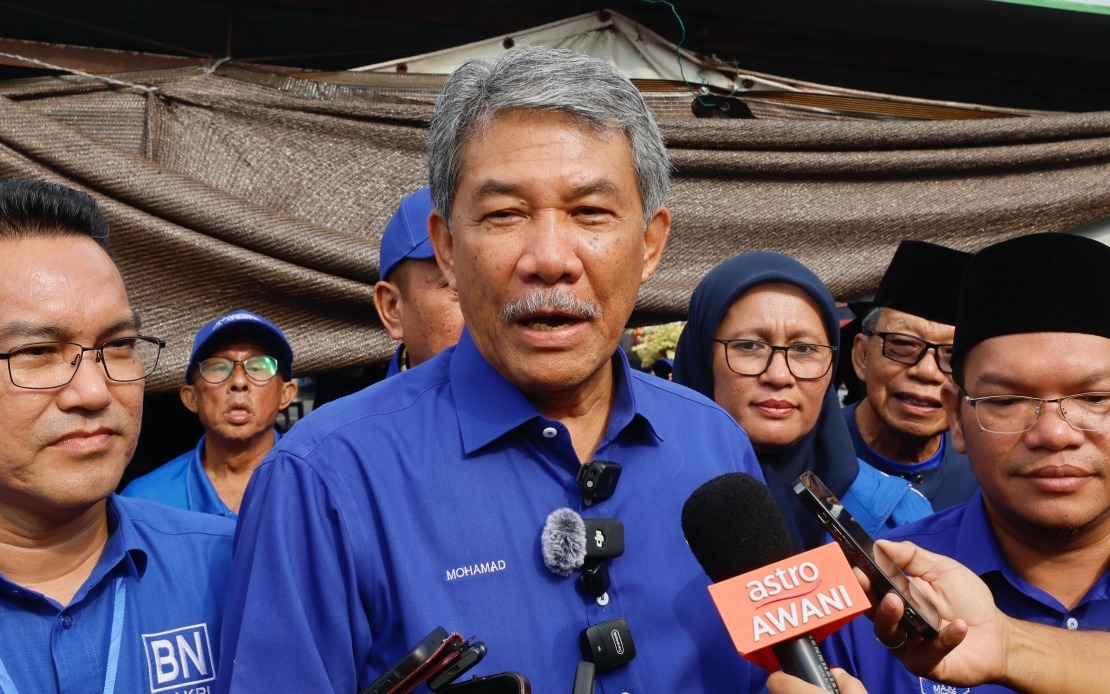
As Johor gears up for its state election on July 11, UMNO deputy president Datuk Seri Mohamad Hasan has sounded a cautionary note to all competing parties, urging them to conduct their campaigns with maturity and restraint. Speaking during an engagement with voters in the Tiram constituency, Mohamad stressed that while political parties are entitled to present their platforms and policy visions to the electorate, the intensity of campaigning must not jeopardise the delicate balance of cooperation sustaining the Unity Government at the federal level. His remarks underscore growing concern among establishment figures that state-level electoral contests could strain the multi-party coalition managing Malaysia's national affairs.
The thrust of Mohamad's message centred on distinguishing between legitimate political competition and conduct that crosses into personal territory. He acknowledged that some degree of light-hearted banter between rival camps is inevitable and acceptable in any democratic contest, noting that he himself participates in such exchanges without taking offence. However, he drew a firm line at attacks that become unnecessarily personal or inflammatory, arguing that such tactics risk undermining the institutional relationships required to govern the country effectively. His position reflects a pragmatic calculation that the cost of winning a state assembly seat cannot be allowed to exceed the cost of fractured cooperation within the federal coalition.
Mohamad, who also serves as Foreign Minister, appears particularly attuned to how electoral friction could reverberate beyond Johor's borders. The Unity Government—a historically unprecedented coalition bringing together UMNO, PKR, DAP, and other parties—depends on mutual tolerance and clearly defined operational boundaries. A campaign marked by personal recriminations and bitter accusations could erode the good faith necessary for such an arrangement to function. By explicitly calling for prudence, Mohamad was signalling that political parties should compartmentalise their state-level rivalry without allowing it to contaminate federal-level partnerships.
A secondary theme in Mohamad's remarks addressed allegations that the Johor election has become a vehicle for efforts to secure a pardon for former Prime Minister Datuk Seri Najib Tun Razak. These claims, he contended, misunderstand both the scope of state government authority and constitutional procedure. A Menteri Besar, he explained, possesses no mechanism to influence decisions regarding the former Prime Minister's legal status. Such matters fall exclusively within federal jurisdiction, and any pardon would require the absolute prerogative of the Yang di-Pertuan Agong. By reframing the election as purely about state-level governance, Mohamad sought to insulate it from the polarising legal and moral questions surrounding Najib.
The clarification is significant because it attempts to neutralise one of the more volatile narratives surrounding the election. For many Malaysians, Najib's legal entanglement remains deeply contentious, touching on broader questions of accountability, rule of law, and institutional integrity. By asserting that the election cannot and should not be understood as a proxy battle over his fate, Mohamad has tried to redirect focus toward conventional state electoral issues. This represents an effort to depoliticise an inherently sensitive matter and prevent it from distorting campaign dynamics.
Moreover, Mohamad's invocation of the supremacy of law and constitutional procedure carries particular weight given UMNO's historical relationship with judicial and institutional processes. By explicitly endorsing respect for the Agong's constitutional prerogatives and federal legal authority, he positioned UMNO as committed to established governance frameworks. This rhetorical move serves dual purposes: it reassures stakeholders concerned about institutional integrity while simultaneously foreclosing opportunities for opponents to accuse UMNO of instrumentalising the election for extraneous purposes.
The Johor state election itself represents a significant political contest. A total of 172 candidates are competing for 56 seats in the State Legislative Assembly, with polling scheduled for July 11 and early voting occurring the day before. The scale of competition underscores the stakes involved and the potential for campaign temperatures to rise. Mohamad's pre-emptive appeal for measured conduct suggests awareness that without such guidance, individual candidates and party operatives might be tempted to escalate rhetoric in pursuit of electoral advantage.
For Malaysian voters and observers, Mohamad's intervention reflects broader tensions within the country's political landscape. The Unity Government experiment remains relatively recent and fragile, dependent on sustained compromise among parties with substantially different bases, histories, and ideological orientations. State elections like Johor's test this arrangement because they occur in the context of ongoing federal partnership. A state election that badly damages inter-coalition relationships could have cascading consequences for national governance, potentially triggering reassessments of the broader federal coalition's viability.
The timing and content of Mohamad's remarks also signal UMNO's leadership priorities as the election approaches. Rather than adopting an aggressive posture toward rivals, he has chosen to emphasise institutional stability and measured competition. This suggests confidence in UMNO's ability to perform well in Johor without resorting to inflammatory tactics, while simultaneously positioning the party as the responsible guarantor of national political stability. Whether other contesting parties will heed similar calls for restraint remains to be seen, but Mohamad's intervention has established a baseline expectation for conduct that both mainstream voters and international observers may use to evaluate campaign behaviour in the coming weeks.

