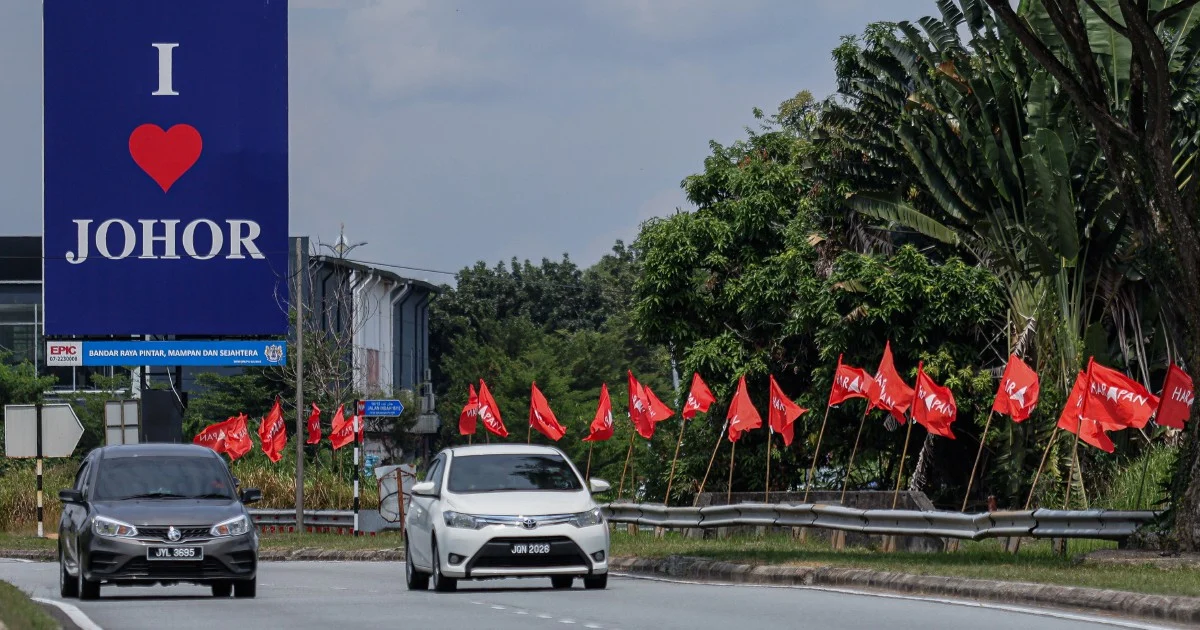
The forthcoming Johor state election represents far more than a contest to determine who occupies the menteri besar's office, according to a senior figure within PKR's youth movement speaking in Johor Baru. The voice from within the coalition hierarchy challenges the tendency of voters and political commentators to oversimplify electoral contests into leadership personality races, instead positioning the contest as a fundamental question about which political alliance possesses the organisational depth, policy coherence, and practical competence to govern effectively.
This framing reflects a broader strategic concern within the PKR youth leadership that the media narrative surrounding Johor's election cycle has become excessively personalised. By allowing the contest to be reduced to assessments of individual candidates for the menteri besar position, the argument runs, stakeholders risk overlooking the institutional and programmatic differences that genuinely distinguish one political coalition from another. The intervention signals an awareness that in Malaysian state politics, where informal networks and factional loyalties often prove as decisive as formal policy positions, voters benefit from a more sophisticated analytical framework.
The PKR youth wing's position underscores the competitive reality facing Pakatan Harapan in Johor, a state with considerable economic importance to Malaysia's broader development trajectory. As Southeast Asia's largest petrochemical hub and a crucial logistics gateway, Johor's governance quality directly affects regional economic performance. The state's economic policies, infrastructure investment priorities, and regulatory environment shape outcomes across manufacturing, port operations, agriculture, and tourism sectors that generate significant employment and government revenue.
Framing the election around coalition strength and governance competence allows PKR and its allies to redirect focus toward their administrative record and forward-looking development agenda. Rather than engaging in potentially disadvantageous comparisons of individual personality traits or charisma, this approach privileges assessment of institutional capacity, policy implementation track records, and programmatic offerings. For voters evaluating which coalition can most effectively manage Johor's transition toward higher-value economic activities and address pressing social challenges, this reorientation offers substantive grounds for decision-making.
The menteri besar position, while symbolically significant and operationally important, ultimately represents only one component of the governance machinery necessary to deliver meaningful change. A state government comprises multiple cabinet portfolios, state bureaucratic structures, and relationships with federal agencies and statutory bodies. The effectiveness of any menteri besar depends substantially on the quality of the team surrounding him, the institutional coherence of the government coalition, and the political stability that permits medium-term policy execution. By redirecting attention toward coalition composition and capability, the PKR youth leader implicitly acknowledges these structural realities.
Johor's economic challenges require sustained, coordinated effort across multiple government departments and across multiple election cycles. Industrial diversification, workforce skills development, port infrastructure modernisation, and fiscal management cannot be accomplished through individual leadership qualities alone, no matter how impressive. These outcomes emerge from coherent policy frameworks, adequate resource allocation, effective inter-agency coordination, and political will sustained across years. Coalitions that demonstrate internal discipline, policy alignment, and organisational capacity tend to deliver superior governance outcomes compared to those built primarily on personality-driven loyalties.
The state's social challenges—ranging from affordable housing availability to education quality to healthcare access—similarly require comprehensive approaches unlikely to emerge from electoral focus on a single candidate. PKR's emphasis on evaluating which coalition presents the strongest comprehensive framework therefore addresses genuine voter concerns about whether Johor's government will effectively tackle the complex policy problems affecting daily life. This positioning allows the coalition to compete on grounds where sustained institutional effort and policy design carry greater weight than individual personality factors.
Yet this rhetorical strategy carries inherent risks. Malaysian electoral politics frequently turns on personal loyalties, factional allegiances, and perceived leadership quality, particularly in state-level contests where voters often have limited information about specific policy positions. By emphasising institutional capacity and programmatic offerings, PKR may inadvertently elevate the salience of dimensions where voters possess less developed preferences or detailed information. Conversely, opponents can more easily mobilise around leadership narratives and personality-driven appeals that require less voter investment in policy analysis.
The intervention also reflects internal coalition dynamics within Pakatan Harapan regarding menteri besar selection. By positioning the MB position as secondary to broader coalition strength, the PKR youth wing may be attempting to influence internal coalition negotiations or deflect potential criticism regarding specific candidacy choices. This meta-political dimension suggests that the argument about what elections should emphasise masks underlying discussions about how coalition partners should distribute major state offices and navigate contested selections.
For Malaysian voters contemplating the Johor election, the PKR youth leader's argument offers a useful reminder that electoral choices carry implications extending well beyond individual leadership positions. State governments deliver numerous services affecting public welfare, regulate crucial economic sectors, and establish policy precedents influencing national political development. Evaluating coalitions on their governance capacity, policy coherence, and institutional strength therefore represents a more demanding but ultimately more consequential approach to electoral decision-making than reducing contests to personality competitions.
The emphasis on coalition strength also resonates with growing recognition that Malaysia's complex, multi-level governance system requires coordinated action across federal and state levels, across government agencies, and across political boundaries. Individual menteri besar, regardless of ability, cannot unilaterally overcome obstacles created by weak coalition discipline, poorly coordinated policies, or inadequate institutional capacity. This institutional perspective suggests that voters seeking genuine improvement in Johor's governance outcomes may benefit from precisely the kind of coalition-focused, comprehensive evaluation that PKR's youth leadership advocates.

