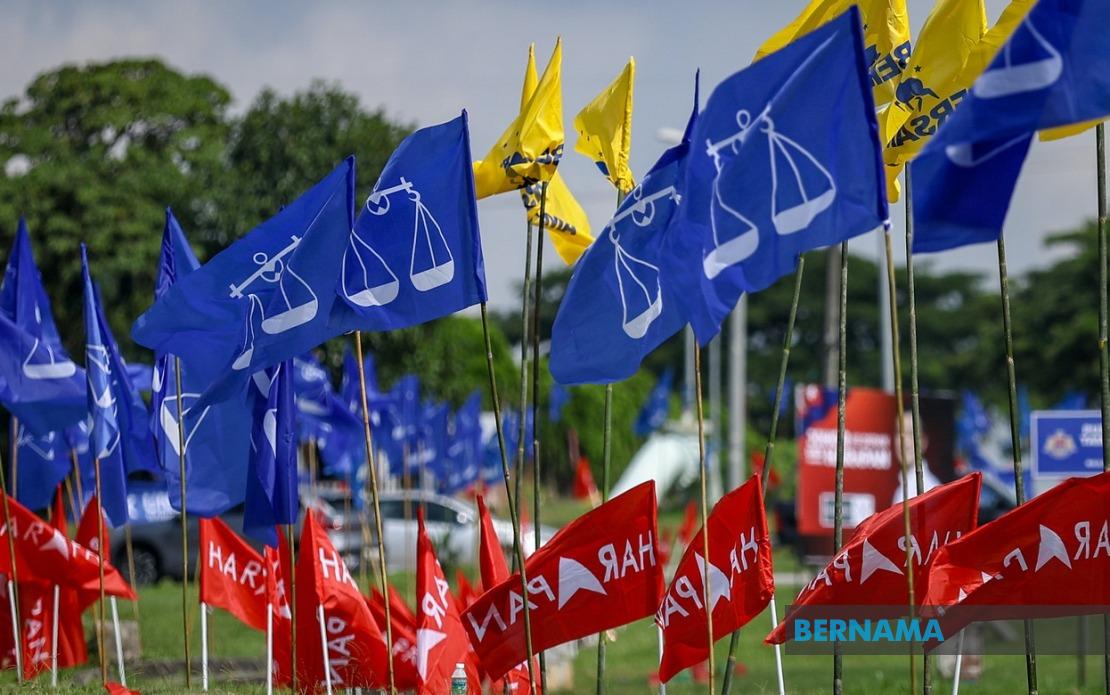
Johor's pivotal state election dialogue will move forward this Tuesday despite a notable gap in the lineup, as Menteri Besar Datuk Onn Hafiz Ghazi will be absent due to conflicting obligations. The broadcasting event, scheduled for 8 pm at the RTM Auditorium within the Johor Broadcasting Department, represents a significant moment in the lead-up to one of Malaysia's most closely watched electoral contests. An official confirmation from the Menteri Besar's office indicated plainly that he does not appear on the event agenda, raising questions about the optics of the state's chief executive missing a platform designed to showcase leadership during a critical electoral period.
The dialogue initiative combines the resources of three major Malaysian media outlets: RTM, Astro AWANI, and Sinar Harian, reflecting broad institutional commitment to facilitating public discourse ahead of polling. This collaborative approach underscores the perceived importance of the Johor contest, where citizens will have opportunities to directly witness candidates articulating their platforms and policy positions. The absence of the sitting Menteri Besar, however, creates an unusual dynamic for what was intended as a comprehensive electoral forum.
Communications Minister Datuk Fahmi Fadzil is confirmed to participate, lending ministerial-level visibility to the proceedings. Alongside him will be Dr Maszlee Malik, the Pakatan Harapan candidate contesting the Puteri Wangsa state seat. This pairing suggests the dialogue will centre on contrasting visions for Johor's future, with Dr Maszlee positioned to present opposition perspectives on governance priorities and policy directions. The structured format allocates one hour for substantive discussion, designed to give both participants equitable opportunity to outline their respective agendas and address constituents' concerns.
Organizers anticipate approximately 200 attendees comprising representatives from various government departments, statutory bodies, and participants from MADANI Communities—a civic engagement initiative reflecting Malaysia's broader democratization efforts. This composition indicates the dialogue targets a sophisticated audience engaged in governance discourse, rather than a mass public rally. The inclusion of government and community representatives suggests the event carries institutional weight and is expected to generate substantive policy discussion rather than superficial rhetoric.
The timing of this dialogue proves particularly significant given the electoral calendar bearing down on Johor voters. Early voting is scheduled for July 7, the same date as the television programme, while main polling occurs on July 11. The 16th Johor State Election represents a competitive battleground, with 172 candidates vying for 56 state assembly seats across the southern state. This numerical scale underscores Johor's electoral importance within Malaysia's political landscape, as the state has historically served as a bellwether for national political trends and ideological currents.
Onn Hafiz's non-appearance carries subtle but significant implications for how the ruling coalition manages its electoral narrative in Johor. The Menteri Besar ordinarily would be expected to utilize such a platform to articulate his administration's record and vision. His absence might reflect strategic calculations about messaging during the campaign period, though the official explanation of prior commitments provides the straightforward public rationale. Regardless of reasoning, the empty seat at this particular forum represents an unusual choice for a state leader at such a consequential juncture.
The decision by media organizations to proceed regardless demonstrates commitment to the dialogue's democratic function independent of any single participant's presence. This institutional independence carries positive implications for Malaysia's media ecosystem and public discourse norms. By ensuring the event occurs and provides opposition voices a platform, the broadcasters reinforce the principle that electoral debates should not be contingent on any particular official's participation, thereby protecting space for contested democratic expression.
For Malaysian observers, particularly those tracking Johor's electoral dynamics, this dialogue offers insight into how competing visions for the state's development are being articulated by substantive figures. Dr Maszlee's participation as a PH candidate allows voters to evaluate opposition approaches to governance while Communications Minister Fahmi's presence ensures government perspectives receive articulation, even if from a federal rather than state-level representative. This arrangement, while unconventional, preserves the fundamental purpose of allowing voters exposure to competing ideas.
The broader context of Johor's electoral significance cannot be understated within Malaysia's political framework. The state has demonstrated capacity to shift political alignments, and recent contests have shown increasing competitiveness between ruling and opposition coalitions. The upcoming election will test whether recent political currents favoring change continue to gather momentum in a traditionally influential state, or whether incumbent advantage proves decisive. The televised dialogue contributes to this democratic process by creating space for substantive public discourse ahead of voting.
For regional observers and Malaysian stakeholders monitoring southeast Asian democratic practices, the Johor dialogue exemplifies how Malaysian electoral institutions navigate contemporary challenges of political competition and media engagement. The programme's design—featuring structured debate, broad institutional participation, and public accessibility through major broadcasters—reflects Malaysia's evolving approach to integrating technology and media infrastructure into democratic processes. Even with the Menteri Besar's absence, the event's progression demonstrates institutional capacity to facilitate electoral discourse according to democratic norms.
As Johor voters prepare for their electoral decision within days, this dialogue represents one of the final major opportunities for exposure to candidates' policy frameworks and leadership perspectives. The one-hour format, while necessarily compressed, should allow substantive engagement with major governance issues affecting Johor residents, from economic development and infrastructure to social services and community cohesion. Viewers will glean important signals about candidates' priorities and competence ahead of marking their ballots.

