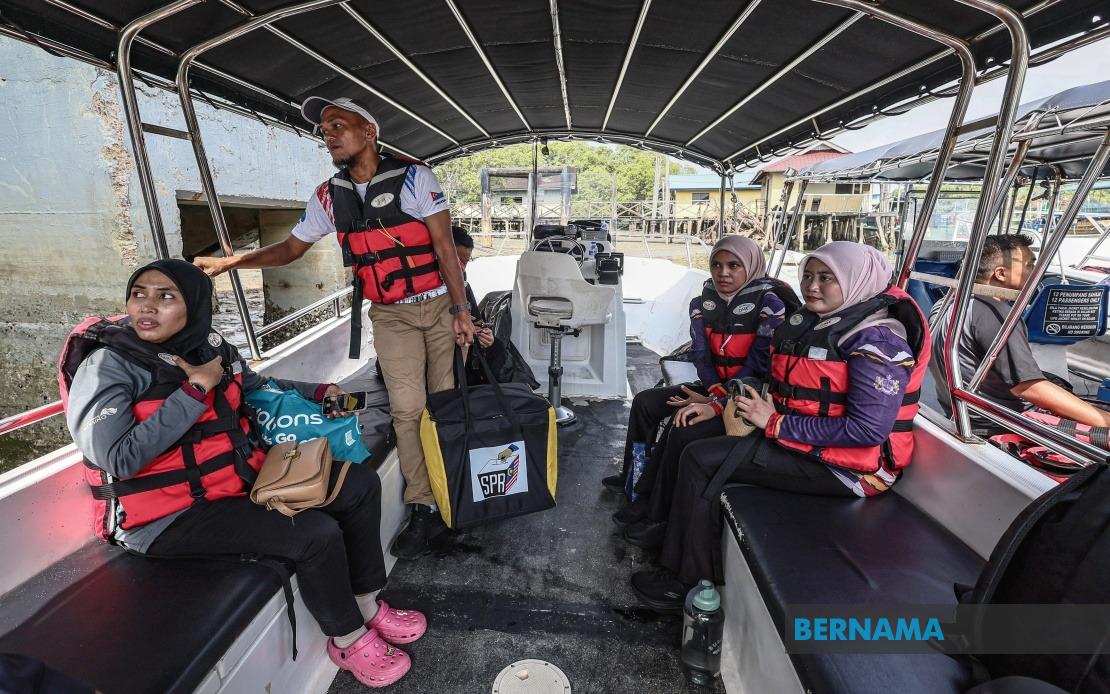
The 16th Johor State Election delivered more than just democratic participation on July 11—it created an unexpected economic windfall for small business operators across the state. While voters exercised their rights to determine Johor's leadership, maritime transport companies and food vendors seized the opportunity to substantially increase their revenue, transforming election day into one of their most profitable periods of the year.
With over 2.6 million registered voters participating across the state, the logistical demands of the election extended far beyond government agencies. Island communities required dedicated ferry services to transport voters back to their home islands, and polling stations needed sustenance for long queues of citizens casting their ballots. These necessities created a spike in demand that small business operators scrambled to meet.
Mustakim Shafie, 35, who operates Island Eagle Boat Services & Island Hopping, experienced firsthand the commercial surge that election day generated. His speedboat fleet, comprising six vessels, found itself fully deployed throughout the day. The company's responsibilities began early in the morning with transporting Electoral Commission personnel and essential logistics to remote islands. By midday, the focus shifted entirely to ferrying groups of voters determined to reach their polling stations despite challenging sea conditions.
The revenue impact was immediate and substantial. Mustakim reported that booking inquiries and confirmed charters had doubled compared to a standard operating day. His pricing structure—ranging from RM4,000 to RM4,500 for three-day, two-night charter packages, and approximately RM2,500 for one-way trips accommodating up to 18 passengers—meant that the doubling of bookings translated into significant daily income. Nearly 50 voters alone hired his services specifically to reach polling stations on the islands.
Yet this economic opportunity came with considerable professional responsibility and risk. Maritime operators like Mustakim must contend with unpredictable sea conditions and volatile weather patterns that can disrupt schedules and jeopardise passenger safety. The responsibility of transporting voters safely to fulfil their democratic duty weighs heavily on operators who recognise that delays or mishaps could undermine civic participation.
Hasrul Azmin Jumaat, 39, another veteran boat operator with more than two decades navigating Johor's coastal waters, brought decades of experience to bear during the election. His company regularly undertakes challenging journeys, including the lengthy 76-kilometre voyage to Pulau Aur, which demands over two hours of continuous operation. Hasrul's extensive knowledge of these waters, seasonal patterns, and safety protocols proved invaluable during the election period, when passenger volume exceeded normal levels significantly.
Beyond maritime transport, food vendors positioned near polling stations capitalised on the concentrated foot traffic. Ismail Mad Hasim, 55, and his wife Faradila Fairuz Mohd Affandi, 45, operated a food stall beside Sekolah Kebangsaan Taman Sutera, a designated polling centre. Their location proved extraordinarily profitable as early voters began arriving from 8 am onwards, creating sustained demand throughout the day. The couple had operated the same stall during previous elections, allowing them to anticipate customer patterns and prepare appropriate inventory.
The couple's entrepreneurial instinct proved sound. They reported selling out their entire stock during the polling period, a result that reflected both effective business planning and the genuine appetite of voters requiring sustenance while engaged in the electoral process. The combination of early opening times and strategic positioning near the voting venue allowed them to capture a customer base that included voters waiting in queues and those completing their civic duty.
Notably, despite their commercial success, Ismail and Faradila remained committed to their own democratic participation. They scheduled their voting time after the conclusion of their peak business hours at the same polling centre where they operated, demonstrating how small business owners balanced entrepreneurial opportunity with civic responsibility. This commitment reflected broader attitudes among vendors who viewed election day as both an economic opportunity and a fundamental occasion for democratic engagement.
The economic stimulus generated by the election extended across multiple business categories and regions throughout Johor. Transport operators, food vendors, and ancillary service providers all benefited from the concentrated demand that voting day created. For small business owners operating with tight margins and variable income streams, such days provided essential revenue boosts that could buffer against quieter periods and support ongoing operations.
This pattern illustrates a frequently overlooked economic dimension of electoral events in Malaysia. Beyond the political implications and democratic processes, major elections generate immediate, tangible economic activity that benefits small and medium-sized enterprises, particularly those in service sectors. The additional foot traffic, demand for transportation, and consumption of goods create short-term revenue spikes that can significantly impact operators' monthly income.
As Johor's polling continued until 6 pm on July 11, small business operators throughout the state remained focused on maximising this temporary surge in demand. For Mustakim's boat crews, it meant executing multiple ferry runs safely and efficiently. For Ismail and Faradila, it meant serving customers continuously and replenishing stock as quickly as circumstances allowed. These small business owners represented thousands across Malaysia whose livelihoods depend on capitalising such opportunities when electoral events generate concentrated economic activity across their communities.

