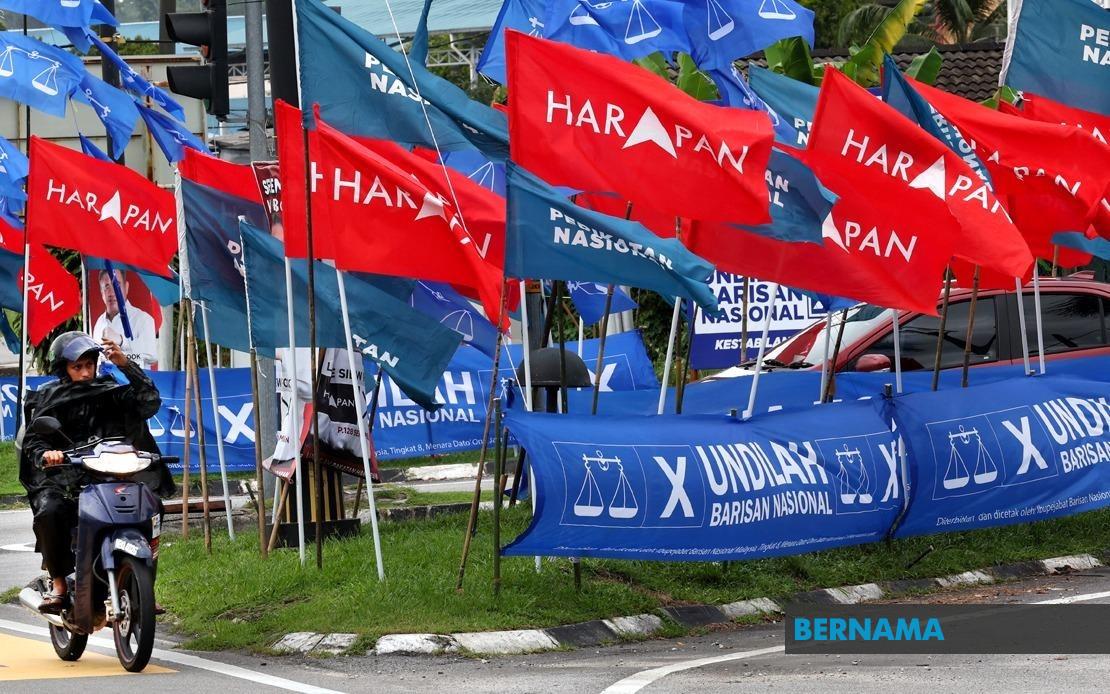
The race for Johor's 56 state assembly seats has entered a fevered final chapter, with all major political coalitions throwing maximum effort into the closing 48 hours of campaigning before the midnight deadline tomorrow. Polling is scheduled for Saturday, and candidates across the spectrum have abandoned any pretence of winding down, instead flooding constituencies with rallies, house visits, and personal voter engagement drives designed to capture undecided voters and mobilise their bases.
The intensity reflects what political analysts view as a highly competitive contest in a state that has long been an electoral bellwether for national politics. With 172 candidates vying for the 56 seats, the race remains fluid enough that last-minute momentum can meaningfully shift outcomes in marginal constituencies. The visible deployment of senior national figures from each coalition underscores just how seriously they regard the stakes, treating this as a proxy battle that carries implications well beyond Johor's borders.
Pakatan Harapan has positioned itself as the forward-momentum coalition, leveraging Prime Minister Datuk Seri Anwar Ibrahim's personal popularity by scheduling him to campaign at three high-value locations on the eve of the final day. The Puteri Wangsa state seat has emerged as particularly symbolic for PH—a closely watched constituency where the coalition's candidate, Muszlee Malik, has been mobilising through social media to drive turnout at the "Grand Finale Harapan Johor Selatan" rally. The deliberate framing as a "finale" event carries psychological weight, signalling to supporters that this represents their last opportunity to demonstrate commitment before the ballot box closes.
The personal sacrifices being made by candidates also illustrate the stakes involved. PH's Paloh candidate, Dr A. Ruban, exemplifies this determination by cutting short medical leave to resume campaigning, framing his return as a non-negotiable commitment to his constituency fight. Such gestures, often communicated through social media statements, serve dual purposes—they energise local party machinery while sending signals to undecided voters about the candidate's dedication and personal investment in their constituency.
Barisan Nasional, the long-dominant coalition that governed Johor for decades before PH's 2018 federal breakthrough, is mounting a defence campaign fronted by coalition chairman Datuk Seri Dr Ahmad Zahid Hamidi. His targeted visits to Endau and Kempas constituencies suggest BN strategy is focused on holding core support in specific regions rather than attempting a uniform statewide surge. Johor Menteri Besar Datuk Onn Hafiz Ghazi's parallel campaign in his Machap seat, reinforced through video messaging on Instagram, indicates BN is also adapting its communication to meet younger voters where they congregate digitally.
The BN candidate in Larkin has adopted a more intimate community engagement approach through the "Ziarah Kasih" programme, which emphasises personal meetings with residents over large-scale events. This strategy reflects a broader recognition across coalitions that voters increasingly demand direct interaction and demonstration of understanding of local concerns rather than distant top-down messaging. In constituencies where BN may be facing demographic shifts or erosion of traditional support, such grassroots work becomes particularly critical for stemming defections.
Perikatan Nasional, the opposition coalition centred on PAS and Bersatu, is employing the mega-rally format to mobilise its base. By bringing both its chairman Datuk Seri Ir Dr Ahmad Samsuri Mokhtar and PAS president Tan Sri Abdul Hadi Awang to Endau for a concentrated show of force, PN is signalling organisational strength and attempting to create a sense that momentum is building on the opposition's side. This approach typically appeals most to voters already inclined toward opposition politics but seeking reassurance about their coalition's viability.
The smaller Parti Bersama Malaysia has opted for a different tactical approach through its "Bersama Tour Truck" initiative, which allows candidates to reach multiple communities sequentially and efficiently. Meanwhile, Bersama's Larkin candidate is pursuing small-group community dialogues—a model designed to allow deeper conversation and relationship-building than large rallies permit. This reflected recognition that in Malaysia's fractionalised political landscape, even relatively new or smaller parties can carve out niches by offering candidates who engage voters at more personal scale.
The proliferation of social media messaging from candidates reveals how contemporary electoral campaigns in Malaysia increasingly operate across multiple simultaneous channels. Candidates are not simply appearing in physical locations; they are documenting, narrating, and amplifying their campaign activities through Instagram, Facebook, and other platforms. This dual existence—physical presence on the ground combined with digital amplification—effectively allows campaigns to reach both local constituencies and broader statewide or even national audiences simultaneously.
The geographic distribution of campaign intensity also offers clues about where each coalition perceives its opportunities or threats. The repeated reference to Puteri Wangsa, Endau, Larkin, and Paloh suggests these constituencies are genuinely contested, with multiple coalitions believing they can win. In contrast, the relative silence around other seats likely reflects calculations that outcomes are already relatively settled, allowing limited campaign resources to concentrate where marginal gains remain possible.
From a Malaysian electoral perspective, the Johor campaign's intensity demonstrates how seriously major coalitions regard state elections, particularly in economically significant states that comprise substantial portions of the country's population. A decisive outcome in Johor could create momentum for PH federally, while an BN or PN victory would similarly carry symbolic weight suggesting voter fatigue with the Anwar government or appetite for alternatives. The final 48 hours will likely determine whether late-stage campaign momentum can shift outcomes from what polling or early voting patterns might suggest, making this closing phase more than merely ceremonial conclusion to the electoral process.

