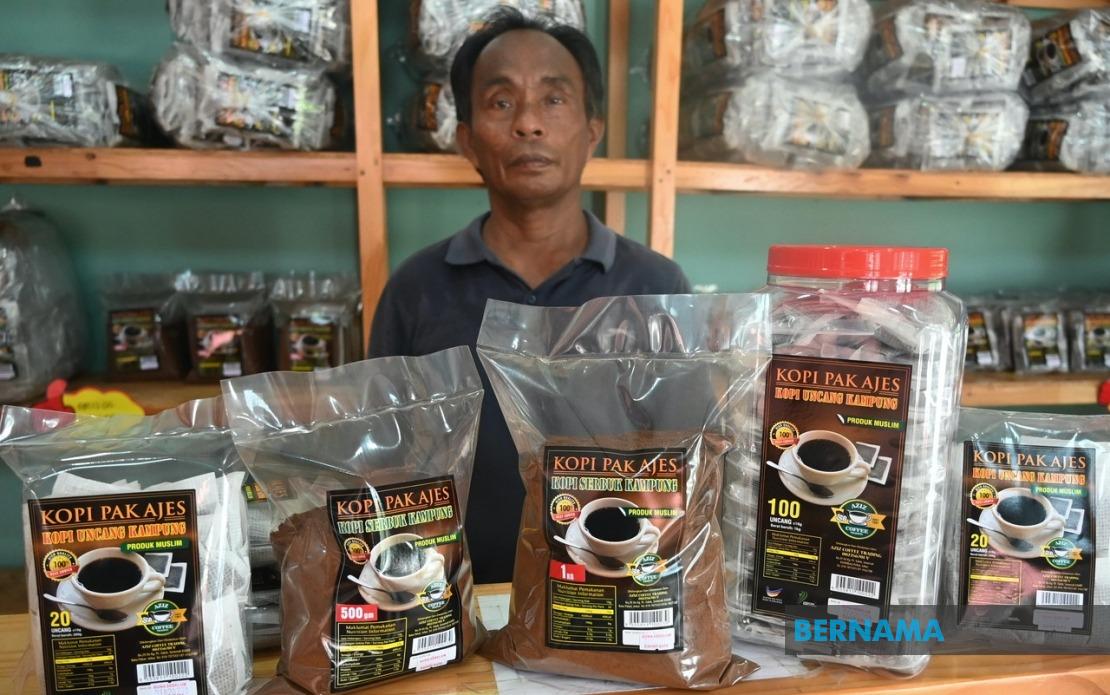
The 16th Johor state election has created an unexpected economic opportunity for Aziz Mohd, a 65-year-old coffee entrepreneur based in Kampung Parit Sidek, Semerah. As 172 candidates vie for 56 state seats across the constituencies of Semerah, Sungai Balang and Bukit Naning, the heightened political activity has translated into dramatically increased orders for his coffee products, forcing him to ramp up production capacity to unprecedented levels.
As the chairman of Aziz Coffee Trading, Pak Ajes—his affectionate moniker among customers—has witnessed orders surge from campaign machinery and party workers mobilizing across the state. The timing could not have been more fortuitous; an election cycle brings with it concentrated demand that rarely occurs outside such electoral windows. His business, which he has nurtured for over three decades, is now experiencing one of its most productive periods as teams working long hours require steady supplies of coffee to sustain their campaign activities.
The operational response has been dramatic. Pak Ajes and his 22-year-old son, Muhammad Fitri, have had to source coffee beans from distant suppliers—reaching as far as Rengit and Kluang—to fulfil the unprecedented volume of orders. This supply chain expansion reveals both the limitations and resilience of small-scale agricultural businesses in Malaysia's rural regions. By doubling production to meet demand, the entrepreneur has demonstrated the agility required to capitalize on seasonal commercial opportunities, a skill honed over decades of farming and trading.
Pak Ajes' journey into the coffee business illustrates the entrepreneurial pathways available to rural Malaysians. His initial ventures in quail egg production and mushroom cultivation generated modest but consistent income that he reinvested into a new agricultural product. In 1991, after observing a surplus of coffee beans in nearby villages, he began processing and packaging them for local beverage retailers. Starting with merely RM200 in capital and packets weighing just 100 grams, he built a manufacturing operation that now produces approximately 1,500 packets daily and over five tonnes of coffee powder monthly.
The production process itself demands considerable expertise and precision. From initial bean preparation through stem and husk separation, the coffee must undergo fifteen days of sun-drying before roasting and grinding. The packaging stage requires particular vigilance; improper storage exposes the ground powder to air, causing it to harden and clump, thereby compromising product quality. This technical sophistication, developed through years of hands-on experience, has enabled Pak Ajes to maintain consistent quality while scaling operations to serve coffee shops throughout the Muar and Batu Pahat regions.
Recognizing the commercial potential within his community, Pak Ajes and Muhammad Fitri opened Kupi Nang Ajes Cafe in 2022, positioned directly in front of their home. The café operates on a budget-conscious model, offering espresso-based beverages at prices designed to attract working-class customers. This retail diversification represents a natural extension of the family's coffee production capabilities, creating a direct channel to consumers rather than relying solely on wholesale distribution to established outlets.
The expansion ambitions articulated by Pak Ajes signal confidence in the regional market for locally-produced coffee. His stated goal of establishing additional branches throughout Johor and eventually across Malaysia reflects the scaling potential he perceives within his business model. Such ambitions, while modest by corporate standards, represent significant growth targets for family-operated rural enterprises. The planned second outlet in either Batu Pahat town or Muar would position the brand in higher-traffic commercial zones, a strategic decision aimed at increasing consumer visibility and sales volume.
Government support has played an enabling role in this enterprise's development trajectory. The Department of Agriculture has provided equipment assistance including coffee grinders and bagging machinery, alongside technical training in packaging standards and product labelling requirements. Such interventions, when properly targeted toward rural entrepreneurs, can meaningfully enhance operational efficiency and market competitiveness. For Pak Ajes, this institutional support has complemented his own capital investments and labour contributions.
The election cycle windfall illuminates a broader economic reality within Malaysian electoral seasons. Campaign machinery generates substantial localized demand for services and consumables—from catering to transportation to beverages—that benefits small-scale suppliers positioned to capture such opportunities. While temporary, these demand surges provide cash flow that rural entrepreneurs can reinvest into expansion or equipment upgrades during quieter commercial periods. For communities like Kampung Parit Sidek, such cycles represent valuable though intermittent revenue opportunities.
Pak Ajes' experience also reflects the importance of supply-chain resilience for agricultural businesses operating at small to medium scale. His willingness to source inputs from neighbouring regions rather than restrict himself to immediate locality demonstrates commercial pragmatism. This geographic flexibility, combined with his established relationships with multiple suppliers and customers, has enabled rapid scaling without compromising product quality or delivery timelines. For emerging entrepreneurs in rural Malaysia, such adaptive approaches prove essential for capturing irregular but valuable market opportunities.
The Johor state election, scheduled for Saturday with polling across 56 constituencies, represents not merely a political milestone but an economic catalyst for suppliers like Pak Ajes. As campaign teams mobilize across Semerah, Sungai Balang and Bukit Naning, the demand for coffee—a commodity essential for sustaining long campaign days—ensures continued brisk business for his operation. The windfall, while ultimately temporary, validates his business model and provides additional resources for pursuing his expansion objectives throughout the region.

